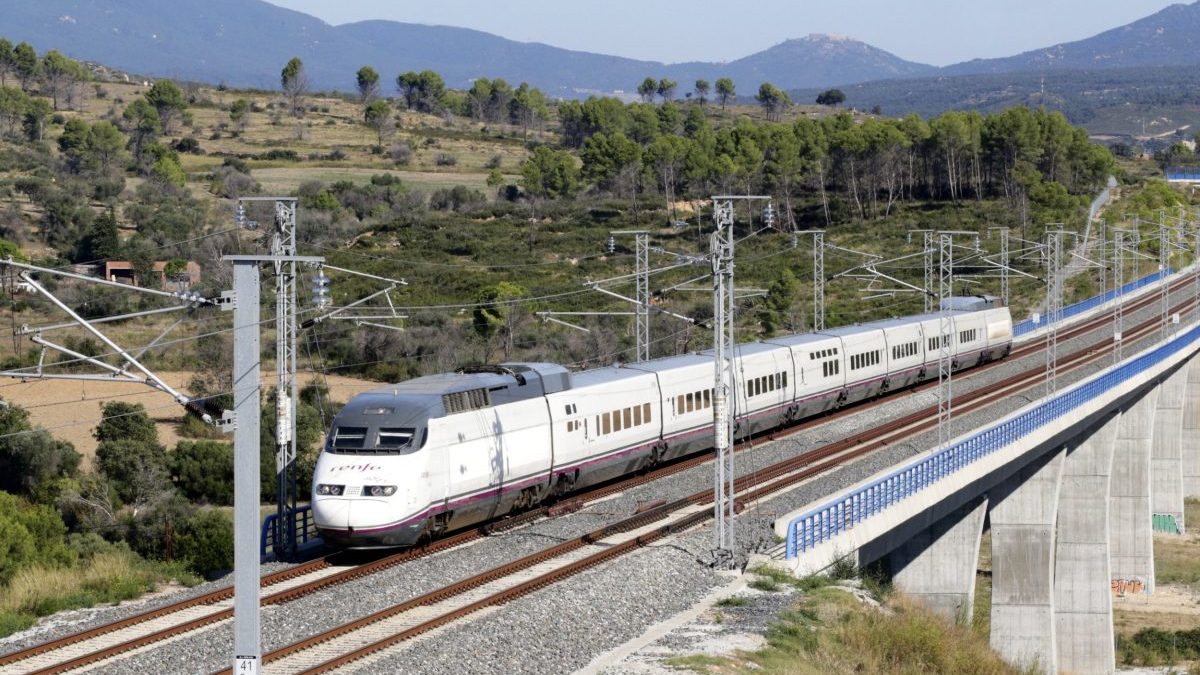
Prices of tickets for high-speed trains are dropping, with passengers choosing rail travel more often as a result
MADRID – Spain has pushed down ticket prices for high-speed trains, leading to more passengers now travelling by rail instead of plane on the country’s major routes, new figures reveal.
Spain’s left-wing government liberalised the rail system in 2020 by allowing two private companies to compete with the state-run operator Renfe. Since then, demand has soared, after a price war pushed ticket costs down.
Single tickets for trains from Madrid to Barcelona cost on average between €10.75 (£9.30) and €47 (£41). In comparison, the cost of travelling a similar distance by rail between London and Edinburgh varies from £25 to £140.
There was a rise from 7.5 to 8.9 million people travelling between Madrid and Barcelona between 2023 and 2025 in August and September, according to Spanish rail operator Renfe.
Train journeys between Madrid and Malaga can cost as little as €9 (£7.80) one-way, while the average price of travelling a similar distance between the UK capital and Manchester starts at €34 (£29.50).
Renfe recorded its highest ever number of passengers – 277 million – in the first half of 2025. This does not account for passengers on two private rail carriers.
The changes saw rail travel in Spain rise by 10.8 per cent between June and September last year, compared with 2024, according to the country’s National Commission for Markets and Competition.
It cut the national carbon footprint by 512,926 tonnes of CO2 per year – the same as 250,000 cars driving for an entire year. The data, from Renfe, was collected between August and September in 2023-25.
A second phase of rail liberalisation in Spain is planned for 2027, when other routes will be opened to competition, potentially boosting demand for train travel again.
Dr Malcolm Morgan, of the Institute for Transport Studies at the University of Leeds, said the current nationalisation of the UK rail system may bring down ticket prices and encourage more people to travel this way.
Morgan, who published a report last year comparing rail and air travel in the UK, told The i Paper: “The process of renationalisation of the rail network has started in Britain and this might push down prices.
“Air travel generally within Britain is generally people travelling to take connections to international flights except some flight connections in Scotland and in Northern Ireland.”
Your next read
A UK Government survey of travel habits said there were 1.72 million passenger rail journeys last year, an increase of 7.2 per cent compared with the year before. Morgan believes this could be a result of more people returning to the office post-pandemic, at least part-time.
“When there are enough trains, operating at a competitive time and price, the comfort of the train is incomparable with flights,” Cristina Arjona, of Greenpeace, told The i Paper.
“If you add the time it takes to get to the station versus airport, the train is more competitive, people prefer trains for its comfort but also its environmental benefits.”
