The Royal Court is no stranger to the headlines. The fabled new writing theatre burst on to the scene with John Osborne’s shockingly naturalistic 1954 play Look Back in Anger, which outraged pompous critics by daring to show someone washing up dirty dishes on stage. Its increasingly proud tradition of iconoclastic new dramas reached a shocking peak with Sarah Kane’s 1995 debut play Blasted, which the Daily Mail‘s theatre critic deemed a “disgusting feast of filth”.
But in 2024, as its 70th anniversary loomed, this storied venue was making headlines for less exciting reasons. The Royal Court’s chairman, Anthony Burton, issued a stark warning that the theatre’s business model was “no longer sustainable”, thanks to a “devastating” 5 per cent cut to its Arts Council England funding.
Few theatres emerged from the bleak years of the pandemic in good financial shape – but the Royal Court’s problems ran unusually deep. Its artistic director Vicky Featherstone‘s leadership had begun in a blaze of ambitious glory with her 2013 Open Court season, which handed the building over to a mob of 140 playwrights who filled every inch of it with performances and happenings. It felt like the place to be.
Then, as the decade wore on, I found myself worrying that its anarchic energy seemed to be subsiding into a more insular, rarified atmosphere – and that its determinedly leftfield line-up of shows were increasingly unlikely to tempt casual theatregoers.
The Royal Court just wasn’t finding the big breakout hits that would fill its coffers, and capture the attention of London’s spoilt-for-choice audiences. And nor did it really seem to be looking for them. Instead, it was using the main stage for a series of worthy-but-slight experiments, like E V Crowe’s undernourished 65-minute one-woman show Shoe Lady, which had little hope of making a splash big enough to lure in mainstream audiences.
When its plays were catching the attention of the wider world, it was for the wrong reasons: in 2021, two of the theatre’s prominent corporate backers had pulled their financial support after a badly handled antisemitism controversy surrounding new play Rare Earth Mettle. In 2023, Featherstone announced she was stepping down from the top job, and hers felt like a rather nerve-wracking pair of shoes to step into.
When I catch up with critic (and long-time chronicler of goings on at the Royal Court) Aleks Sierz, he’s full of sympathy rather than envy for the inheritors of this high-profile gig. “I wouldn’t personally like to be an artistic director in this climate,” he says. “In fact, I feel sorry for them.”
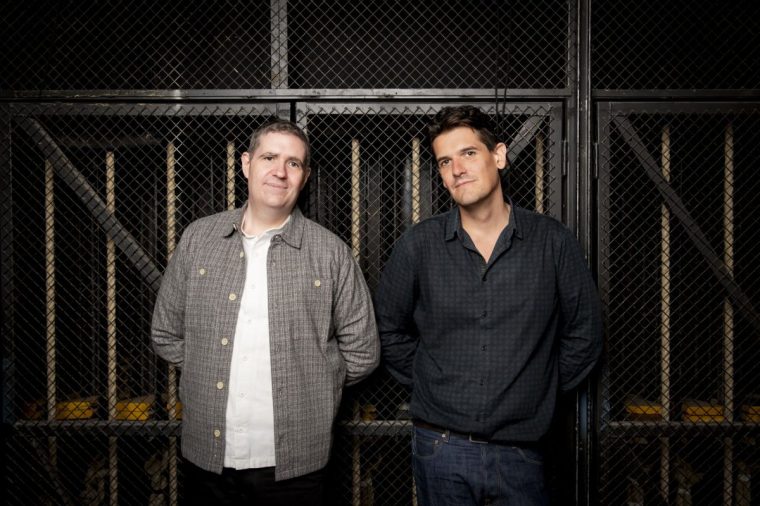
So when I meet its current leadership team, artistic director David Byrne and executive director Will Young (not the musicians), it’s reassuring to see them radiating enough optimism to thaw the frost decking the theatre’s grand Italianate façade. “Every generation needs to fight for its institutions,” says Byrne, “and now it’s our time.”
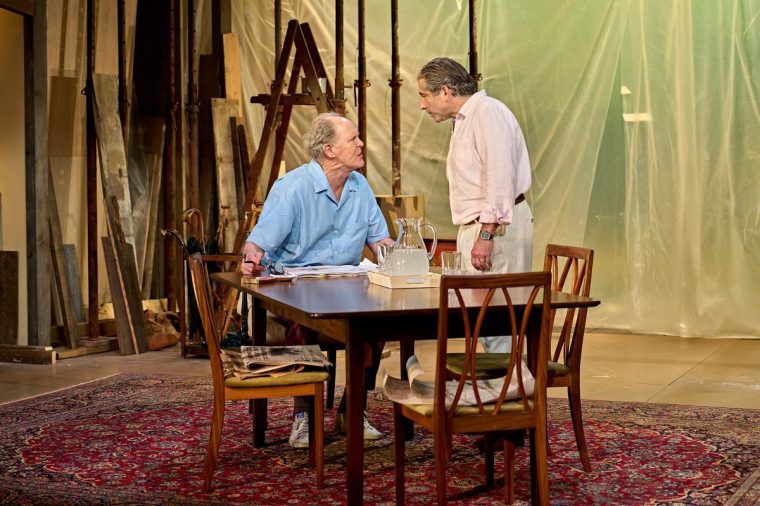
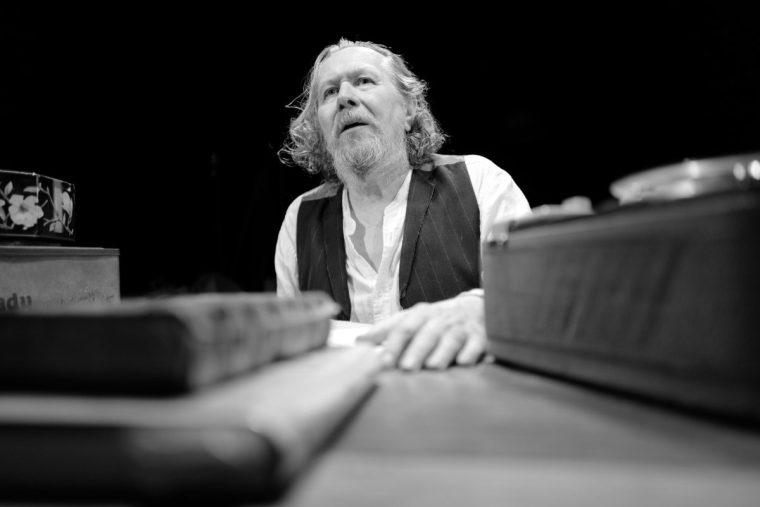
This year is the Royal Court’s 70th anniversary, and they’ve greeted it with a celebratory season that feels like a major event. Living legend Gary Oldman will perform Samuel Beckett monologue Krapp’s Last Tape, a play that premiered at the theatre in 1957. There’ll be the London transfer of Broadway’s most raved-about hit play of last year, Kimberly Belflower’s John Proctor is the Villain. And they’ve even persuaded Tilda Swinton to make her first stage appearance in 30 years in Manfred Karge’s Man To Man, the play that supplied her breakout role back in 1987. Four shows from the season have already sold out, months before their first audience members trickle through their doors.
More quietly, they’ve gone an impressive distance to restoring the theatre’s imperilled finances. “In the past two years we have tripled the number of individual supporters the organisation has got,” says Byrne proudly. The theatre’s chairman Burton welcomed the new year by announcing that the venue had added £900,000 to a fund designed to allow it to “artistically fail”.
Leading one of London’s most storied theatrical institutions might seem like a prodigious leap from the duo’s previous gig in charge of the tiny, freshly built 50-seat studio theatre New Diorama. But not to anyone who was paying attention. Their distinctive brand of leadership was ambitious, outward-looking, and generous to anyone who came through the theatre’s doors, with free pizza for hungry audiences and a host of bold initiatives to support struggling artists.
Now, they’re using some of that sparky energy to rewire an older, more unwieldy institution. “We’re bringing that same mentality of constantly trying to find new ways of working, and new sources of funding,” says Young. And as he readily admits, the theatre’s boost in investment from individual, charitable and corporate sponsors is the product of some serious legwork: “It’s come from us going cap in hand to anyone who’ll listen.”
It’s not something you can imagine previous Royal Court leaders doing. And nor did they have to. In the 20th century, the theatre relied on the comfortable padding of public funding, which insulated it from the sharp financial realities of staging plays that might be a little too radical for the ticket-buying public. But in the past couple of decades, Arts Council cuts have meant that even publicly funded venues must earn most of their income through ticket sales and private sponsorship.
That means that the Royal Court has a tough challenge on its hands: it must programme plays in keeping with its reputation for finding bold new experiments, without totally losing sight of audiences in search of a broadly enjoyable night at the theatre.
“I do think that theatres need to strike a balance between commercial imperatives and the fact that genuinely experimental, provocative work might well be unpopular,” says critic and author Sierz, and he should know. He chronicled a generation of radical 1990s Royal Court playwrights in his 2001 book In-Yer-Face Theatre, charting the impassioned and often hostile reception received by its pioneers Kane and Mark Ravenhill’s depictions of drug deals and dead babies.
Looking back still further, he explains that audience numbers in the theatre’s supposed 1950s and 1960s golden age often dipped below 30 per cent capacity, as public taste struggled to catch up with bold new writing styles. “I’m really sympathetic to Byrne having inherited a Royal Court that’s basically bankrupt,” he says, “but there’s something in me that thinks he’s taken a wrong turn.”
For Sierz, the danger is that as well as having too keen an eye on commercial imperatives, the Royal Court’s current leadership is “running the risk of betraying its original mission of being purely a writers’ theatre”. Even the most rebellious 1990s playwrights still conformed to the particularly British tradition of text-based theatre, where the writer’s individual voice was king.
Now, the Royal Court seems to be leaning towards a more European approach, where visionary directors shape visually striking projects such as Katie Mitchell’s recent Cow | Deer, a performance where not a single word was spoken.
“They also haven’t really found their mojo in terms of developing new writers,” Sierz reckons, pointing to the recent loss of its Literary Manager during a round of redundancies. Still, Byrne is keen to point out that the theatre’s new team is pretty dedicated to the written word, just in a slightly different form. “We’re able to read more plays than ever before,” he says, pointing to the theatre’s new Open Submissions Festival, which acts as a showcase for the works they discover.
They’re also putting the spotlight on 18-year-old debut author Leo Simpe-Asante, whose debut play Godot’s To Do List will act as a curtain-raiser for Krapp’s Last Tape each night.
Even so, it’s noticeable that the 70th-anniversary season has generally platformed less well-known writers in the smaller Royal Court Upstairs studio space, instead of giving them the main stage. Playwright Leo Butler worked with the Royal Court’s writers’ groups for a decade. I expected him to argue that more emerging writers should be given a shot at big spaces – like the 19-year-old Andrea Dunbar was when her 1982 Royal Court play Rita, Sue and Bob Too became a feminist theatre landmark. But instead, he points to a long line of playwrights who have had their first efforts trashed in the press. “Being in the studio protects the writer,” he says. “If you’re suddenly flung on the main stage with your first play it can be really unforgiving.”
And perhaps that protective atmosphere is especially important in the current unforgiving economic climate, which may not allow writers to fail more than once. “I think it’s a really bad environment for new writers at the moment,” says Sierz. “New plays should be contemporary, provocative, and it should experiment with form. After the shocks of the pandemic, there’s a lack of confidence to do that.”
In 2024, the UK’s publicly funded theatres staged 31 per cent fewer productions than they did in 2014 – and with cash in short supply, the plays they did stage were more likely to be safe commercial bets than fearless bids to be the new Sarah Kane.
“For us, Royal Court plays are those which are pushing the conversation forward, and which are ahead of public taste,” says Byrne, who’s striving to create an environment “in which artists are supported to take big risks in a climate where that’s not always a given”. That includes a big enhanced programme for training and supporting directors, alongside the venue’s fabled Writer’s Groups, which have a long track record for training up some of the biggest voices in theatre.
The Royal Court’s role in the UK’s theatre scene isn’t just a practical one. It’s a spiritual one, spurring the scene forward with faith in the power of the new and the next. “The Royal Court has a mythic quality as a home for plays and playwrights, and an immense history of shaping what theatre can be,” says playwright Leo Butler, summing up the venue’s appeal.
And whatever observers might make of their approach, it’s undeniable that Byrne and Young have the infectious confidence to reinvigorate not just their venue, but a wider theatre culture. “It feels like there’s a real sense of momentum and energy in Sloane Square at the moment, and that’s only going to continue,” says Byrne.
The Royal Court’s 70th Anniversary Season is available to book now, with £15 rush tickets available online on Mondays at 9am
