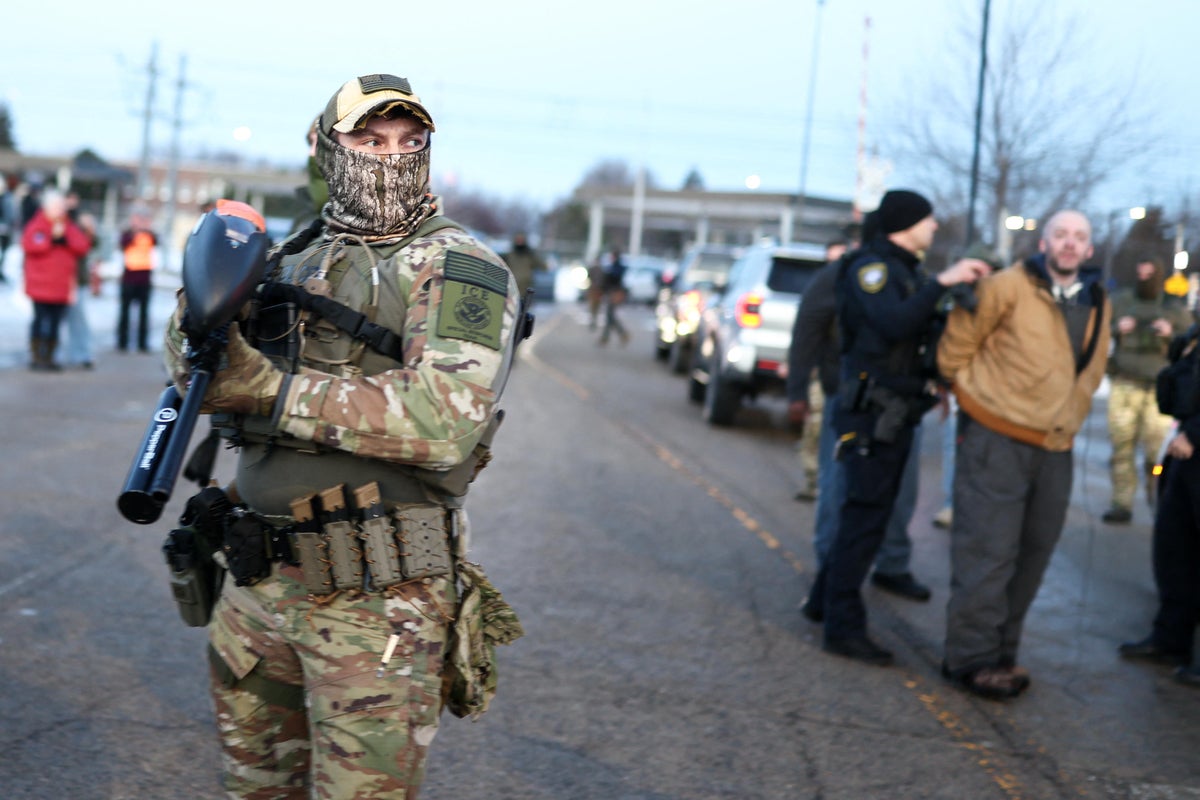
The Department of Homeland Security gave Immigration and Customs Enforcement officers Tuesday a “reminder” that they have “federal immunity” over their conduct while on the job – a claim that resurfaces as the agency faces scrutiny for defending the officer who fatally shot Renee Good.
In an X post, DHS resurfaced a clip of Stephen Miller, the White House deputy chief of staff for policy who is also a central figure in the administration’s immigration agenda, talking about the sweeping immunity.
“To all ICE officers: You have federal immunity in the conduct of your duties,” Miller said on Fox News’ The Will Cain Show in October. “You have immunity to perform your duties, and no one—no city official, no state official, no illegal alien, no leftist agitator or domestic insurrectionist—can prevent you from fulfilling your legal obligations and duties.”
Although the clip is from several months ago, the department’s decision to highlight it now seems to be part of its defense that the officer who fatally shot Good does not need to be held accountable because he is protected from civil and criminal liability.
While federal law enforcement officers have protections against some prosecutions, experts say they are not completely immune from legal or other consequences.
Despite that, Vice President JD Vance made similar assertions to Miller last week when he told reporters the officer has “absolute immunity” from investigation
“The precedent here is very simple: you have a federal law enforcement official engaging in federal law enforcement action. That’s a federal issue. That guy is protected by absolute immunity; he was doing his job,” Vance said.
Michael J.Z. Mannheimer, a constitutional law professor at Northern Kentucky University’s Salmon P. Chase College of Law, told CNN, “The idea that a federal agent has absolute immunity for crimes they commit on the job is absolutely ridiculous.”
The Supremacy Clause largely protects federal law enforcement officials from being criminally prosecuted by a state. But there are limitations – such as when a law enforcement officer’s actions violated state law and were unauthorized, unlawful, or outside the scope of their official federal duties.
In the case of the ICE officer who shot Good, Emmanuel Mauleón, a law professor at the University of Minnesota Law School, told TIME that the administration could claim supremacy immunity because the officer was acting within his duty.
“The State is entitled to investigate, but the federal government here does seem to be trying to hamper the ability of the state to obtain critical evidence,” Mauleón told TIME.
While the FBI has opened an investigation into the shooting, they’ve largely deprived state investigators of evidence that would be needed to bring charges.
Federal law enforcement officials are also awarded wide protections for their actions while on the job to prevent frivolous civil lawsuits that could hinder officers from performing their duties. That is called “qualified immunity.”
However, charges can be brought if an officer violates a person’s rights under “deprivation of rights under color of law.” Derek Chauvin, the officer who murdered George Floyd, was charged with this.
But it can be a high bar to clear because prosecutors have to prove in court that the officer intended to deprive an individual of their rights.
“It would be a very tough case,” Timothy Sini, a former federal prosecutor in New York, told CNN. “Prosecutors would have to prove beyond a reasonable doubt that there was a willful deprivation of the victim’s rights – here it would be the right to be free from excessive use of force.”
DHS allows officers to use force to control people while on the job when it’s authorized by law or in defense of themselves or others. However, the department vaguely defines force as whatever is “objectively reasonable” in the circumstances.
The department says officers should avoid using deadly force when possible, in part by avoiding putting themselves in positions where they have no alternative. But they may do so when they feel the subject poses “imminent threat or death or serious bodily injury” to themselves or others.
“Deadly force shall not be used solely to prevent the escape of a fleeing subject,” DHS guidelines say. The department says the exception is when there is reasonable belief that the subject poses a significant threat of death or harm to others.
Robert Bennett, a 50-year-career Minneapolis lawyer, told MotherJones that family members of Good could potentially bring charges under Bivens, a case that allowed civilians to sue the federal government for monetary damages, or the Federal Tort Claims Act.
