An admission from the chief of the defence staff about the scale of underspending on Britain’s armed forces on Monday was music to the ears of Russian planners and propagandists, who are also gauging just how seriously to take threats of deployments into Ukraine and special operations to seize “shadow fleet” oil tankers in the high seas.
Before Christmas, Air Chief Marshal Sir Richard Knighton had reportedly warned Sir Keir Starmer that the Ministry of Defence (MoD) was facing a £28bn shortfall over the next four years.
Giving evidence to the Commons Defence Committee on Monday, he expanded on the theme, admitting that “we can’t do everything we would want to do as quickly as we would want to do it within the context of the budget we set”.
His words have been seized on with glee and relief by the Russian commentariat. The TASS news agency led that “Britain has declared itself unprepared for military conflict”, while the nationalist Tsargrad news site focused on Knighton’s “nervousness”.
Attention was drawn to the contrast between the Air Chief Marshal’s words and recent bullish rhetoric from Britain’s civilian leaders. Moscow has long regarded the British as among its most dangerous and devious antagonists, and some recent public statements have struck a nerve.
After the US seizure of Venezuelan leader Nicolás Maduro, Defence Secretary John Healey incautiously talked about how he would like to see Vladimir Putin “kidnapped” and brought to a war crimes tribunal in The Hague.
Russian foreign ministry spokeswoman Maria Zakharova, known for her astringent style, went out of her way to dismiss this as the “wet dream of British perverts”.
Meanwhile, Starmer continues to talk up the chances of British troops being deployed as part of a “Multinational Force – Ukraine” (MNF-U), even though the Russian President has made it clear that he would not sign any peace deal that allows this.
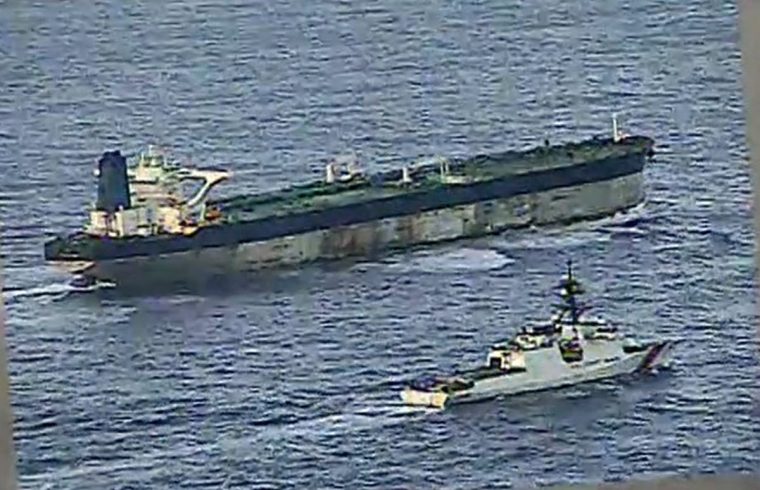
The Prime Minister has since also seemingly given the green light to seizing more of the “shadow fleet” tankers shipping Russian oil exports around the world.
Russians tend to pay disproportionate attention to what British leaders say, often mistaking crowd-pleasing flourishes like Healey’s for serious policy. No one is going to be kidnapping Putin, for all kinds of reasons.
Likewise, the chances of the MNF-U “reassurance force” making it to Ukraine look slender at best. However, from Moscow’s point of view, it certainly helps that Britain and France, the two main proponents of the idea, would find it difficult to scrape together the 13,000 troops being discussed. This is not least because for every soldier on the ground, two more would have to be committed to the operation, either preparing for deployment or recovering from a tour of duty.
To a degree, Russia’s response reflects the schadenfreude of representatives of a country spending 40 per cent of its budget and around 8 per cent of its GDP on defence, compared to under 5 per cent and 2.4 per cent respectively for the UK.
As one Russian commentator put it on social media: “It’s amazing that the British lion, which so loves to roar and bare its teeth, for so long let those teeth rot.”
There is, admittedly, unease in Moscow over the threat to the “shadow fleet”. British Government lawyers believe that tankers under false flags are fair game for seizure under the Sanctions and Money Laundering Act.
At least four such vessels have passed through the English Channel in the past week.
Such operations would represent a distinct shift in the UK’s confrontation with Russia. They would also be expensive, not so much in the seizure, but in then handling what tend to be rusty, badly maintained and uninsured vessels that would become Britain’s responsibility.
A Foreign Office official told The i Paper that this was “not a long-term solution,” though. The operators of the fleet would probably start “paying more attention to registering their boats properly, with questionable but legal jurisdictions” in order to close this loophole, even if this imposed more costs on them, which would also eat into the shrinking profit margins of Russian oil exports.
With ten new hulls joining the “shadow fleet” every month, something is needed to prevent Moscow’s sanction busting, and although seizures are not going to end exports, it should deter some operators from taking on this business.
Your next read
For now, Moscow seems happy to tell itself that the British Government likes to talk tough, but lacks the capacity to back its words with actions.
With the UK still lacking a clear defence plan, and now talking about sending forces to Greenland to deter Trump – even while sending Typhoon jets to the Chagos Islands, potentially to support the US President in strikes on Iran – there is a sense that London is already overstretched.
To quote a hawkish Russian analyst: “Starmer seems eager to distract attention from problems at home with Russophobia, but he should first have talked to his generals, marshals and admirals to find out what he can really do.”
