The second film in Danny Boyle’s new post-apocalypse trilogy is more trauma than zombies
A word of warning: 28 Years Later: The Bone Temple is one of the most outrageously violent mainstream films I have ever watched. There is flaying (even worse than in Game of Thrones); there is decapitation with spinal cords attached; there is even a crucifixion.
In the last film (this is the second in Danny Boyle’s new zombie trilogy) we left young Spike (Alfie Williams) self-exiled to the mainland of the now quarantined Great Britain, seeking a coming-of-age adventure after rejecting his father’s lies and the old-fashioned ways favoured by the siloed island community he grew up in. Spike happened upon a gang of misfits all trussed up like Jimmy Savile, led by a guy calling himself Sir Jimmy Crystal (Jack O’Connell): scraggy blonde hair, shell suits, lavish gold jewellery. They’re into the Teletubbies, they fight like Power Rangers. They don’t look like they’re here to help.
Now, Spike is hanging out with these post-apocalyptic lost boys and wow, is he getting more than he bargained for. First, there’s a little game of kill or be killed, after which he finds himself unwillingly recruited to the “Jimmys”, whose absolute favourite thing, it turns out, is torturing other survivors, Clockwork Orange-style, all under the guise of some pseudo-religious ideology. Remember Sir Jimmy’s vicar father lowering him as a boy into the bunker as the infected stormed the church in the last film? It’s childhood trauma with a heavy dose of daddy issues.
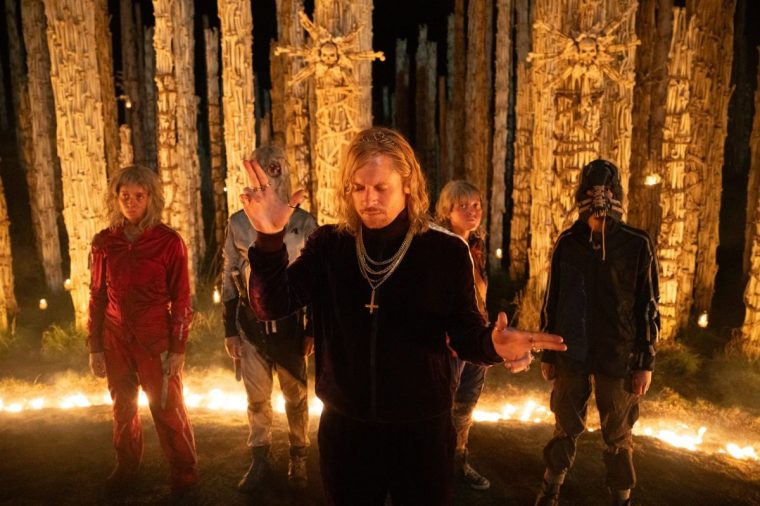
The new trilogy is far more thematically driven than the first (the powerfully raw 28 Days Later came out in 2002, followed by two inferior sequels). Last year’s film was preoccupied with national isolation and nostalgia; this one, barely a zombie film at all really, is interested in just what makes us human, whether we’ve caught the Rage virus or not. While Spike’s new friends are busy massacring, Alex Garland’s script turns back to Dr Ian Kelson (Ralph Fiennes), the doctor who built the ossuary of the title, and whose help Spike previously sought with his sick mother.
Kelson, always slightly on the mad side, has taken to hanging out with an Alpha zombie he has named Samson (a beefy Chi Lewis-Parry), who keeps returning for morphine, like a rabid dog sitting for treats. The pair lounge together amongst the bones, drugged up to their eyeballs, staring at the sky. But the goodly doctor isn’t just getting high or stopping Samson from tearing off his head – he has an experiment in mind. The bloodthirsty Jimmys have lost their humanity, but has Samson retained any of his?
I found the last film frustrating in its tonal inconsistency: thought-provoking and beautiful at first, increasingly camp and ridiculous as Fiennes gave in to his worst melodramatic instincts. Bone Temple is far more consistent. I’m not convinced that the heavy violence is entirely warranted, but the whole thing is at least unfailingly kitsch, and when the storylines merge they do so seamlessly.
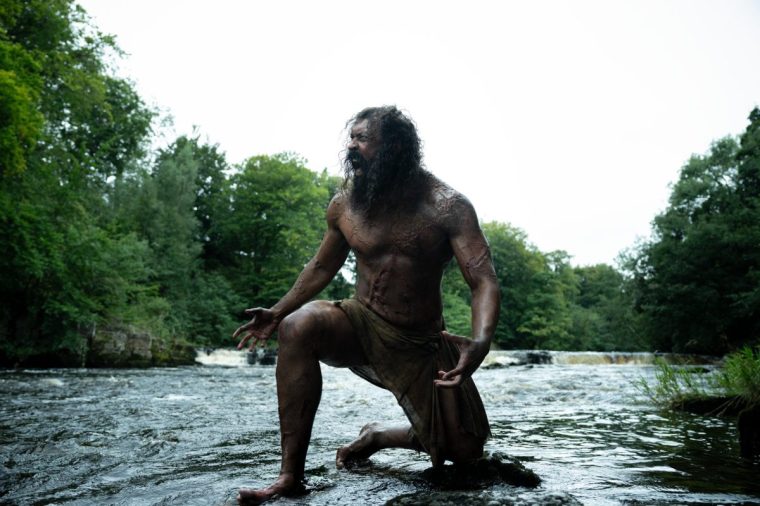
O’Connell is enjoyably bonkers, and Kelson’s radical empathy feels both funny and earned in a way it didn’t before, culminating in a wildly entertaining Luciferian rock-out to Iron Maiden. The whole thing is so over the top that even an objectively silly moment that reminded me of a hulking King Kong carrying off the fragile Fay Wray doesn’t ruin the vibe. Taking the reins from Boyle (producing here), director Nia DaCosta has softened out his self-serious instincts, combining horror and comedy in a similar way to her 2021 Candyman sequel. (It’s just a bit of a shame that Williams, so good before, is sidelined to make way for the Fiennes/O’Connell show.)
The final frames do, as promised, feature the original’s Cillian Murphy back as Jim, who is set for a more central role in the (Boyle-directed) final film. With Jim given a sense of both purpose and humour in this cameo, it looks like both the preposterousness of Bone Temple and the politics of its predecessor will feature in the finale. Hopefully along with a bit more Spike, and more zombies.
In cinemas now
