The US President is profoundly ripping up the rulebook, and this is just the beginning
There is a delay between the world changing and the reality of that change sinking in, like the few seconds’ lag between stubbing your toe and being slammed by the pain, but on a planetary scale.
We are still living in that interregnum in the wake of Donald Trump’s decision to send troops to kidnap Nicolás Maduro from the bedroom of his palace in Venezuela and bring him to trial in the United States, in the early days of 2026.
Trump’s White House has barely tried to explain the action under either US domestic law, let alone international law. The US President has claimed he, personally, will run Venezuela for the foreseeable future, while simultaneously seeming content to leave Maduro’s regime in charge, albeit with a new figurehead.
Trump has tried to personally order US oil companies back into Venezuela, while issuing orders to sell billions of dollars’ worth of the country’s oil and load it into offshore bank accounts he will control. He has expressed no interest in installing the winner of last year’s Venezuelan elections into office, nor of ensuring new elections are held in the country.
Experienced observers of world affairs have spent much of the past week trying to explain this behaviour, or fit it into historical context, but the reality is that it simply doesn’t fit. Trump made no attempt to get Congressional support for his actions, nor an international coalition, and appears to be making up a plan as he goes. It sets a concerning precedent for how the US will handle domestic and foreign matters – further damaging America’s standing on the global stage.
The US might have a chequered past when it comes to international intervention, but this action was distinct even from that. When it comes to understanding just how profoundly Trump is ripping up the rulebook, it may only be the beginning. Just weeks ago, conventional wisdom was that Trump was blustering over Venezuela, and unlikely to escalate from strikes at sea to strikes at land without Congressional approval. We now know just how wrong that assessment was.
This should make it all the more unnerving that Trump’s bluster has escalated almost vertically since the Venezuelan operation, as if the President is on an adrenaline high and is chasing a follow-up. He has threatened Cuba, Colombia and Mexico, and renewed his drive to seize Greenland – a Nato member and long-standing US ally that already houses US troops – for America.
Any one of these would be disastrous, but taking Greenland in particular would end the Nato alliance as the world has known it since the Second World War, even while Vladimir Putin wages a war of aggression in Europe – one Trump pledged to end on day one of his presidency and now seems to have forgotten entirely.
Demolition man
America is now demolishing the “rules-based international order” that America itself built, and which propelled it to become not only the world’s richest nation, but also its undisputed superpower, which – until recently – counted most of the world’s other leading economies as close diplomatic and military allies. Once again, media, politicians, diplomats and others are scrambling to explain the inexplicable.
In international relations, it is famously miscalculations that lead to conflict. One country thinks it can seize some land without its neighbour retaliating. Another leader thinks they can break a particular treaty without causing escalation. One thing leads to another, and then the world is at war. In the nuclear era, the costs of miscalculation have only increased. The rules-based order, so far, had held things together. Without it, what’s left to keep the peace? The danger of that catastrophic miscalculation grows by the day.
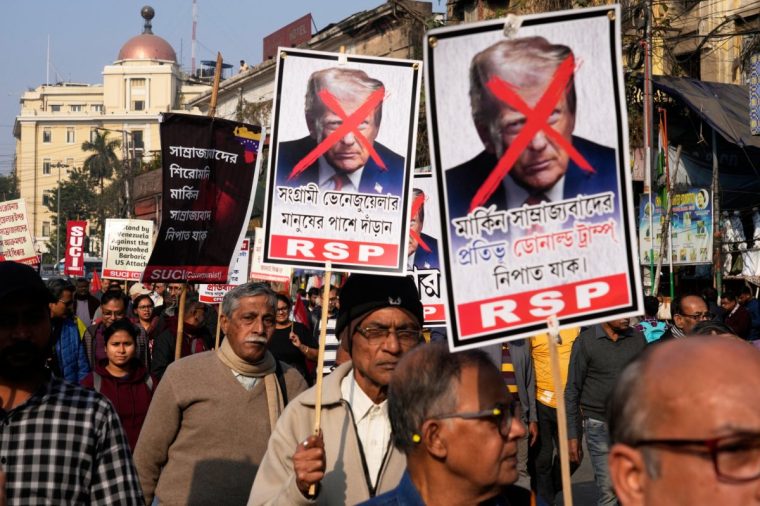
The USA has, for decades, been the loudest voice at the table when it comes to international affairs – in part because it has the largest military, but also because it has been a reliable ally. It has guaranteed and subsidised Europe’s defence, buying deference on security in return. Trump’s team is violating the terms of the deal, without seeming to understand they are doing so.
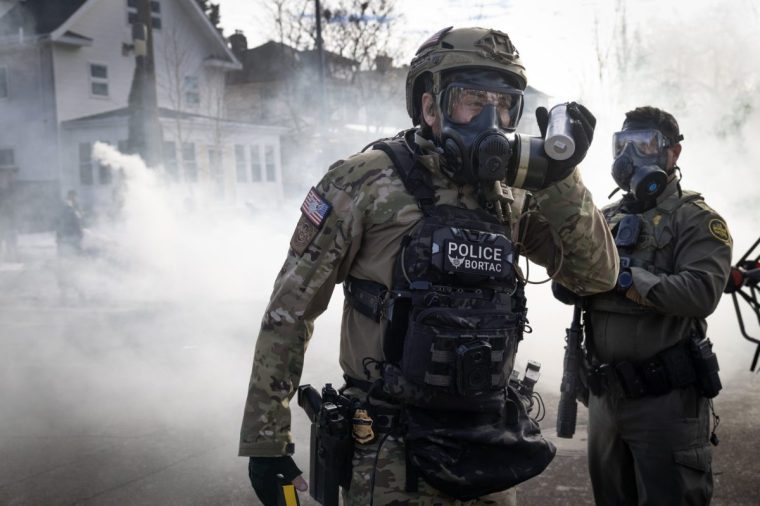
Trump is also waging a war at home. For months, he has been sending federal forces into major cities that voted for his political opponents, on the flimsiest of legal and political pretexts. Last year, targets included Los Angeles, Washington, DC, Portland and Chicago.
This year, Minneapolis was added to the list, leading to 37-year-old Renee Nicole Good being shot dead in the street by an ICE agent – while at least four people, including her killer, filmed the encounter. Where once there might have been apologies, investigations, or at least attempts to calm the situation, Trump’s team are escalating.
Homeland Security Secretary Kristi Noem has vowed to send hundreds more agents into Minneapolis – directly against the wishes of the city’s mayor and the state’s governor – while Vice President JD Vance has repeatedly launched into vicious verbal attacks on Good, inflaming Trump supporters to do the same, to a dead woman.
The chaos on the streets is matched with an assault on America’s institutions. Trump has launched a criminal investigation into Jerome Powell, chair of the Federal Reserve, America’s central bank and the backstop of the global economy. The President is trying to order companies around by fiat. In an interview with The New York Times, he said the only limit on his power that he recognises is that of “my own morality”.
The dollar is the world’s reserve currency. Every nation uses it, and needs it – and therefore needs it to be reliable. If Trump’s fight with the Federal Reserve escalates, the global economy will feel the effects. Trump’s attacks on US institutions often have indirect effects on the rest of the world – it is harder to advocate for human rights abroad when you ignore them at home, after all – but increasingly, they are directly impacting US allies.
Time and again, we try to process this barrage of insanity with reason. We try to find a context, or glean a plan, or connect it to precedents. Usually, that is a good thing, but here it starts to look like rationalisation – to look at Trump’s actions as they actually are is to know fear.
Put simply, this is the kind of wild grandiosity usually characteristic of absolute dictators in the last days of their rule, not the behaviour of any democratically elected world leader. Trump has thrown off all restraint, felt no consequence, and is on a tear. This might just be the result of an unchecked ego. It might be health related – it should surely alarm us that even as he is ordering international strikes, Trump keeps referencing having taken multiple basic cognition tests.
Your next read
But the reasons almost don’t matter. We have been ignoring just how chaotic Trump’s America has got because it’s easier than the alternative. Stock prices are at an all-time high – but they will not stay there if traders genuinely reckon with what Trump wants to do with the Federal Reserve. Nato is just about still standing, on paper at least, but might crumble at a touch if Trump is confronted. Trump is heading towards the mid-terms, which might limit his power, and the end of his term, which will see him lose the spotlight. How will he react to either of those usually unavoidable slights?
America has been the bedrock of the post-Second World War global order, and its financial system. None of us wants to think about what happens if those foundations have now crumbled. Understandably, we have chosen the easier path. We have spent a year pretending things are still normal.
That has brought us to here – getting ever closer to the limits of what can be ignored. We have stubbed our toe, hard. The pain is inevitable. We can only delay it so much longer.
