The Venezuela raid showed nations around the world that they could be the US President’s next military target
Donald Trump’s threat to launch strikes against drug cartels in Mexico could backfire by unleashing retaliatory violence by brutal criminal groups in the United States itself.
The recent attack on Venezuela and capture of its leader, Nicolás Maduro, has put countries around the world on notice that they could be next on the US President’s hit list.
And one nation left looking particularly vulnerable is Mexico which, since the US President’s return to power a year ago, has been singled out for fierce rhetoric and threats, allegedly because of its cartels that funnel drugs northwards into the United States.
He has railed, in particular, against the flow of the powerful opioid fentanyl into the country, which has fuelled a drugs crisis. Although often produced in China, fentanyl is largely smuggled in via Mexico.
Trump has openly threatened military action against Mexico, saying the US will “start now hitting land, with regard to the cartels”, in an interview on Thursday. He told Fox News: “The cartels are running Mexico — it’s very, very sad to watch and see what’s happened to that country.”
His statements were only the latest in a series of growing threats to use force against drug cartels in Mexico.
Mexico’s President, Claudia Sheinbaum, has been attempting to head off the threat by cooperating closely with the United States and sharing intelligence on the country’s criminal networks.
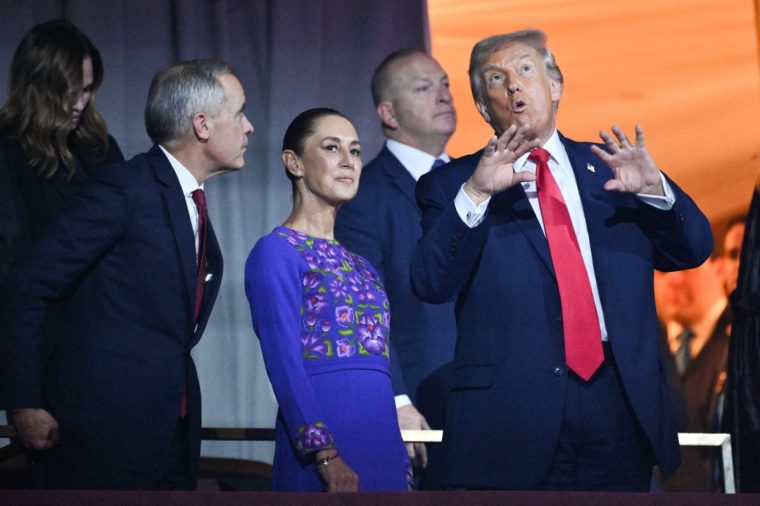
She said on Monday that she had declined offers of US military action from Trump and that US intervention against the cartels had been ruled out after a “good conversation” with him by phone.
“We continue to collaborate within the framework of our sovereignty,” she said. “We seek co-ordination without subordination.”
However, her comments suggested that she expected possible future statements from the US President threatening her country’s territorial integrity.
She hinted that, should US threats to take action in her country continue, she would seek another call with Trump.
How the US could use force in Mexico
The Americans appeared to be considering two different options for using military force in Mexico, said Dr Raúl Zepeda-Gil, teaching fellow on war studies at King’s College London and an expert in Mexican organised crime.
“One would be using drone strikes, similar to those that the US has used against Isis in the Middle East… They would use this to destroy laboratories, particularly fentanyl laboratories, but clearly they couldn’t do this without the Mexican government’s authorisation. Second is the distant idea of boots on the ground, which I highly doubt.”
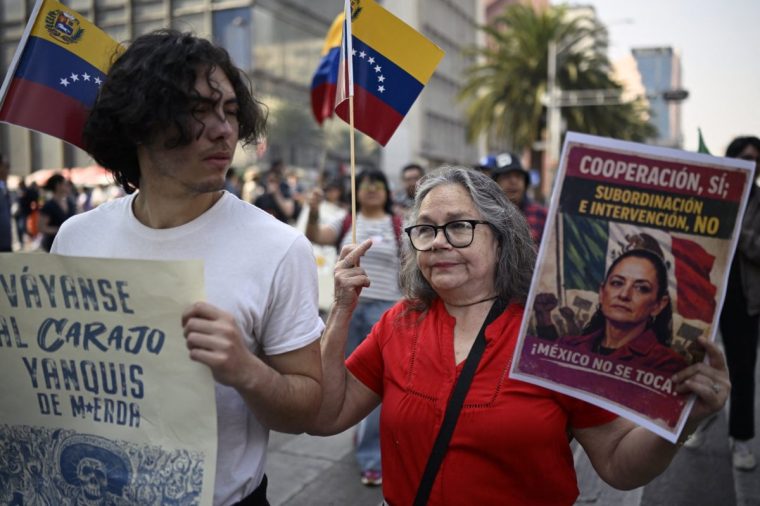
He pointed out that using airstrikes on Mexican targets without the authorisation of its government would be a violation of sovereignty, and Sheinbaum did not appear to want such intervention.
That position from Mexico appears unlikely to change, said Dr Javier Eskauriatza, assistant professor of criminal law at the University of Nottingham.
“In November last year, the Americans offered to Mexico to carry out strikes and Mexico rejected the offer and has been pretty steadfast in simply saying we’re happy to co-ordinate with you, we share your concerns but we reject explicitly the idea that you can use force or that US troops will be on Mexican soil.”
US intervention might prompt shoot-outs and retaliatory strikes
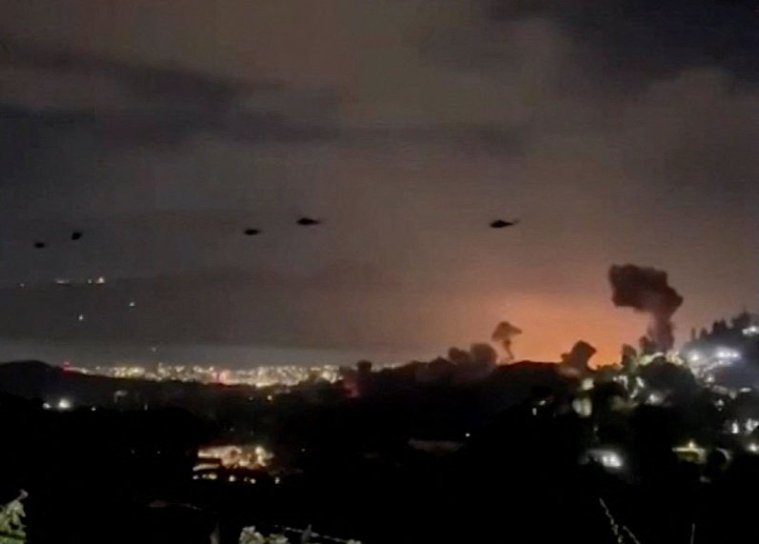
However, the precedent set in Venezuela, when US military went in without the authorisation of the country’s government, has worried countries in the crosshairs of the President that it could do so again.
“If Donald Trump decided that tomorrow he will send 400 Delta Force members across the border and into specific areas of Mexico, who knows what the response would be to that. I would predict that there would be shoot-outs and a lot of violence, but ultimately the Mexican armed forces are no match to the US, so the route forward is co-operation and dialogue,” Eskauriatza said.
( Photo: Reuters/UGC)
But the US itself might not escape unscathed in such a scenario.
If Trump took unilateral action against the cartels, we could see strikes within the US by cartels due to their strong cross-border links.
“If Donald Trump crosses the red line and attacks unilaterally, I think all bets are off,” said Eskauriatza.
“There’s also the possibility of retaliatory strikes in the US by the cartels that have very strong links there, so it’s a very different situation to Venezuela. It’s far more dangerous for the US, so I would hope that, through [US Secretary of State] Marco Rubio, Trump can be brought to the table and that the issue can be negotiated and co-operation can be the touchstone.”
To deter the US from intervening, Mexico has already taken action to attempt to placate the Trump administration and prove itself a reliable partner.
Sheinbaum pointed out that fentanyl trafficking from Mexico to the US had fallen by about 50 per cent over the past year.
Eskauriatza said: “Early last year, Mexico sent 10,000 national guard troops to the border, and soon after that Mexico captured and extradited 26 high-ranking cartel members and sent them to the United States.”
Your next read
Marco Rubio has been a key figure in the talks between the two countries regarding cartels and the war on drugs.
He spoke with Mexico’s foreign minister on Sunday about the need for stronger co-operation to dismantle Mexico’s drug networks and stop the trafficking of fentanyl and weapons, a State Department spokesman said.
Zepeda-Gil said: “Secretary of State Marco Rubio has said that he wants to see more tangible successes [in tackling the cartels] from the Mexican government. I’m not sure if [the US] will be able to define what tangible is, but if tangible means the strikes [on drug laboratories], maybe the Mexican government will find a way to accommodate that.”
