Since American forces captured Venezuelan President Nicolás Maduro, plunging the country into uncertainty, there have been hopes for a transition to democracy, the stabilization of its economy, a reduction in drug trafficking and conditions that might allow millions of Venezuelans abroad to return home.
But one factor will impede efforts at stabilizing the country: Venezuela’s hard-to-control border with Colombia, a shadow security zone that serves as a sanctuary and trafficking corridor for armed and dangerous organizations.
There are two main armed groups along the border:
- Leftist guerrillas in Colombia who have used Venezuelan territory to regroup, move supplies and evade counterinsurgency attacks.
- Leftist pro-government militias in Venezuela that have squashed dissent and exerted violence against civilians every time protests have erupted against Hugo Chávez and, later, Maduro.
Over time, these groups have often collaborated, turning a porous frontier into a shared operating space that any new Venezuelan government will have to dismantle.
The question, then, is whether any government — democratic or otherwise — can consolidate power in the presence of entities on both sides of an ungoverned international border with the most to lose from a change in the status quo.
Venezuela: Shielding Colombian leftist rebels
I have been studying armed groups in Colombia for a decade. My research explains why about one-third of disarmed fighters of the guerrilla group the Revolutionary Armed Forces of Colombia (FARC) have picked up arms again since a historic peace agreement in 2016.
The breakup in the organizational structure of FARC is one of these reasons. The other reason is Venezuela’s support.
When a handful of disarmed FARC commanders released a video in August 2019 announcing their return to taking up arms, they were able to do so because Maduro’s government had an ideological and strategic stake in keeping them afloat: a shared leftist, anti-imperialist world view that treated Colombia’s Marxist guerrillas as political allies.
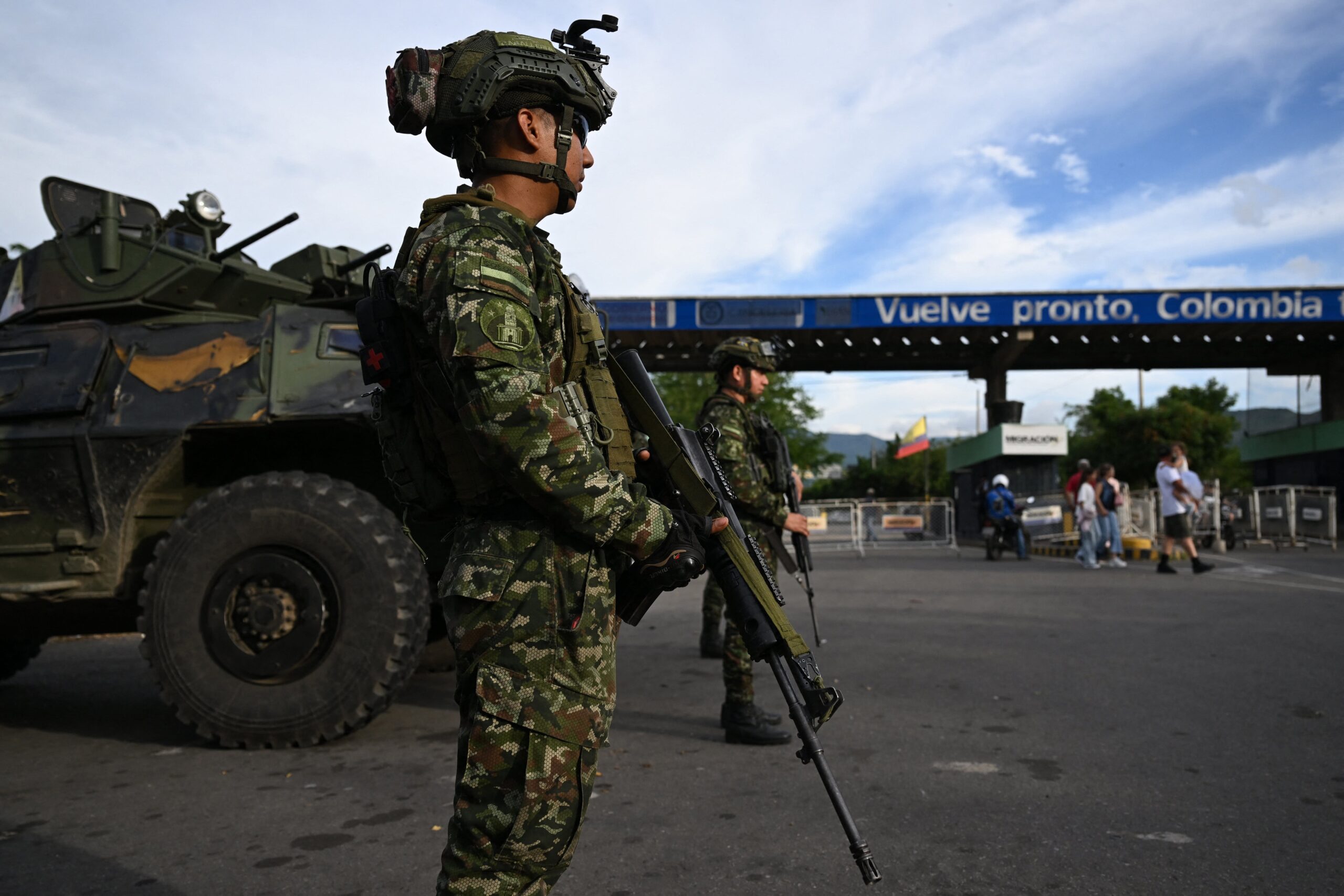
In fact, when I interview disarmed FARC combatants in Colombian provinces on the border for my research, they consistently describe Venezuela as a place where they could recuperate, treat injured fighters and regroup after Colombian military pressure, which was equipped and funded in part by the U.S. government.
In the border province of Norte de Santander, the FARC and another leftist guerrilla group, the National Liberation Army (ELN), collaborate to ship coca paste from the expansive coca fields of northeastern Colombia through alluvial paths and dirt roads to Lake Maracaibo in Venezuela. From there, speed boats take the cocaine to the U.S.
In one interview, I asked a former FARC commander to draw the trafficking route on a map. To my surprise, it zig-zagged across the international border between Colombia and Venezuela.
Any attempt to change the status quo in Venezuela will therefore be met with fierce resistance by Colombian armed groups who have for decades benefited from a porous border and a helping hand across it.
Armed militias mobilized by Chavez
Colombia has done its share of influencing Venezuela’s politics, in particular during the presidency of Álvaro Uribe from 2002 to 2010, when
Colombia was closely tied to the U.S. and was perceived by former president Chávez as a threat to his revolution.
After the failed April 2002 coup attempt against Chávez — when some members of the military and opposition briefly removed him from office before he returned within two days — the president responded by backing armed pro-government militias, known as colectivos, so they could help defend his rule.
For years, Maduro consistently armed and provided impunity to militias that run street-level checkpoints and show up fast across the country when the regime feels threatened.
In the days after Maduro’s recent capture, those groups were visibly deployed across the capital of Caracas, patrolling on motorbikes with rifles, stopping cars and demanding access to people’s phones — signalling that Chávez’s ideology still has muscle on the street, even if its top leader is now in an American jail cell.
Militias are one of the most destructive forces for a society. Once mobilized, they allow governments to avoid accountability for violence and repression. They are also difficult to get rid of. My research also shows that almost half of armed groups return to fighting after going through disarmament.
About the author
Sally Sharif is a Lecturer in Political Science at University of British Columbia. This article is republished from The Conversation under a Creative Commons license. Read the original article.
With armed violence in Colombia surging again and leftist armed groups entrenched along the frontier, any crackdown on Venezuelan colectivos risks pushing them across the border into Colombia, where allied guerrillas can shelter them until the pressure eases.
Sore spots for state-building
International borders are sore spots for countries attempting to consolidate power and transition to peace. The civil war in the Democratic Republic of the Congo has been raging for decades because of neighbouring Rwanda’s support for the rebels.
The World Bank ran into this reality in the Great Lakes region of Africa: it helped launch the Multi-Country Demobilization and Reintegration Program because efforts to demobilize fighters in one country didn’t work when armed groups and combatants were moving and operating across borders.
Similarly, the Colombia-Venezuela border has long fuelled cycles of violence in Colombia. It will now be the main sticking point in any Venezuelan efforts to reduce drug trafficking, consolidate power and transition to democracy and the rule of law.
