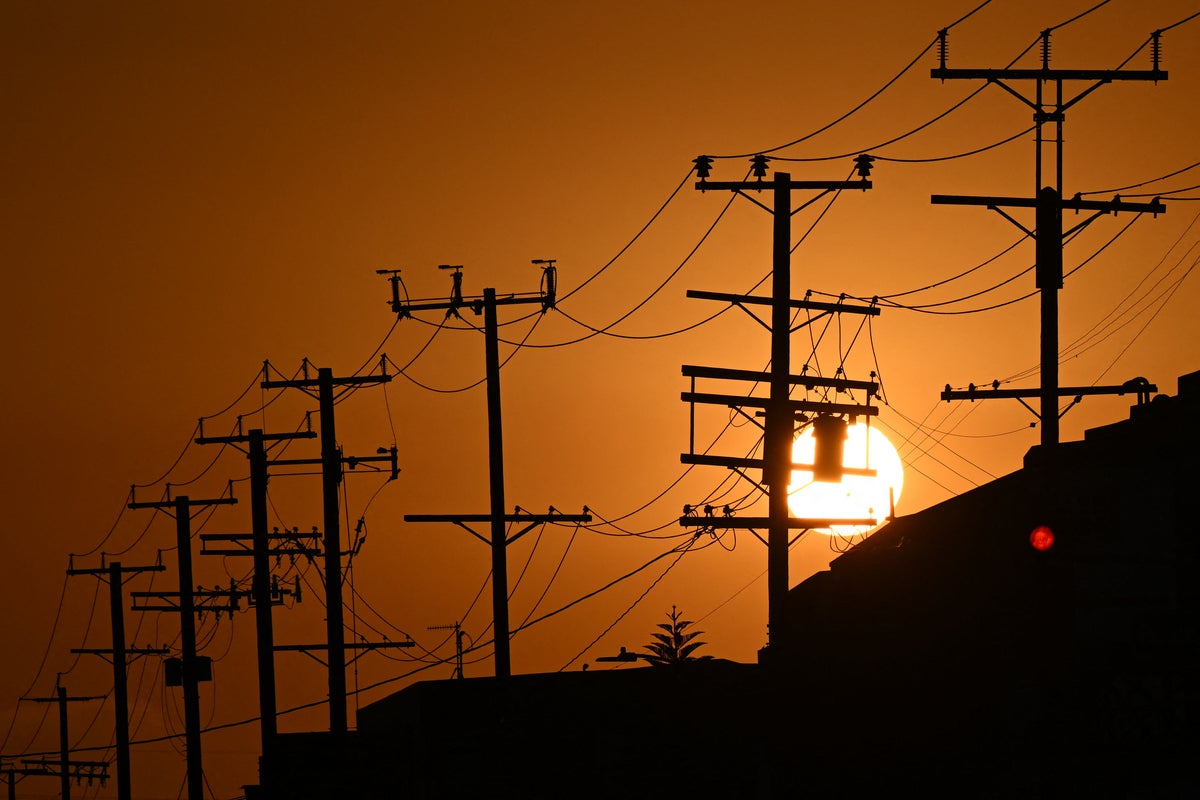
The East Coast of the United States could soon experience rolling blackouts as AI data centers gobble up more and more electricity, pushing the grid to the limit, according to a new report.
PJM, the organization that services nearly 70 million people in a 13-state corridor stretching from Kentucky to New Jersey, may be forced to trigger power outages during high demand periods, such as summer heat waves or winter freezes, The Wall Street Journal reported.
Mark Christie, a former head of the Federal Energy Regulatory Commission, said he used to believe the threat of blackouts was distant. “Now I’m saying that the reliability risk is across the street,” he said.
The AI boom has seen data centers cropping up across the U.S. but they are heavily concentrated in Northern Virginia, increasing demand for power and leading to soaring energy bills. “It’s killing my pockets,” a Maryland resident told Bloomberg in September. Another added: “You wonder, ‘what is your breaking point?’”
PJM has projected that power demand will increase by an average of 4.8 percent annually for the next 10 years — an unprecedented pace of growth. And ICF, a consulting firm, forecasts that demand in 2030 will surge 25 percent above 2023 levels, largely as a result of data centers.
PJM board Chairman David acknowledged the existence of “reliability challenges” but said “they are not unsolvable.”
Warning signs are already flashing red. This summer, heat waves surged demand for power on the PJM grid to “near-record highs” as consumers tried to cool their homes, according to the Journal. PJM responded by requesting that all power plants operate at full capacity. PJM also paid multiple large energy users, including factories, to cease operations.
While historically rare, rolling blackouts can be deadly. Over 200 people died in Texas in the winter of 2021 after the grid operator in the state ordered utilities to institute rolling blackouts to prevent complete grid failure amid freezing temperatures. Some Texans were without power for days.
A few months ago, PJM came up with proposals intended to balance the needs of both consumers and data centers. One plan said they would slash power to data centers during periods of strain.
Tech companies such as Amazon, Microsoft and Google opposed the plan, claiming it unfairly singled out data centers. They responded by offering their own proposals, which would make going offline voluntary.
Joseph Bowring, the head of Monitoring Analytics, has asked the federal government to step in, filing a complaint with the Federal Energy Regulatory Commission, which states that PJM should be prohibited from servicing new data centers unless it has adequate capacity.
Unless action is taken, “PJM will be in the position of allocating blackouts rather than ensuring reliability,” he wrote in November.
The looming threat of blackouts comes after multiple power plants in PJM’s service area shuttered as a result of economic factors and environmental policies, the Journal reported.
Elected officials and executives have sought to pin blame on one another.
In 2024, Pennsylvania Governor Josh Shapiro filed a complaint seeking a price cap on rate increases within the PJM market. “For the largest grid in the nation to have the fewest avenues for customers and their elected representatives to be heard is unacceptable,” he said.
Manu Asthana, the firm’s then-CEO, said that officials had exacerbated the problem with burdensome regulations. “We can do whatever we want in the markets,” he said, “but if our plants run into a hostile siting and permitting regime, they will not get built.”
Data centers have yet to provoke a strong reaction from most Americans, according to a December survey from Navigator, which found most have heard nothing or little about the construction of new centers. At the same time, there is bipartisan support for increased regulation, with 60 percent saying more should be done to curb its potential negative effects.
