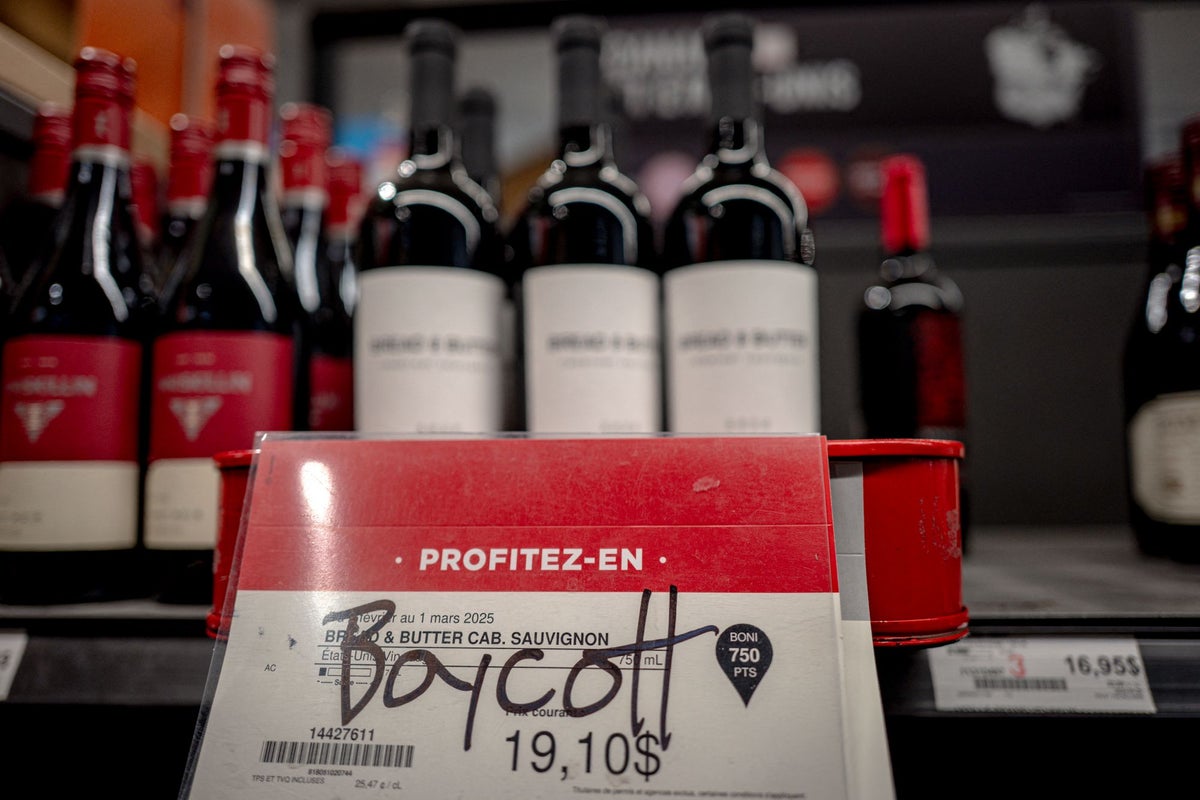
Almost three-quarters of Canadians continue to support boycotts of American alcohol brands in protest at President Donald Trump’s tariffs and trade wars, according to a new survey.
The president’s threat to use “economic force” to compel Canada into becoming the 51st state, imposition of 25 percent tariffs on its steel and aluminum, and rhetoric about crushing its auto industry since returning to power have only succeeded in angering America’s neighbor to the north and inspiring a renewed sense of patriotism.
Provinces such as Quebec and Ontario responded to Trump’s tough talk by pulling U.S. spirits and wines from their stores last year, encouraging shoppers to buy local.
A year on, just 20 percent of Canadians think it is time to back away from the trade war, with 73 percent remaining in favor of holding the line, according to a Nanos Research Group poll for Bloomberg.
The consequence of the commercial snub has been an astonishing 91 percent slide in sales of American wine to Canada since 2024, when it was the U.S.’s number one export market, according to a complaint submitted by vintners to U.S. Trade Representative Jamieson Greer.
In October alone, wine sales to Canada were down 84 percent year-on-year, and spirits were down 56 percent over the same period, according to the U.S. Department of Agriculture’s own data.
Individual brands have reported horror stories of their own, such as the Kentucky‑based distiller Brown‑Forman Corporation, which makes Jack Daniel’s and has seen organic net sales of its Tennessee whiskey to Canada plummet by more than 60 percent in the first half of the 2026 fiscal year.
Jim Beam has been hit by a slump in demand and has responded by pausing production at its main distillery in Kentucky, attributing the decline not just to Canada but also to declines in bourbon exports to Europe and Japan.
Minnesota’s Phillips Distilling Company was also forced to act after a 70 percent decline in sales of its products to Canada, opting to address the issue by outsourcing production to a Montreal-based contractor rather than continue distilling its northbound products at home.
Asked about the backlash, White House spokesman Kush Desai told The Independent: “President Trump’s skillful use of tariffs has created unprecedented market access for American products to economies that in total are worth over $30 trillion, with over one billion people.
“As these trade deals and the administration’s pro-growth policies of deregulation and working-class tax cuts take effect, it’s going to be bottoms up for American distillers, brewers, and winemakers.”
The administration has begun ramping up pressure on the Canadian Prime Minister Mark Carney’s government to lift the provincial bans, with Greer warning last month that doing so would be a condition for securing a successful review of the U.S.‑Mexico‑Canada Agreement this year.
The trade pact is vital to Canada, and talks on it were close to a resolution last October, only for Trump to shut them down when he became infuriated by an advert put out by Ontario Premier Doug Ford, which used a clip of Ronald Reagan denouncing the use of tariffs as a foreign policy weapon.
The repurposed remarks were taken from a speech broadcast from Camp David on April 25, 1987, in which the 40th president challenged the notion that protectionism is patriotic as he defended imposing higher tariffs on Japanese electronics imports.
“Over the long run, such trade barriers hurt every American worker and consumer,” Reagan warned. “High tariffs inevitably lead to retaliation by foreign countries and the triggering of fierce trade wars.”
Despite Trump’s blowup, Nanos’s research for Bloomberg also found Canadians in favor of Ford’s head-on approach to dealing with the president’s tariffs, which has seen him urge Carney to keep retaliatory counter-levies against the U.S. in place.
The Independent has reached out to Ford’s office for comment.
The dogged mood in Canada extends beyond the alcohol boycott: 71 percent of survey respondents told Nanos they are currently “less likely” to purchase other U.S.-made goods than before, and 11 percent are “somewhat less likely.”
Meanwhile, Statistics Canada noted Monday that Canadians were taking 28 percent fewer trips south by plane and car than last year, further evidence of the Neighbor to the North giving the U.S. the cold shoulder so long as Trump is in office.
