An Indigenous community in Canada is facing an ongoing water crisis that has prompted evacuations — but some residents are still trapped in the area as officials report slow progress, according to local media outlets.
About 700 people have been evacuated from Kashechewan First Nation in northern Ontario as of Tuesday morning, amid ongoing issues with water infrastructure, including the treatment plant and equipment that handles the sewage system, according to Canada’s National Observer.
But some are still trapped in the community, as officials tell the CBC the evacuation of all 2,300 residents is going slower than anticipated.
The rural community is only accessible by air during most of the year, Canada’s National Observer reports.
Kashechewan First Nation Executive Director Tyson Wesley told the CBC that “flights are kind of still at the same rate, even though we’ve asked to expedite the evacuation.” Local leaders are working with the provincial and federal governments to coordinate the evacuations, the outlet reports.
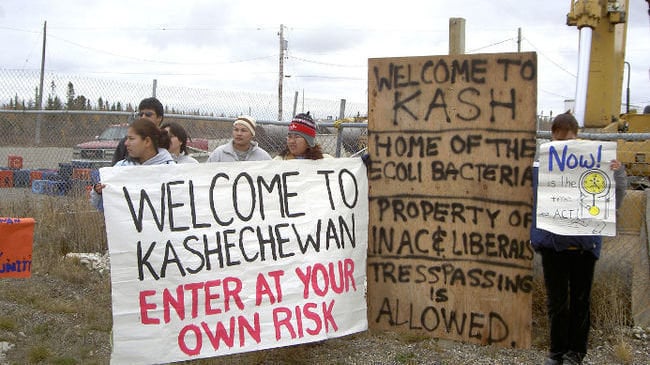
Kashechewan Chief Hosea Wesley declared a local state of emergency on January 4, citing issues with the water treatment and wastewater plants, the CBC reports. That same day, residents were instructed not to consume the water.
The declaration came after the water treatment plant pumps failed in early December, according to the CBC. This meant the chemicals used to treat the drinking water weren’t mixed in.
A spokesperson for Indigenous Services Canada told the CBC that officials are currently conducting water testing and completing repairs at the water treatment plant.
Keisha Paulmartin, 15, told the CBC last week that families are struggling to ration their water amid the ongoing emergency.
“The problem is some houses have a lot of kids and some houses of like three families in one house and one water bottle case per day,” Paulmartin told the outlet.
Chief Hosea Wesley told the CBC that the “response from both levels of government has been woefully inadequate and does not meet the level of urgency required.” He also asked the Canadian Armed Forces for assistance with the evacuations, but said he hasn’t received a response.
“We have asked for assistance from the Canadian Armed Forces to speed up the evacuation of our most vulnerable members and to assist with deliveries of bottled water. They have yet to commit to this, so our people are continuing to suffer, and we can only hope that a tragedy does not occur before they can get out safely,” he told the CBC.
A spokesperson for Canada’s Office of the Minister of Emergency Management and Community Resilience said that federal and local officials are working together to address the crisis.
“The federal government, through Indigenous Services Canada, is on the ground working with Kashechewan First Nation and the Province of Ontario to increase daily evacuation flight capacity through private sector contractors while work is ongoing in community to restore water treatment and sewage services,” the spokesperson told The Independent.
“We recognize the seriousness of the water crisis and the strain it is placing on the residents of Kashechewan,” they added.
The Independent has contacted the Kaschechewan First Nation, Indigenous Services Canada and Ontario’s Indigenous Affairs and First Nations Economic Reconciliation office for comment.
Access to clean drinking water has been an ongoing issue for the community. In 2017, more than 20,000 signed a change.org petition to “help the Kashechewan First Nations Reserve get access to clean water.”
Last year, Tyson Wesley told The Globe and Mail that the community had faced several water crises in the past.
“We had a water crisis for quite a while before the government really reacted to the situation that we were in. It was a really dramatic experience not being able to drink water from your tap and it’s still an ongoing issue,” he told the outlet.
“I look at my cousin right now, who’s close to his mid-20s, and he doesn’t drink water out of the tap, even in cities. It takes quite a while to break out of that psychological habit,” he added.
