A builder left with virtually nothing from his wealthy mum’s £5m-plus fortune is suing his sister over claims she plundered it to pay for meals at the Ivy and her daughter’s wedding at the Savoy.
Gary MacDougall, 70, had expected he and his family to split his multi-millionaire mum Jeanne MacDougall’s estate with his sister Sandra Thomas, 65, and her husband, Lloyd.
But after a change of her will in 2011 and a series of property sales and gifts, Gary was left with “nil” to inherit from his mum’s fortune when she died in April 2020.
He is now suing to overturn his mum’s last will and also accusing his sister and brother-in-law of plundering her fortune while she was still alive.
Mrs MacDougall’s estate was valued at £2.5m after she died, but Gary says large sums were illegitimately spent by his sister and brother-in-law on their family when she was alive but incapable of consent, including holidays, meals at the Ivy and their daughter’s five-star wedding at the Savoy Hotel.
Two properties he says should ultimately have gone to his family were also removed from the estate before his mum’s death, with one sold for £900,000 and another – a house in west London which he values at £1.7m – handed to Sandra and Lloyd.
At the High Court, Gary is now challenging his mum’s final will and the validity of a series of lifetime transactions in a bid to claim over £2m in cash and assets.

However, Sandra and Lloyd are fighting the case, claiming that although some of Mrs MacDougall’s money was spent on their family, it doesn’t ultimately matter as it was destined for Sandra anyway under both her final two wills.
The pensioner’s 2011 will was also explainable because she was closer to her daughter and had intended that her son got very little or nothing from her estate, having already received valuable business and property interests from her late husband, they say.
The case is set to go before the High Court for a 12-day trial dealing with the validity of the will and property transactions, and what happened to the pensioner’s money before she died.
In documents filed at the London court, Gary’s barrister Harry Martin describes how the family fortune derived from the siblings’ property developer father Alexander MacDougall’s “substantial real estate portfolio.”
Development properties were mainly bought up in the Acton and Ealing areas of west London, renovated and rented out, generating significant profits.
As a builder himself, Gary says he contributed to the family’s wealth by using his company to maintain the properties free of charge.
The barrister claims that over the years it had been made clear to the two siblings by their parents that they would ultimately receive “broadly equal financial treatment and inheritance.”
This included his father insisting to Gary that he would not require a significant pension pot as he would inherit property on which to live on in his retirement, said the barrister.
Following their dad’s death, the parties’ mum made a will in 2008, which Mr Martin said amounted to a “broadly equal” split between her son and his family on one side and daughter and son-in-law on the other.
Under that will, Gary and his family would receive properties in Avenue Crescent and Berrymead Gardens, while Sandra and Lloyd got most of the cash in her bank accounts and houses in Stuart Road and Avenue Gardens.
But another will was then made in 2011, under which all four properties went to his sister and brother-in-law, while they would continue to receive the majority of her savings.
Gary and Sandra would split the small amount that was left, but due to the costs and expenses of estate administration, that is “likely to be worth nil,” Mr Martin says.
Now suing, Gary claims the will is invalid due to “presumed undue influence,” having been made at a time when his mum was elderly and dependent on his sister and brother-in-law.
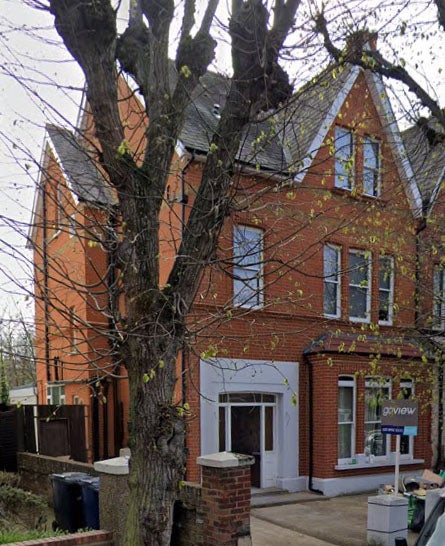
He is also challenging a 2015 gift to Sandra and Lloyd of the Avenue Crescent house, which he says was promised to him and worth £1.7m, but which his sister puts at under £1million.
The lease on the Avenue Gardens house was also granted at an undervalue – £400,000 when it was worth £615,000 – to his sister’s daughter, he claims.
And at the same time, he says his sister and brother-in-law were guilty of “financial abuse” of his mum while looking after her affairs under a power of attorney.
His barrister Mr Martin said more than £2m left Mrs MacDougall’s bank accounts between 2012 and 2020, with less than £500,000 being attributed to spending for her own benefit.
“From 2012, and continuing until the deceased’s death in 2020, the defendants began to treat the deceased’s bank accounts as their own personal bank accounts by incurring, or causing the deceased to incur, substantial expenditure for their own benefit and for the benefit of their family,” he said.
“In 2017, approximately £362,587.30 was expended from the deceased’s bank accounts, with the deceased’s debit card in use almost every day.
“The payments made by the defendants included, for example, paying for their daughter’s wedding at the five-star Savoy Hotel in London, shopping on Oxford Street, flights, spending on holiday in Spain, £30,000 to the car manufacturer Jaguar and meals out at the Ivy.
“The claimant estimates from an analysis of the deceased’s bank statements provided by the defendants that, between January 2012 and April 2020, the total sum of £2,153,049.88 was expended from the deceased’s bank accounts.
“The same analysis indicates that only a small proportion of the expenditure – currently estimated to be circa £468,034.23 – represents expenditure which was attributable to the deceased.”
Attacking the 2011 will, Mr Martin claims it should be ruled invalid and her earlier 2008 will reinstated, under which Gary would be entitled to the Avenue Crescent house and the proceeds from the 2017 sale of Berrymead Gardens – likely to total well over £2m in assets.
“Between approximately 2011 and 2020, the deceased suffered from dementia due to Alzheimers Disease, which quickly progressed to the point where she had difficulty recognising her family and caring for herself,” he said.
“During this same time period, the deceased lived with the defendants and then in a care home, and was almost entirely reliant upon the defendants to care for her and to look after her finances.”
He continued: “The available evidence shows that the defendants were always present and involved when the deceased dealt with her financial and testamentary affairs. There is no example during the relevant period of the deceased dealing with such matters on her own.
“Both the making of the 2011 will…and the lifetime transactions which are the subject of this claim form part of a pattern of behaviour directed to divestiture of the deceased’s estate in favour of the defendants and their family.”
For Sandra and Lloyd, barrister Alexander Learmonth KC accepts that they exceeded their authority under the power of attorney, but did not do so deliberately, having misunderstood what they were entitled to do.
“They believed that as attorneys they were entitled to act in any way that the deceased could herself have acted and that they should do whatever they believed the deceased wanted or would want them to do on her behalf,” he says in their defence to the claim.
“The defendants acted at all times in good faith and never acted in bad faith in what they sincerely believed to be the best interests of the deceased and in accordance with what they understood to be her wishes, having regard to the advice she had received and the wishes she had when capacitous of reducing her liability to inheritance tax by spending generously on herself and others, and by making lifetimes gifts in favour of her intended beneficiaries.”
He said that, even under the 2008 will which Gary supports, his sister would inherit all of the money in the accounts from which the money was spent.
“It follows that if, on the taking of an account or otherwise, any transactions carried out by the defendants on the named accounts were found to be void or liable to be rescinded, the money should be restored to the named accounts from which it came, and would then pass to the second defendant according to the terms of the 2011 will or the 2008 will.”
Arguing for the 2011 will, he said it was intended to result in Gary getting virtually nothing and was logical due to the difference in relationships Mrs MacDougall had with her children.
“The deceased had a particularly close and affectionate relationship with…her daughter, in contrast with her more distant and often fractious, but still loving, relationship with the claimant,” says the barrister.
She and Lloyd had helped and cared for Mrs MacDougall consistently ever since her husband went into care in 2002, while Gary had “done very little for her, and that only grudgingly.”
“The claimant was often rude and disrespectful to the deceased when she worked for him as his bookkeeper, accountant and company secretary, which the deceased resented,” he claims.
“By the time of the 2011 will, no symptoms of dementia had been reported and no diagnoses of dementia or Alzheimers disease had been made.
“The defendants were not involved in the will-making process.
“To the defendants’ knowledge, the deceased’s intention behind the 2011 will, in particular by listing and specifically devising or bequeathing all her assets, including her bank accounts, was to ensure that there would be little or no residuary estate, so that the residuary gift to the claimant and [Sandra] would have little or no effect.
“It is denied that the deceased was mentally infirm at the time of the 2011 will or that she was vulnerable to influence.”
The case is set for a trial later this year.
