U.S. citizens whose parents first entered the country illegally are volunteering for military service to take advantage of a policy that promises to shield their relatives from deportation, according to a report.
The development comes in response to President Donald Trump’s increasingly contentious crackdown on undocumented migrants, which exploded into controversy last week when an ICE agent taking part in immigration raids in Minneapolis shot dead a mother-of-three protesting the federal agency’s presence in her neighborhood.
Footage of the killing of Renee Nicole Good was closely scrutinized on social media and led to protests taking place in cities across the United States this weekend.
With fear rife in minority communities, The New York Times reports that some children of migrant families are offering to join institutions like the National Guard in order to protect their parents under the Parole in Place program, which shields the undocumented relatives of servicemen and women from deportation and offers an expedited path to citizenship.
The policy was introduced by the George W Bush administration in 2007 to give Armed Forces personnel peace of mind in response to the case of Sergeant Alex R Jimenez, who died fighting for the U.S. in the Iraq War at the same time as his wife, back home, was being deported to the Dominican Republic.
The Times spoke to Sergeant First Class Rosa Cortez, a recruiter for the Oregon National Guard, who said that while she previously hoped to inspire would-be recruits to sign up by emphasizing her own personal accomplishments over her 20 years of service, the opportunity to join is now being seen more as a means of securing protection.
Cortez said that she herself was the daughter of undocumented migrants and had spent her childhood picking fruit in the orchards of the Pacific Northwest to make ends meet, often living temporarily in tents or barns.
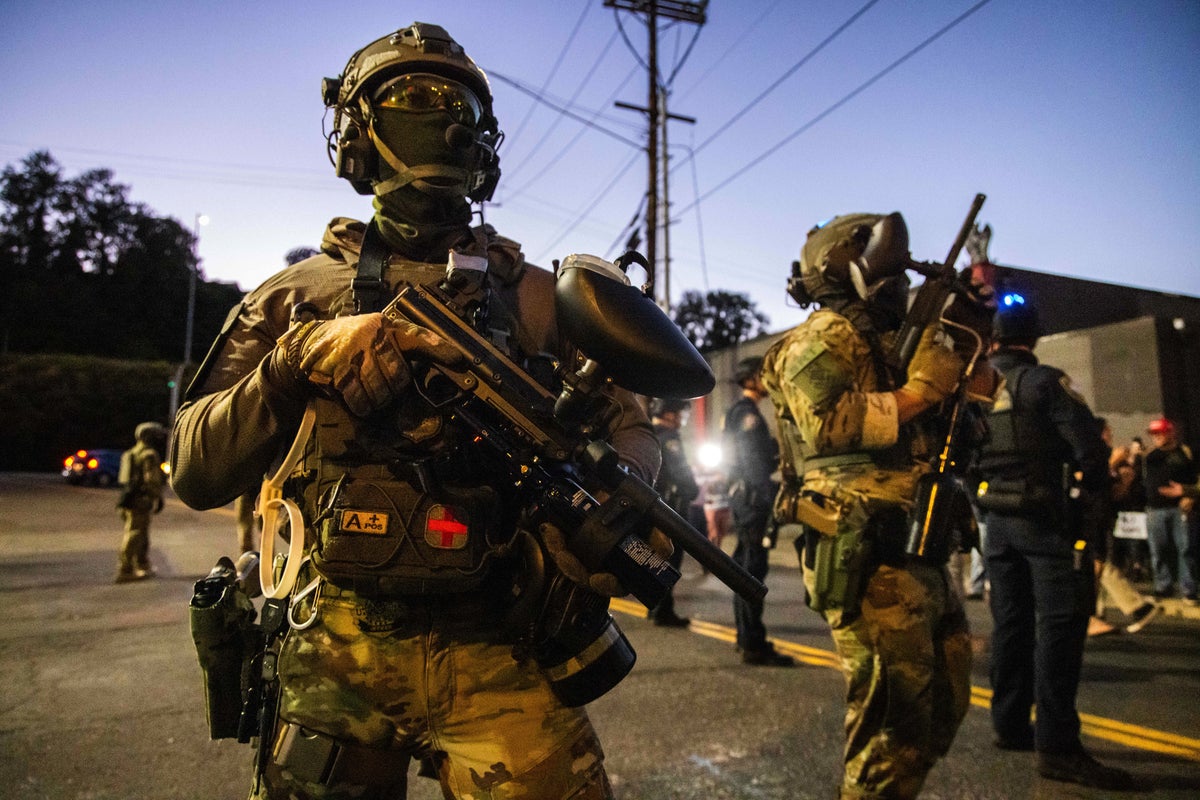
She spoke of her pride at being part of the Guard, particularly when helping out in disaster relief situations. However, under Trump, its members have more often been federalized and sent into Democrat-run cities on policing missions, a strategy increasingly running into problems in court and inspiring unrest on the ground.
Cortez described helping Lindsey Vasquez, 20, join the Guard to protect her family. Vasquez made a success of the opportunity and went on to become a logistics specialist while also working at a department store, eventually helping her parents secure permanent residence.
Cortez also discussed the case of Juan, 23, a recent volunteer who first enquired about joining because, he said, “I’m hoping to get my mother qualified for PIP so that she doesn’t have to leave the country.”
Juan told the sergeant he was motivated by fear after seeing three masked federal agents arrest a family friend at a branch of Home Depot.
Despite expressing doubts and reservations, Juan ultimately passed the entrance exam just before Christmas and is currently advancing with his application.
“He’s a good kid, full of energy,” Cortez said of him, unconcerned that he might be joining for the wrong reason. “I think he’ll be a great leader.”
