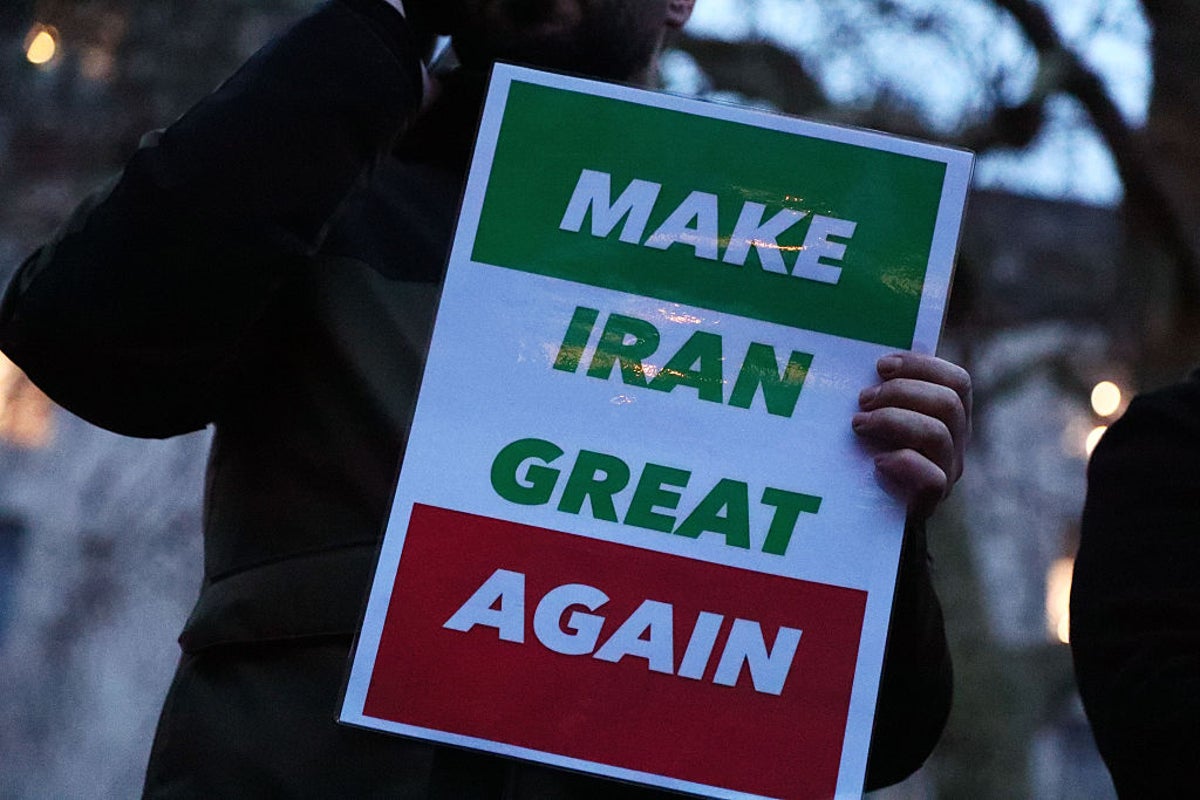
Conversations on Capitol Hill are shifting rapidly towards Iran following a flurry of statements from the White House indicating that the president is considering military action aimed at destabilizing the Iranian government or protecting demonstrators who have come under attack by government security forces.
The White House confirmed Monday that the president was considering airstrikes within Iran’s borders, an act that would mark a largely unprecedented step for the American government but would not be outside the realm of possibility for Donald Trump, who last year directed strikes to disable Iran’s nuclear weapons development program.
Karoline Leavitt, the White House press secretary, told reporters that air strikes remained on the table but stopped short of saying that the president would consider deploying U.S. forces on the ground to protect protesters, a notable distinction given that Trump has signaled his own openness to deploying forces in such a manner inside Venezuela.
“One thing President Trump is very good at is always keeping all of his options on the table,” said Leavitt. “And airstrikes would be one of the many, many options that are on the table for the commander-in-chief. Diplomacy is always the first option for the president.”
The president said on Truth Social that his administration would intervene to stop widespread violent retaliations against protesters in Iran. Photos and videos appearing to be from near the city of Tehran show mourning Iranians searching for relatives amid rows of back body bags at a warehouse near a hospital where victims of the government crackdown were sent. Exact figures for the crackdown are unknown, but are believed to be in the hundreds, according to aid groups.
“We’re looking at it very seriously. The military is looking at it, and we’re looking at some very strong options,” Trump told reporters on Air Force One Sunday as he returned to Washington.
Now, the likelihood of U.S. intervention in Iran is at its highest point since the days leading up to the strikes last year that targeted several Iranian nuclear sites at Fordo, Isfahan and Natanz. Sen. Lindsey Graham, long one of the strongest supporters for military strike against the theocratic Iranian government, traveled on Air Force One with the president last week and has urged Trump both publicly and privately to get the U.S. involved. On Sunday, a second GOP senator spoke to a local news station and said that the Ayatollah Khamenei’s future as leader of Iran likely now had an expiration date.
“The Ayatollah there should recognize that his time is limited,” said Sen. Mike Rounds of South Dakota, a member of the Intelligence Committee, on KOTA Territory News. “We should do what we can to support [the protesters].”
“The president’s going to be very careful about committing troops. He’s always careful about committing troops. I think he still will be in the future,” Rounds continued. He added that he thought such a commitment was off the table for now, but that other means of support for the protests were still up for discussion.
The U.S. has not yet taken steps to build up forces near Iran in the Red Sea or surrounding waters, as was done before hostilities last year. In the case of Venezuela, the president’s campaign of military strikes against suspected drug trafficking boats and raid to capture Nicolas Maduro occurred after a carrier group was sent to the region. News reports indicate that the president will be presented with a range of options at a Tuesday briefing with top members of the military.
But the war drums on Capitol Hill are beating with enthusiasm as foreign policy hawks salivate over the prospect of ridding the board of a major and persistent opponent to U.S. interests in the Middle East, even if the president’s strikes on Venezuela failed to gain the support of a clear majority of Americans and divided his MAGA base.
Sen. Rick Scott, a Florida Republican, spoke to reporters last week and was cryptic in his remarks about what specifically the administration should do — but repeatedly said he trusted both the White House and Israel’s government to “do the right thing” in the days ahead.
Lawmakers on both sides of the aisle are frequent supporters of resolutions in support of the Iranian people’s right to self-determination, and as a result, a potential strike aimed at destabilizing the regime or stopping violent suppression of protests could find a bipartisan show of support in Congress.
One foreign policy hawk on the Democratic side is once again indicating his support for possible military action: John Fetterman, who also made similar statements about the strike to capture Maduro in Venezuela.
Though he voted for a War Powers resolution to constrict further Venezuelan strikes, Fetterman cheered the Maduro raid and on Monday told CNN that he would support military action to support protesters in Iran facing violent crackdowns.
“Iran is one of the world’s top terrorist underwriters. And now you have that poisonous regime now in spiral. So why wouldn’t we want to support that? And those brave protesters– they’ve probably killed more than 600 by now…why wouldn’t we want to have…the kinds of targeted action that could break that regime?”
His words were celebrated by Graham, who reposted them on X, writing: “[O]n many issues, particularly foreign policy, you have a clear-eyed assessment and a common sense approach. The protestors in Iran have had it with the brutal regime. President Trump told them he has their back, which was truly a moment in history. Senator Fetterman, your statement that you would support military force to protect the protestors and weaken the regime is welcomed and impactful. It will be a big shot in the arm to those brave Iranians in the streets demanding the end of their oppression.”
Responding to concerns that the strikes could embolden the regime or generate popular support for the government, Fetterman responded that he supported the strikes only if they “make sense” in terms of weakening the U.S.’s enemy.
“I think we can all agree that the world would be better, safer, and more just if you could break that regime,” he insisted.
