In the sky above Iran, Elon Musk and Starlink are helping protesters to break the internet blackout
The timing could not be better for the world’s richest man.
Facing a possible UK ban after his Grok chatbot was used to make sexualised images of children, Elon Musk is being hailed as a hero by Iranian protesters for the vital role his Starlink satellite network is playing in supporting the latest uprising.
A grid of 10,000 satellites, operated by Musk’s SpaceX and originally designed to spread high-speed internet to remote locations, Starlink has become an essential tool for Iranians trying to evade heavy censorship.
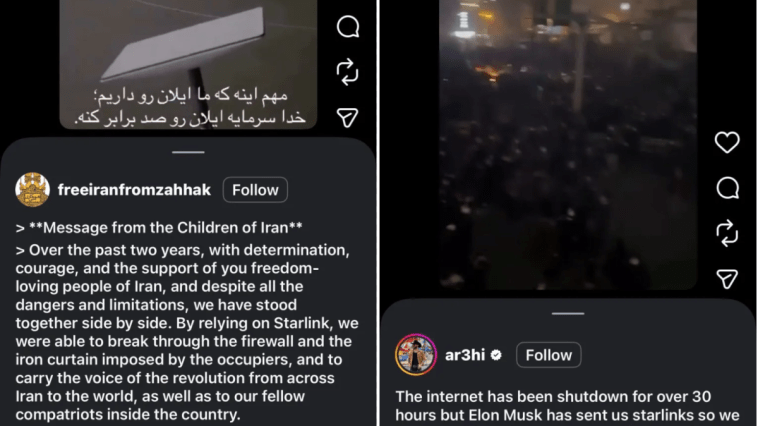
Despite Iran imposing an internet blackout, protesters have been able to organise themselves via social media and connect with the outside world. Social posts like this, which has been verified by The i Paper, are often the only insight into the latest protests in the country.
Despite threats of fines and prison sentences for using the network, there are an estimated 50-75,000 smuggled Starlink terminals – dish/antennas – active inside Iran, giving unfiltered access to the internet.
Musk first confirmed the activation last June, stating “the beams are on”, signalling that Starlink satellite coverage was live over Iranian airspace.
One activist, who goes by Freeiranfromzahhak on Instagram, highlighted its value this week. They said in an post: “By relying on Starlink we were able to break through the firewall and the iron curtain imposed by the occupiers and to carry the voice of the revolution from across Iran to the world, as well as to our fellow compatriots inside the country.”
Nazanin Boniadi, the Tehran-born British actress, who starred in films including Iron Man, said: “We are now three days into an internet blackout. The very limited information that I have received has been because of the existence of Starlink terminals and the activation of Starlink recently, and and it’s not good news.”
Boniadi told Sky News she had heard that thousands of Iranians had died in the protests and called for international support for those taking to the streets.
Military signal jammers try to take Starlink down
Now the Tehran regime, frustrated in its bid to shut down all external internet links, has hit back, launching a cyber war against the lifeline Musk’s network has given to its opponents.
On Sunday, protesters reported widespread disruption to Starlink satellite internet connections, with claims that the authorities are using signal jamming equipment to block communications during the demonstrations.
Exiled opposition figure Ilia Hashemi said on social media that simultaneous access to 80 per cent of contacts using Starlink had been cut off during a half-hour period.
Protesters have gathered in Tehran neighbourhoods such as Sattarkhan and Saa’dat Abad where Starlink terminals are known to have been active. But Hashemi said that previously unknown signal blockers are now being used to target frequencies used by Starlink satellites in those local areas, according to social media posts tracked by opposition channels.
The BBC, like other media organisations unable to report from Iran, is using Starlink to connect with activists and source videos of clashes between protesters and security forces, which are then analysed by its Verify unit to assess if official casualty figures are correct.
A doctor who contacted the BBC via a Starlink satellite connection said Tehran’s main eye specialist centre, Farabi hospital, had gone into crisis mode with emergency services overwhelmed.
However Alireza Manafi, an internet researcher, warned users to exercise caution because Starlink connections could potentially be traced by the government.
How Musk and Starlink have gone geopolitical
Musk, whose Starlink was previously used by Iranian protesters in 2022 following the death of a 22 year-old woman in police custody, has embraced the role that his network can play in political upheaval.
The billionaire authorised Starlink to provide free broadband in Venezuela, following Donald Trump’s operation to seize Nicolás Maduro, to “support the people”.
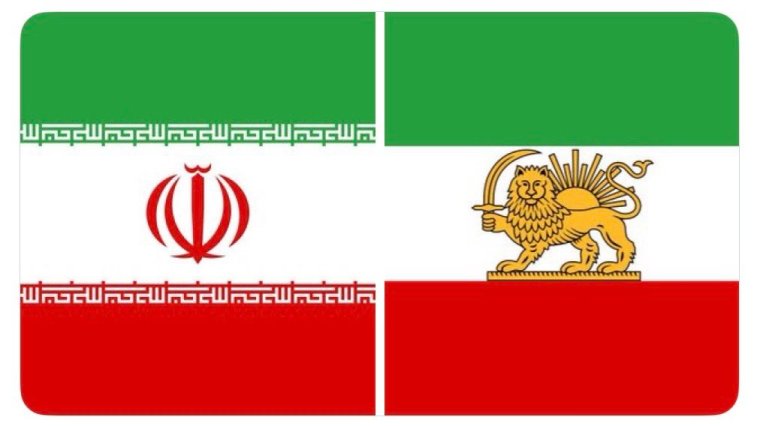
Musk’s social platform X has replaced the Iranian flag emoji with an image of the pre-1979 revolution monarchy flag with the lion and sun symbol, brandished by some demonstrators.
Starlink’s current prominence can only enhance the value of a business which analysts suggest could be worth $175bn as a standalone within Musk’s SpaceX.
But repressive regimes are not taking kindly to Musk’s ability to create tools allowing citizens to evade their censorship measures.
Both China and Russia pushed back against Starlink this year, accusing it of endangering spacecraft and helping criminals and terror groups, with no evidence to back their claims. Beijing is said to be gaming out how Starlink might be blocked in the case of a war with Taiwan.
Your next read
Starlink’s support of democratic uprisings against state oppression also helps Musk with some damage limitation. His alignment with far-right and nationalist political figures has prompted dismay among millions of now former Twitter users.
Starlink’s positive role may now weigh on the UK ministers considering blocking X in a row over Musk’s Grok chatbot. There is global concern about the AI app which is able to create and spread deepfake pornographic images. The X platform has been flooded with pictures – created by Grok at users’ requests – depicting partially stripped women and children.
Musk has accused the UK Government of finding “any excuse for censorship”, and called Sir Keir Starmer’s administration “fascist”, highlighting that other AI programmes had also created similar images
