37 aid organisations have been banned by Israel over what it says is failure to comply with new restrictions
Israel said it is banning some of the world’s leading aid organisations from Gaza, in a move that threatens to worsen the Strip’s deadly humanitarian crisis.
Médicins Sans Frontiéres (MSF), ActionAid and the International Rescue Committee are among 37 aid organisations which face a ban in Gaza and the occupied West Bank.
The i Paper understands that at least some of the aid organisations did not receive official notice of the ban and found out through media reports.
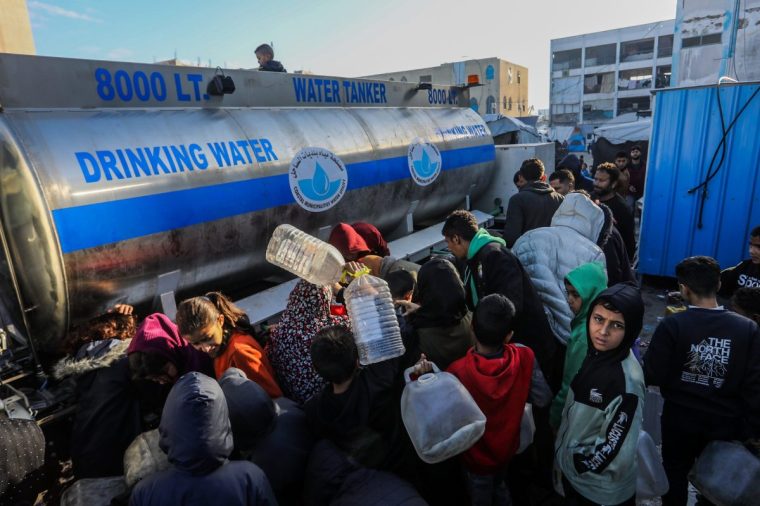
Gaza is in the throes of what the UN has called a “man-made” crisis, with famine declared earlier this year. At least 100 children have died from malnutrition, the Strip’s healthcare system has all but collapsed and mass displacement has left families sleeping in tents through the winter months.
Why have the organisations been banned?
Israel has launched a new set of requirements for NGOs working in Gaza, including sharing more information about their staff, funding and operations, which it says is intended to prevent the exploitation of aid by Hamas.
There are several grounds for rejection, ranging from denying the existence of Israel or the Holocaust, to promoting “delegitimisation campaigns” against Israel and supporting the prosecution of Israeli security forces in court.
Israel’s ministry of diaspora affairs, which is in charge of the registrations, said that the aid organisations were being banned because of their “refusal to provide complete and verifiable information regarding their employees”, which it said was critical to preventing “the infiltration of terrorist operatives into humanitarian structures”.

COGAT, the Israeli ministry in charge of aid, said this “raises genuine concern regarding the nature of their activities and the entities with which they operate”.
But NGOs have previously pushed back on the regulations, saying they endanger the working of their operations.
The Humanitarian Country Team of the Occupied Palestinian Territory – a forum of UN agencies and more than 200 local and international organisations – previously warned that the new registration system “fundamentally jeopardises” humanitarian operations in Gaza and the West Bank.
“The system relies on vague, arbitrary, and highly politicised criteria and imposes requirements that humanitarian organisations cannot meet without violating international legal obligations or compromising core humanitarian principles,” it said.
Foreign ministers from ten countries, including the UK, said that the new requirements on NGOs were “restrictive” and that any attempt to stem their ability to operate was unacceptable.
Israel has claimed that an investigation found two employees from MSF had links to Palestinian militant groups – an alleged sniper for Hamas and a member of Palestinian Islamic Jihad.
MSF said it took the allegations “extremely seriously” but said there was no substantiated evidence for this and that it would never knowingly employ people engaging in military activity.
“Any employee who engages in military activity would pose a danger to our staff and our patients,” the organisation said, adding that publicly making such claims without substantiated evidence puts humanitarian staff at risk and undermines life-saving medical work.
Israel also said MSF had refused to complete its registration process and had not given the required list of employees.
How will the ban affect Gaza?
MSF said that the ban “will have devastating consequences for Palestinians” and that it was working urgently to resolve the issue.
“In Gaza, MSF supports around 20 per cent of all hospital beds and supports the delivery of one in three babies,” a spokesperson said. “If MSF is prevented from working in Gaza, it will deprive hundreds of thousands of people from accessing medical care.”
Israel has disputed MSF’s description of the reach of its operations.
Bond, the UK network for organisations working in international development, called for an immediate reversal of the decision, saying that the ban “would have a devastating impact on access to essential services for millions of Palestinians”.

“At this critical moment, amid harsh weather conditions and as levels of famine remain acute in large parts of Gaza, civilians urgently require an increased and unimpeded flow of humanitarian assistance – including healthcare, water and sanitation, and nutrition – to prevent unnecessary suffering and further loss of life,” it said.
Bond added: “International NGOs are integral to the humanitarian response in Gaza and the West Bank, and must be allowed to operate safely, independently, and without restriction.”
Israel said that the banned organisations had not brought aid into Gaza under the current ceasefire and their previous contribution amounted to only about 1 per cent of the total aid volume.
It said that the decision would “not result in any future harm to the volume of humanitarian aid entering the Gaza Strip” and that 4,200 trucks will continue to enter every week via the UN, donor countries, the private sector, and more than 20 other international organisations.
But the ten foreign ministers this week expressed serious concerns about the “renewed deterioration of the humanitarian situation”, which they described as “catastrophic” and “appalling”.
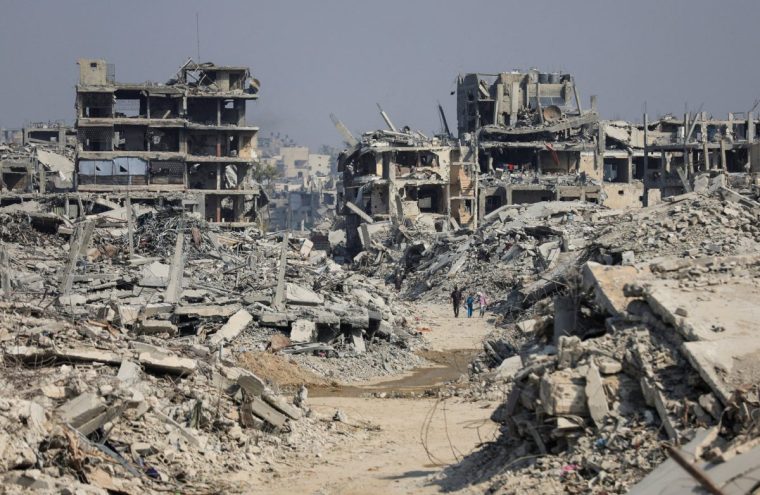
They warned that deregistration for key aid agencies would have a “severe impact” on access to essential services. More than half of health facilities in Gaza are only partially functional and face shortages of essential medical equipment and supplies, the group said.
Meanwhile, the near total collapse of sanitation infrastructure has left 740,000 people vulnerable to toxic flooding, while 1.3 million people still require urgent shelter support.
An IPC report this week found that while the situation had improved since famine was declared in August, 1.6 million people – the majority of Gaza’s population – face “high levels of acute food insecurity”.
“Whilst the amount of aid going into Gaza has increased since the ceasefire, the response remains severely constrained by persistent impediments on humanitarian access,” the ministers said.
They also called for the lifting of “unreasonable” restrictions on items considered to be dual use. Some shelter building and medical equipment has been banned because Israel considers that it could be used by Hamas.
The humanitarian crisis has been further exacerbated by winter weather, with temperatures dropping and heavy rainfall.
