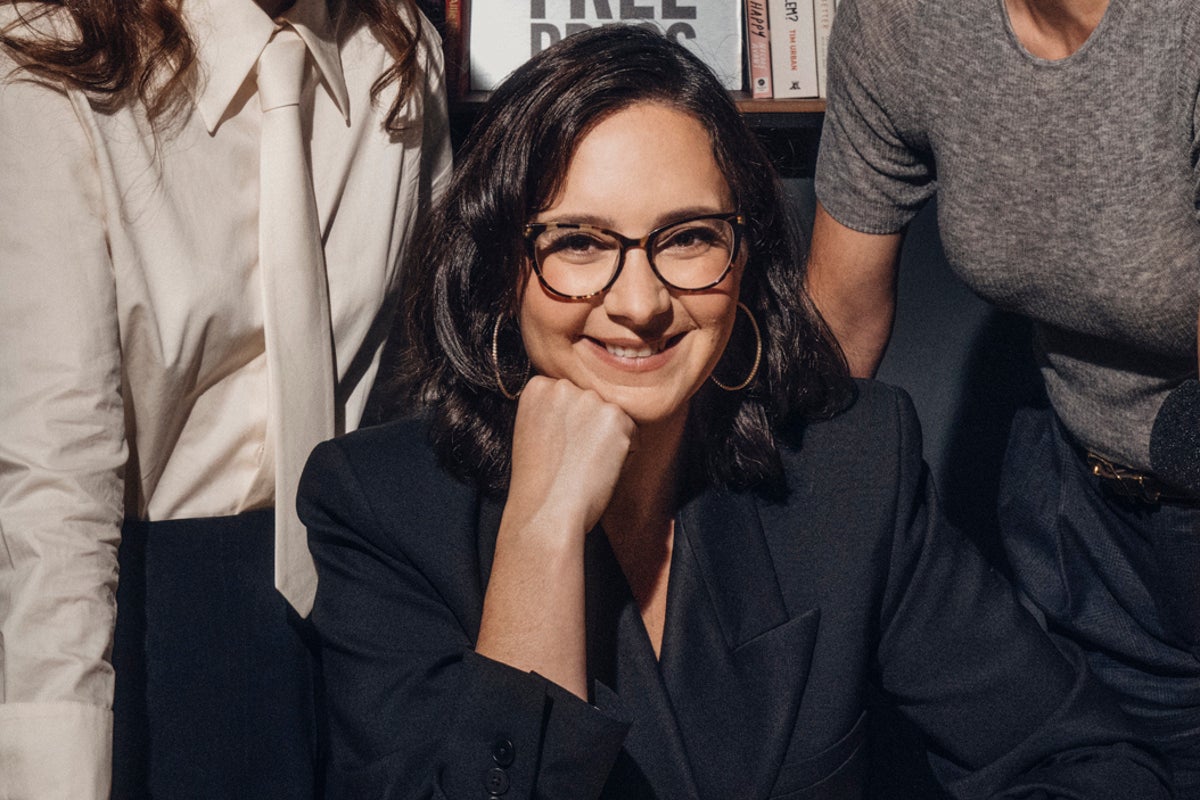
Following Bari Weiss’ much-derided decision to spike a 60 Minutes segment on the Trump administration shipping Venezuelan migrants to El Salvador’s notorious CECOT prison, correspondent Scott Pelley said Weiss needed to take her job as CBS News editor-in-chief “more seriously” as it wasn’t “part-time.”
Pelley’s pointed remarks about the newsroom’s leader came during the show’s Monday afternoon meeting, where Sharyn Alfonsi – the segment’s reporter – took issue with Weiss’ lack of communication over the story’s last-minute postponement while 60 Minutes executive producer Tanya Simon defended Alfonsi’s reporting.
Meanwhile, Weiss continues to come under fire for yanking the story, which has threatened to spark a network “revolt” over what Alfonsi called a “political” decision that reeked of corporate interference.
On top of that, she has also opened herself to mockery after the CECOT segment was widely shared online on Monday evening after it was discovered that the CBS News had apparently delivered the full 60 Minutes episode to Canadian network Global TV before removing Alfonsi’s report. While the video has since been removed from Global, the segment continues to make the rounds on social media.
“On Monday, our Canadian broadcast partner, Global TV, mistakenly published on its app the ‘Inside CECOT’ segment that CBS News decided to delay for a future broadcast,” a CBS News representative told The Independent. “While Global TV has removed the episode from their app, this segment has since been posted on social and digital media. Paramount’s content protection team is in the process of routine take down orders for the unaired and unauthorized segment.”
Weiss, the “anti-woke” founder of center-right blog The Free Press who was installed as CBS News’ top editor in October by Paramount chair David Ellison, defended her decision to pull the segment during Monday morning’s editorial meeting.
“I held that story because it wasn’t ready. While the story presented powerful testimony of torture at CECOT, it did not advance the ball,” she said, adding that other news organizations had already done similar reporting. “The public knows that Venezuelans have been subjected to horrific treatment in this prison. So to run a story on this subject two months later, we simply need to do more, and this is 60 Minutes.”
Weiss also said that “we need to be able to make every effort to get the principals on the record and on camera,” insisting “that is my North Star, and I hope it’s the North Star of every person in this newsroom.”
Alfonsi, in an email she sent to 60 Minutes colleagues after Weiss spiked her story that was quickly leaked to the media, noted that the segment had been “screened five times and cleared by both CBS attorneys and Standards and Practices” and was factually correct. “In my view, pulling it now – after every rigorous internal check has been met is not an editorial decision, it is a political one,” she stated.
Alfonsi also pointed out that 60 Minutes had repeatedly reached out to DHS, the White House and the State Department for responses to the report.
“Government silence is a statement, not a VETO. Their refusal to be interviewed is a tactical maneuver designed to kill the story,” she declared. “If the administration’s refusal to participate becomes a valid reason to spike a story, we have effectively handed them a ‘kill switch’ for any reporting they find inconvenient.”
The New York Times reported this week that while Weiss pressed for numerous changes to the story, specifically seeking more input from the Trump administration while taking issue with the description of the Venezuelan migrants deported to the violent El Salvador prison, she didn’t weigh in until very late in the process.
While the segment was first screened for network journalists on December 12, Weiss did not attend that screening on the four others over the following week, according to the Times. It wasn’t until Thursday that she finally watched the segment and offered her suggestions, which the show incorporated into the story. 60 Minutes then told the network on Friday afternoon that it was fine to promote the report to viewers.
“Then, around midnight at the end of Friday, less than 48 hours before the segment was set to air, Ms. Weiss weighed in again, this time with more substantial requests,” the Times added. “She asked producers to add a last-minute interview with Stephen Miller, the White House deputy chief of staff — a relatively straightforward task for a print journalist who needs to only make a phone call, but a logistically difficult one in TV news, where a camera and lighting crew is often required.”
In her memo to some of the 60 Minutes staff that weekend, she said “we’d be doing our viewers a disservice” if the piece were run as is. Eventually, three hours before the show was set to air Sunday, the network released an editorial note stating that the segment would not be part of that evening’s program.
“Allies of Ms. Weiss argue that as editor in chief, she has a clear prerogative to weigh in on any of the journalism produced by her newsroom,” the Times reported. “Still, even some of her supporters privately conceded on Monday that she was still learning the ropes of broadcast journalism and that she had mishandled the timing of her feedback.”
After Weiss doubled down on her decision during Monday morning’s editorial call, which also included a swipe at Alfonsi for her strongly worded email, staffers at 60 Minutes expressed their frustration over how Weiss had handled the situation.
Pelley, who has expressed his displeasure about corporate interference with 60 Minutes before, raised concerns about Weiss’ management style and wondered why she waited until the last minute to offer her suggestions – especially since she had skipped all the screenings of the segment.
“It’s not a part-time job,” he said in the meeting. Additionally, Pelley noted that if Weiss wanted to be more involved in the day-to-day editing of 60 Minutes stories, she should not only attend the early screenings but also communicate directly with the correspondents.
“She needs to take her job a little bit more seriously,” he said.
Alfonsi, meanwhile, has pointed out that Weiss never reached out to her or her producer during her late push to yank the segment. “Disagreement requires discussion,” Alfonsi said in the meeting.
The correspondent’s remarks appeared to be a retort to Weiss’ comments in the editorial call, which saw the editor said that she wanted a newsroom “where we are able to have contentious disagreements about the thorniest editorial matters and do so with respect.”
As for Weiss’ push for more feedback from the administration, which she argued in her weekend memo was necessary because “there’s a genuine debate here” that Trump is “operating within the bounds of his authority,” CNN’s Brian Stelter reported Tuesday that 60 Minutes made a concerted effort to get government responses.
According to Stelter, the Alfonsi story was in the works for months, and the first official request for comment – along with an interview with Kristi Noem – was sent to DHS in November.
“Multiple follow-ups were sent in December. Pretty standard stuff,” Stelter added. “Noem’s press secretary said on Dec. 15, after several nudges, ‘we will let you know when we can accommodate this but not right now.’ The next day, the ‘60’ team sent a detailed list of questions to the department.”
On top of that, when the program reached out the White House for comment last week, Trump spokesperson Abigail Jackson merely responded with a media-bashing jab that 60 Minutes decided not to include in the segment.
“60 Minutes should spend their time and energy amplifying the stories of Angel Parents, whose innocent American children have tragically been murdered by vicious illegal aliens that President Trump are removing from the country,” Jackson wrote back to 60 Minutes.
Ultimately, though, much of the criticism over the odd timing of Weiss’ sudden push to radically change the segment and then pull it from the air centers on the suspicion – both internally and externally – that this is related to Paramount’s hostile takeover bid of Warner Bros. Discovery, which Trump has said he’ll be very “involved in.”
While Trump has spent the past few months gushing over Ellison – whose father is ultrawealthy Oracle founder and loyal Trump supporter Larry Ellison – following the Paramount merger with the Ellisons’ Skydance, the president has publicly soured on the father-son duo because of his anger over recent 60 Minutes broadcasts.
David Ellison, who has leveraged his family’s close relationship to Trump as a key factor in his WBD offer, has looked to quell the president’s fury behind the scenes by claiming he and Weiss had no advanced warning about the Marjorie Taylor Greene segment that enraged Trump. Shortly after that story aired, the president groused that the new ownership of Paramount was “no better” than the previous one.
Meanwhile, just hours before Weiss sent her memo to 60 Minutes calling for significant changes and a delay to the CECOT story, Trump once again raged about the program and the Ellisons.
“I love the new owners of CBS,” Trump griped. “Something happens to them, though. 60 Minutes has treated me worse under the new ownership… they just keep hitting me, it’s crazy.”
On Monday morning, Paramount sent a revised bid for Warner Bros. that included Larry Ellison agreeing to personally backstop the $40 billion of equity financing – a key sticking point for WBD’s board of directors.
