The US President is used to getting his own way, but experts say if he were successful in his case against the broadcaster, the consequences would be extremely dire
The way Donald Trump described the BBC this week was similar in word and tone to how he’d mocked the murder of the widely admired film director Rob Reiner and his wife just 24 hours earlier.
Reiner, he alleged, was tortured and struggling, but “once very talented”. Similarly, said Trump, the BBC, which he is suing for defamation in the hope of securing $10bn (£7.5bn), was “formerly respected [but] now disgraced”.
It is not really clear who writes Trump’s social media posts or drafts his lawsuits. But the sentiments they contain are 100 per cent authentic Trump.
It is hard to think of someone else in public life, especially one who has ascended to such Olympian heights as the Oval Office, who so repeatedly claims they are a victim.
In the case of Reiner, the assertion he made, too tasteless even for many Maga hardliners, was that the man behind films such as Spinal Tap and When Harry Met Sally was somehow responsible for his own death because he’d “driven people crazy” with his obsession about the president.
(Reiner’s son Nick, 32, who’d previously talked about addiction problems, is set to face two counts of first-degree murder with “special circumstances of multiple murders”.)
As for the BBC, Trump alleges a Panorama documentary from last year, which spliced together two sections of a fiery address he gave on 6 January 2021, hours before supporters stormed the US Capitol, “intentionally, maliciously and deceptively [doctored] his speech in a brazen attempt to interfere in the 2024 presidential election”.
Since he returned to the White House, the US President has been used to getting his way with almost no pushback.
Even as he asserted presidential rights in a way with no precedent, he has largely faced no challenge from the Republican Party, crushed whatever resistance Democrats offered, and appealed any lower courts’ rulings that went against him to the Supreme Court, which has been largely deferential.
Companies, law firms and universities that want to do business with him have been muted, and two earlier defamation lawsuits levelled at ABC News and CBS News were settled. (In the case of the broadcasters, it was widely seen that the companies made strategic commercial decisions, rather than ones based on the likelihood of Trump succeeding in court.)
The BBC has now joined both the New York Times and the Wall Street Journal in deciding to fight. Experts say the BBC has good reason for doing so.
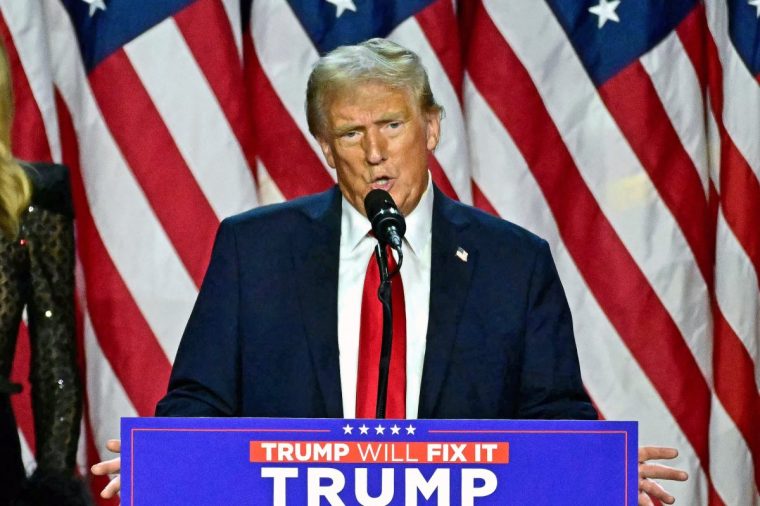
Professor Gregory Germain, of Syracuse University, told The i Paper the biggest hurdle Trump faces to win the case is the First Amendment to the US Constitution, which guarantees the right to free speech and an independent media.
“The protection for the press is at its absolute apex when a high-profile public figure like Trump is seeking damages for criticisms of his political speech,” he adds. “He has all of the tools necessary to respond and present his side. The American tradition for courts to stay out of the political arena dates back to the elections of George Washington and Thomas Jefferson.”
Another challenge for Trump, says Gavin Phillipson, of the UK’s University of Bristol, is to show he suffered harm, especially in Florida, where the 34-page suit has been filed.
“The programme was not shown there,” Phillipson, author of Media Freedom under the Human Rights Act, says. “He won Florida very handily. I don’t know how he’d go about showing there was any damage to his reputation.”
Trump has plenty of supporters who’ve been rallying to his side since he first suggested he’d sue the broadcaster in November, following the revelation that a so-called whistleblower, Michael Prescott, had contacted the BBC board about the edit.
Among those accused of using the incident to attack the BBC for what they perceive as its left-wing bias are former British Prime Minister Liz Truss.
Truss, 50, who served just 50 days in Downing Street, told Fox News the BBC had “lied, they’ve cheated, they fiddled with footage, both in the case of President Trump, but also covering up what’s happening in Britain, whether it’s mass migration, whether it’s our economic problems”.
Indeed, Truss, who has been trying to remake her career in the US, speaking at events such as the Conservative Political Action Conference, or CPAC, and showing up at last year’s Republican National Convention, is cited in the lawsuit as an “authority” on the BBC’s alleged bias.
Given that most experts believe Trump has little chance of winning the lawsuit and may even see it thrown out at its first hearing, it is a matter of speculation what he’s hoping to achieve.
Did he simply get bad advice and think the BBC would roll over, as have so many others?
If Trump were to lose, the affair would cost him little and he’d easily claim it was another incident where a court had treated him unfairly. (It would count, at the same time, as one in a growing number of challenges the president is encountering eleven months into his second term, be it a mini-revolt among supporters over the Epstein files, or a handful of off-year election races where Republicans lost badly.)
If he were successful, we’d be in very different, much more serious territory.
Your next read
Germain says it would be “existential”.
“There would no longer be free speech or a free press in this country,” he says.
Germain says he believes Trump cannot win.
But the US President is hugely popular in Florida, and were it to reach the hands of a Floridian jury, there’d be few bold enough to bet on its outcome.
