‘The way the Russians learn is often clumsy and wasteful, but it’s getting faster’
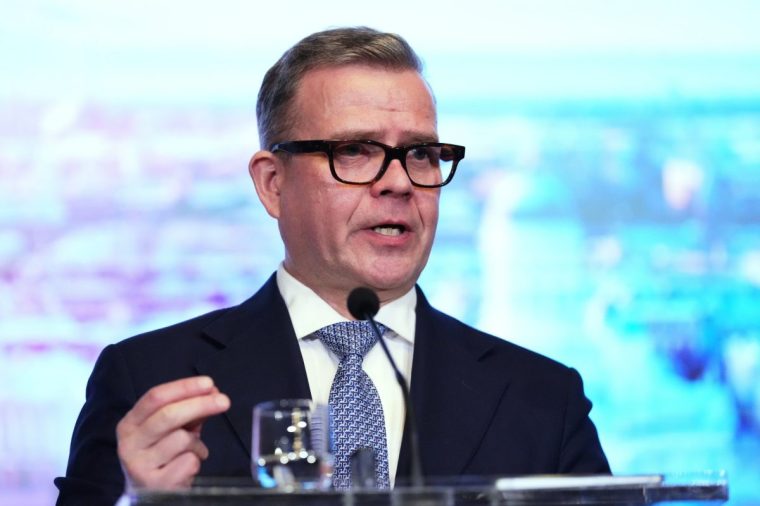
With an 830-mile border with Russia, it’s no surprise that Finland pays close attention to Moscow’s military plans. The prime minister, Petteri Orpo, has warned that peace in Ukraine would paradoxically increase the potential threat to Nato.
Whether or not, as Donald Trump claimed, the world is “closer now than we have been, ever” to a deal over Ukraine, whenever it does happen, Russia will be free not only to return many of its troops to positions along its frontiers with Nato, but also to move ahead with ambitious plans to rearm and expand its military.
At present, the war is taking up perhaps 95 per cent of Russia’s operational ground forces. From marines assigned to the Pacific Fleet to the specialist Arctic warfare troops of the 200th Guards Motor Rifle Brigade, units from across the Russian Federation were desperately assembled for the fight, once it became clear that Putin’s expectations of a quick and near-bloodless victory in 2022 were desperately far from the mark.
Many of these units are now just shadows of their former selves, while others have been reconfigured. The 200th Brigade, for example, has been expanded this year into the 71st Guards Motor Rifle Division. More than just the exigencies of the conflict in Ukraine, these moves also foreshadow an ambitious plan for post-war expansion.
At the beginning of 2023, the then-defence minister Sergei Shoigu laid out a plan to increase the total Russian armed forces to 1.5 million personnel, an increase of 150,000 from its size at the start of the war. Putin claimed this had been achieved at the end of 2024, but on Monday, Chief of the Defence Staff Air Chief Marshal Sir Richard Knighton suggested that in reality it was closer to 1.1 million. Nonetheless, once the terrible drain from Ukraine is staunched, there is little doubt that the Russians will continue to try and reach this new target.
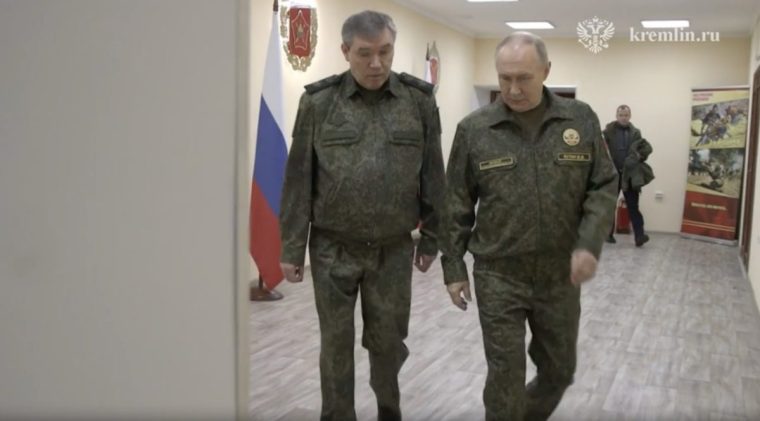
To this end, preparations are being made for the deployment of these extra troops once they are no longer committed to Ukraine.
The 71st Division, for example, is part of the 14th Army Corps, headquartered in Murmansk on the Arctic Ocean coast, which is in the process of being expanded into a full Army that could threaten both Norway and Finland in the High North. Further south, Finland also faces the Leningrad Military District’s 6th Army and the newly established 44th Army Corps. Most of their troops may be in Ukraine, but the construction of new barracks, bunkers and firing positions continues, ready for their pivot back to facing Nato.
This is a common pattern along the alliance’s eastern flank, with extra troops likely to be deployed in Belarus, close to the Polish border.
The Russians are looking to upgun, too. In some cases, this simply means modernising existing kit. This week it was announced that the 11th Army Corps in Kaliningrad, a Russian exclave sandwiched between Poland and Lithuania, was going to swap its ageing T-72s replaced with the latest T-90 tanks.
It will also mean reconfiguring them not least with the hard-won tactical lessons from Ukraine. The Russian military remains top-heavy and hierarchical, and Chief of the General Staff Valery Gerasimov has failed to grasp the doctrinal changes necessary to maximise this. Nonetheless, it would be dangerous to underestimate the Russians’ capacity to learn those lessons and adapt accordingly.
The irony is that even as the Russian troops we see in social media clips look like vagabonds and scavengers, assaulting Ukrainian lines on foot or on motorbikes, in practice, as Sir Richard has warned, Moscow is building “a massive, increasingly technically sophisticated, and now, highly combat-experienced, military.” Those ragamuffins are advancing under the cover of drones and advanced electronic jammers, and when they spot Ukrainian forces, they can call in strikes by accurate long-range rockets or massive glide bombs to clear their way.
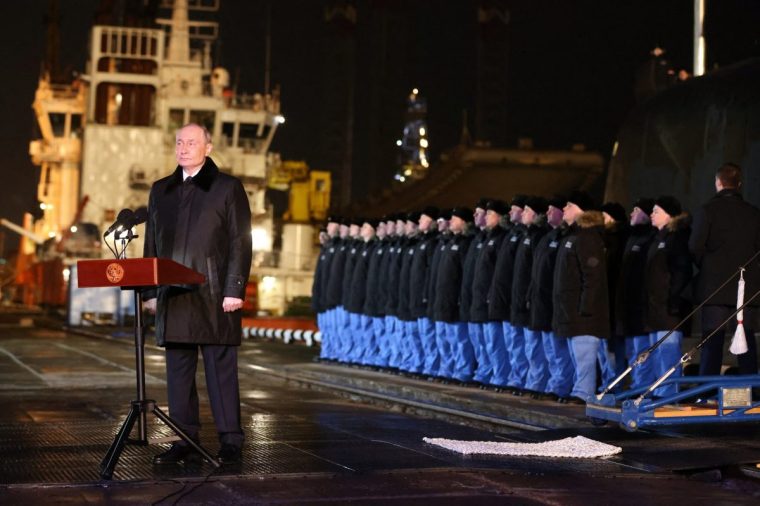
(Photo: Gavriil Grigorov/AFP)
As a British Ministry of Defence staffer warned: “The way the Russians are learning is often clumsy and wasteful, but it’s getting faster and faster. We’re still just getting our heads round the [drone] revolution, for example, but they’re now making it.”
Of course, capability is only one part of the threat equation, the other being intent. Performatively belligerent rhetoric by pundits and out-of-favour politicians aside, there is no clear sense that Putin has any desire to attack Nato. Nonetheless, he may – or a successor may – prove even more aggressive and reckless.
Your next read
Either way, the depressing irony is that a long overdue peace in Ukraine will also necessarily free up Russia to redeploy its army back on Nato’s borders and plough the estimated 6 per cent of GDP it spends on security into its expansion and modernisation.
As one Finnish army officer observed to me last month, “we want peace – but peace for Ukraine is going to mean more worries for us.”
