Three white-tailed eagles, including a chick representing the first wild-born generation in England for centuries, have disappeared under highly suspicious circumstances.
Authorities are now appealing for public assistance as police investigate the fate of the birds, integral to a crucial reintroduction programme.
The satellite tags of two of the eagles – one being the recently fledged youngster – were discovered discarded near their last known locations, both having been deliberately severed.
The third bird’s tracker has ceased transmitting data, with no sightings reported since.
These magnificent raptors, often dubbed ‘flying barn doors’ due to their impressive 8ft (2.4m) wingspan, were once prevalent across southern England until persecution led to their eradication by the 18th century.
A collaborative effort between Forestry England and the Roy Dennis Wildlife Foundation initiated their reintroduction on the Isle of Wight in 2019, releasing 45 white-tailed eagles to date.
The project has seen significant success, with several breeding pairs forming and six chicks born in the wild in England – a milestone not achieved since the 1780s.
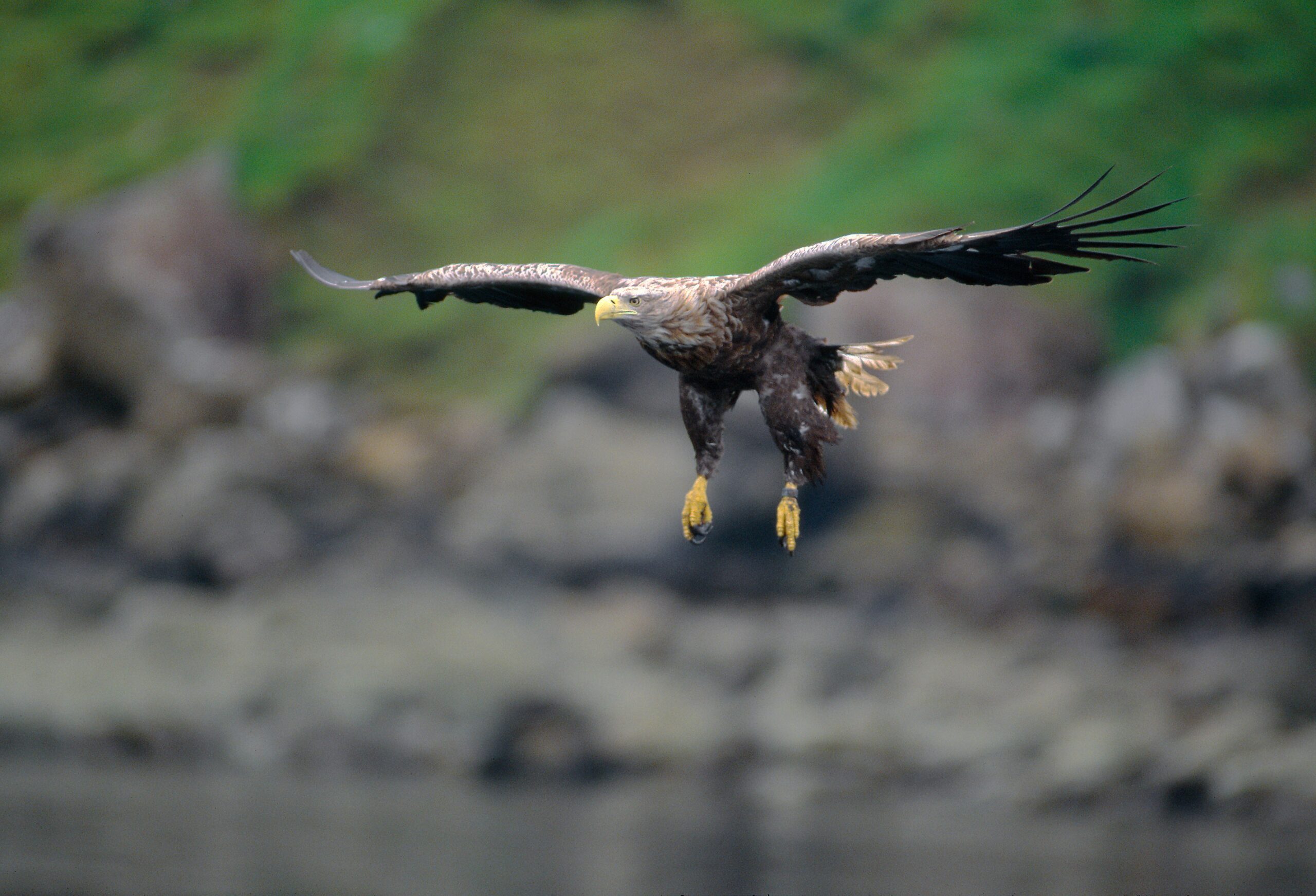
The birds, which are the UK’s largest bird of prey, have previously been successfully reintroduced in Scotland.
Forestry England said any targeting of the birds would potentially impact the long-term success of the English project.
Tim Mackrill from the Roy Dennis Wildlife Foundation said: “We monitor the satellite data, showing the bird’s minute-by-minute movements, on a daily basis and always investigate any suspicious or unusual data.
“It was devastating to find the stolen and dumped tags, particularly for the chick in Sussex who fledged this summer and had only just begun its life.
“So many people in the area had shared the joy of seeing these birds breed again after hundreds of years and our ongoing monitoring has shown how well they were fitting into the landscape.
“To have that destroyed just a few months later is deeply shocking.”
Steve Egerton-Read, white-tailed eagle project officer for Forestry England, said: “We are returning this lost species to the English landscape and have had so much support from the public.
“These special birds are helping people connect with natural world and showing how, with a little bit of help, nature can thrive.
“We are asking the public to show this support again by encouraging anyone who has information that may help the police investigation to come forward.”
The disappearances are being investigated by several police forces.
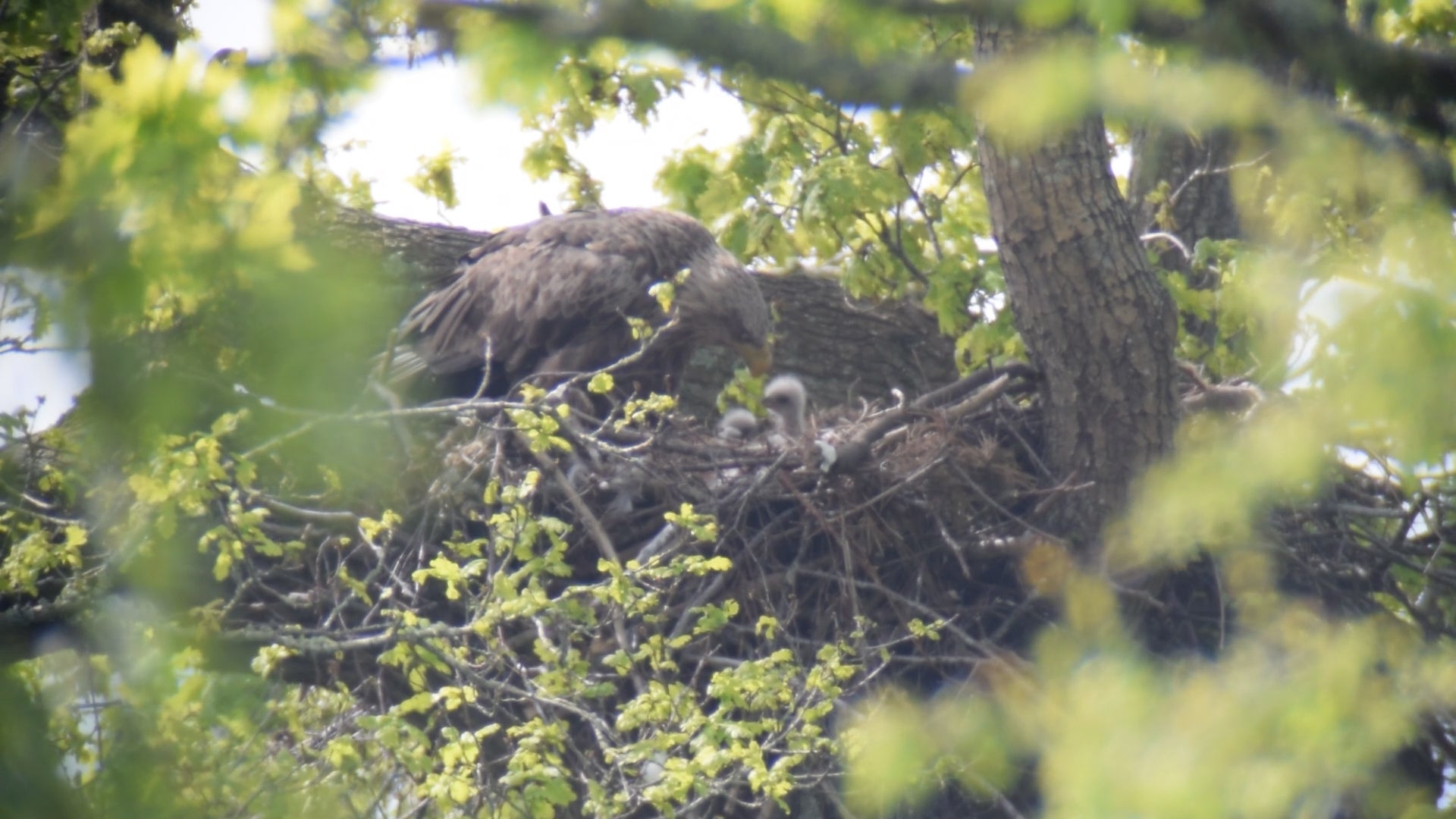
A satellite tag belonging to one of the chicks that fledged from a nest in Sussex was retrieved from the River Rother, near Petersfield, on September 26.
It had been removed using a sharp instrument and searches in the area to locate the body of the bird have been unsuccessful.
Sussex Police are appealing for information from anyone who was in or around Harting Down and Petersfield on the evening of 20 September 2025, who may have seen the bird or any suspicious behaviour, quoting incident number 769.
Dyfed Powys Police are investigating an incident in which a satellite tag that had also been cut off with a sharp instrument before being hidden was recovered in remote moorland on 13 September. Searches to find the eagle’s body have also been unsuccessful.
The force wants to hear from anyone around the Gwgia Reservoir, Tregynon, between 11am and 1pm or on access land near Bryn y Fawnog, between noon and 3pm on 13 September, quoting crime reference 137.
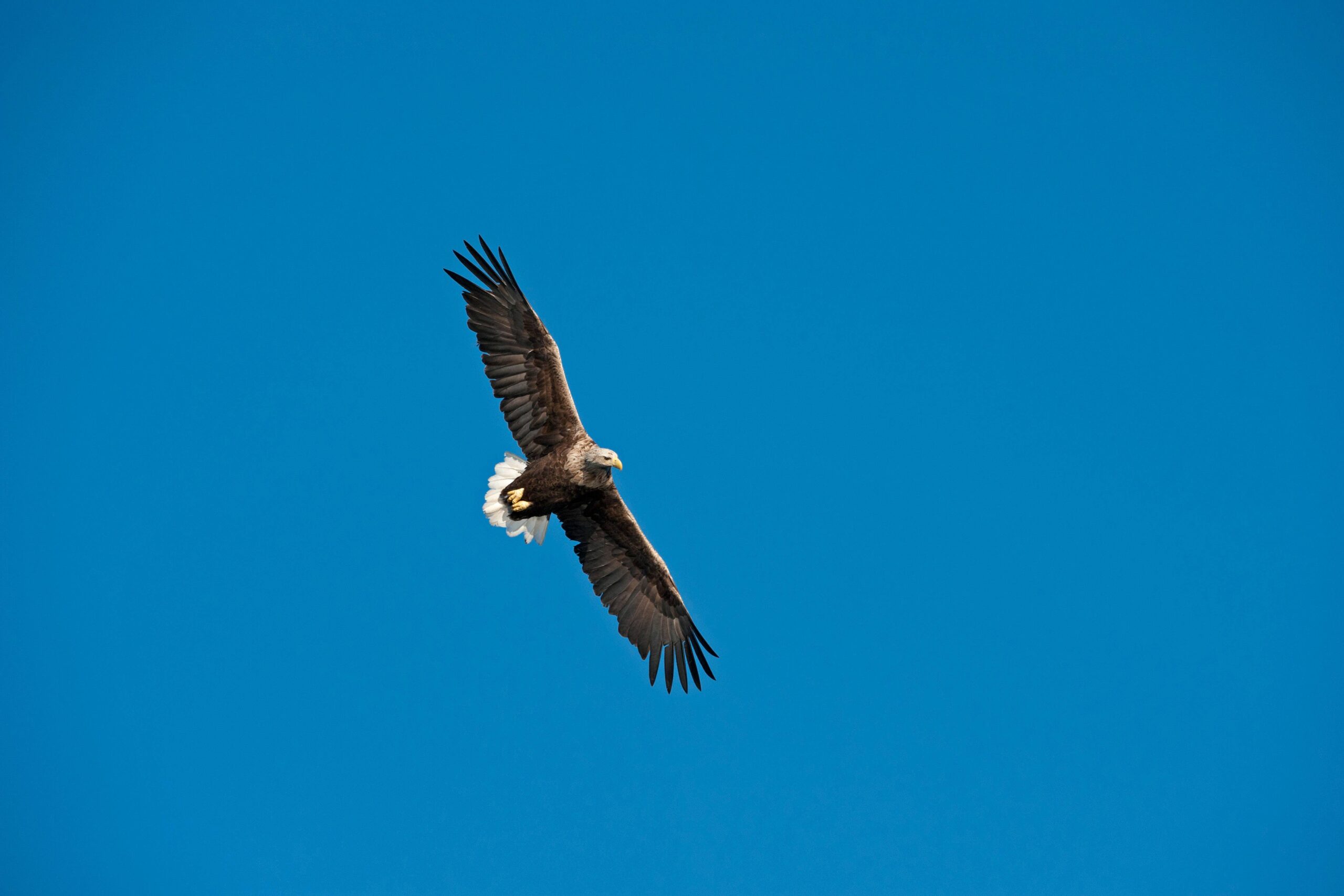
In a third incident, concerns are growing for another eagle from the project, whose tag has stopped working, after its last transmission in the Moorfoot Hills area, south of Edinburgh, on 8 November.
Police Scotland are treating the disappearance as suspicious and are asking anyone with information to contact them quoting incident number PS-20251215-1347.
In 2022, two released white-tailed eagles from the reintroduction scheme were found dead.
These prompted police investigations in Dorset, which ended after tests on the bird were found to be “inconclusive”, and on the Isle of Wight, where no evidence of an illegal act was found, though the presence of rat poison brodifacoum was found in both.
