The Government has said it will consider how a Supreme Court ruling over a Troubles death is relevant to calls for it to reveal the identity of the agent Stakeknife.
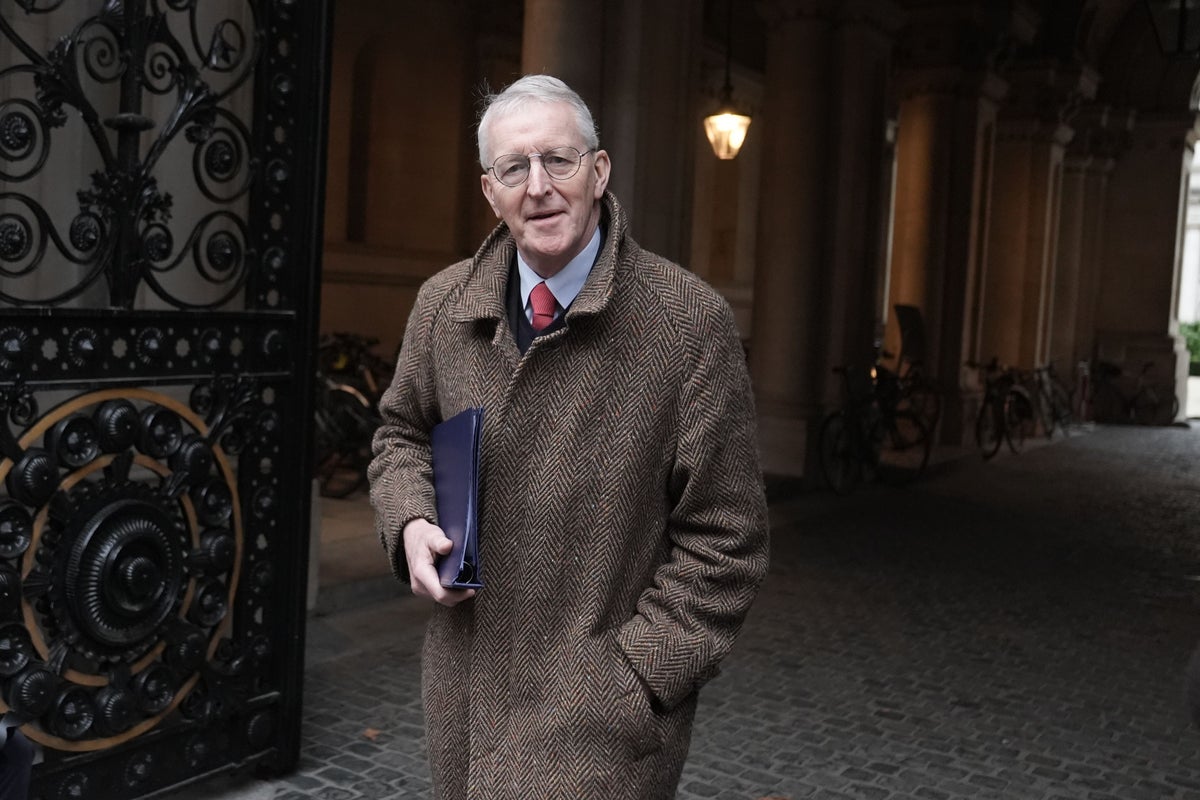
Northern Ireland Secretary Hilary Benn said the ruling on Wednesday had “wide-ranging implications”.
The final Operation Kenova report last week urged the Government to name Stakeknife, who operated as an Army spy within the IRA during the Troubles.
Mr Benn said at the time he would respond after the Supreme Court ruled in a Government appeal over a coroner’s decision to disclose some sensitive material in the inquest into a 1994 murder in Belfast.
The court has now ruled that the coroner should not release the information around the murder of Liam Paul Thompson in Belfast in 1994, and said the responsibility lies with the Northern Ireland Secretary over assessing risks to national security.
Mr Benn said: “The Government welcomes the unanimous judgment handed down by the Supreme Court.
“This is a highly complex case with wide-ranging implications.
“The Government will therefore take time to fully consider all aspects of this judgment, including those relevant to the request made by Operation Kenova for the Government to name Stakeknife.
“I will return to the House on this as soon as the Government has come to a final view.”
Last week’s Kenova report looked at the actions of Stakeknife, the Army’s top spy in the Provisional IRA’s internal security unit during the Troubles.
The agent has been linked to at least 14 murders and 15 abductions.
He was widely believed to be west Belfast man Freddie Scappaticci, who was 77 when he died in 2023.
The Kenova report also called for the UK Government to publicly reveal the identity of Stakeknife.
The Government has resisted previous calls to do this, arguing that departing from its policy of Neither Confirm Nor Deny (NCND) in regard to officially confirming the identity of agents would have implications for national security.
In his judgment in the Thompson case, Lord Stephens said one of the issues for the coroner to consider had been the fact that the Ministry of Defence and PSNI held documents which were relevant to the issue of whether the security forces had received information from a covert human intelligence source in connection with the death.
He said the Government considered that “disclosing those documents would be contrary to the public interest in protecting national security, in particular because it would be contrary to the policy of neither confirming nor denying the use of informers or other secret source”.
