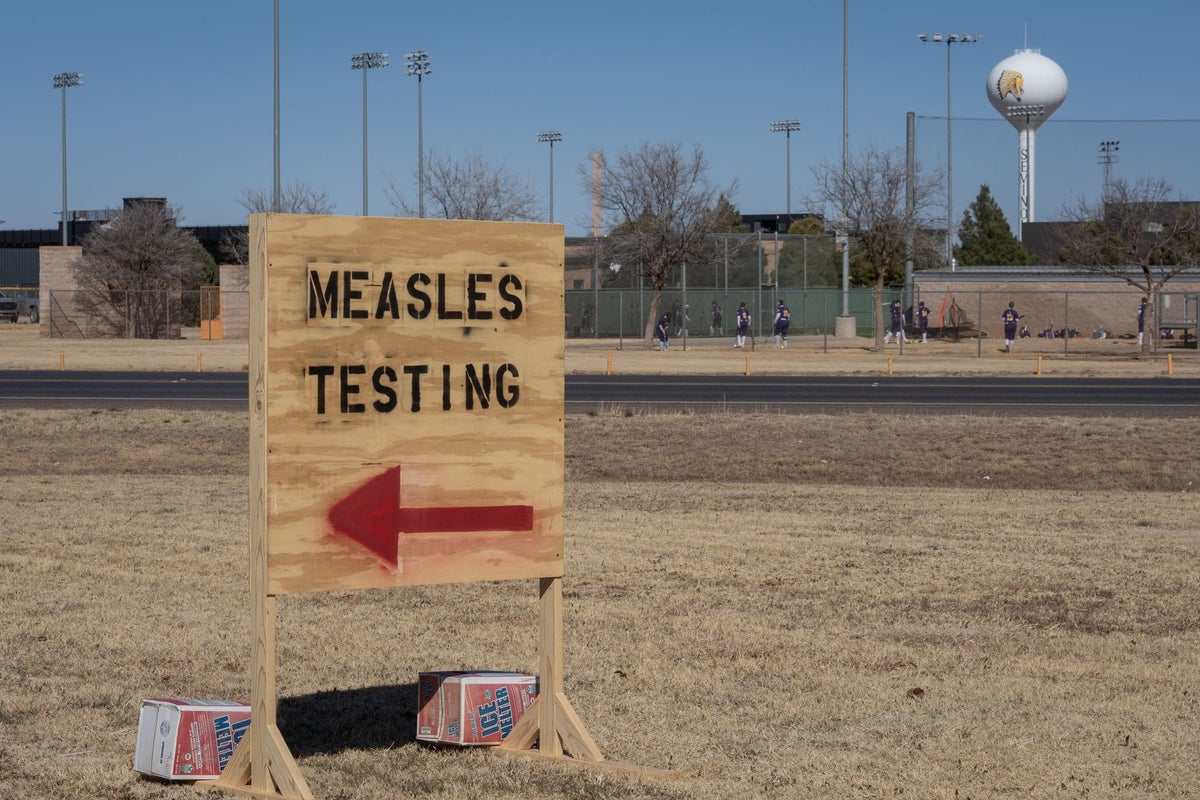
The measles outbreak in South Carolina is reportedly “accelerating,” thanks to a combination of unvaccinated students and large gatherings where the virus can quickly spread.
As of Wednesday, there have been 111 reported measles cases in the northwest region of South Carolina, NBC News reports. The region includes Greenville and Spartanburg.
“We are faced with ongoing transmission that we anticipate will go on for many more weeks,” South Carolina Department of Public Health state epidemiologist Dr Linda Bell said during a Wednesday news briefing.
There have been 27 cases reported since Friday.
Bell said that was a “significant increase in our cases in a short period of time,” noting that holiday gatherings and other large events — paired with lower-than-optimal vaccination rates — are responsible for the spike.
According to data compiled by NBC News, the K-12 vaccination rate for measles, mumps, and rubella in Spartanburg County was 90 percent for the 2024-2025 school year. While that number is high, doctors say at least a 95 percent vaccination rate is needed to stop outbreaks from occurring. Neighboring Greenville County’s MMR vaccination rate was 90.5 percent.
President Donald Trump’s Department of Health and Human Services Secretary Robert F Kennedy has long been a vaccine skeptic, though he did endorse the MMR vaccine in April after an uptick in measles cases in some parts of the country.
Officials in South Carolina have provided mobile health clinics to help administer MMR shots in an effort to slow the spread of the virus, but Bell said few of the locals took advantage.
“I can tell you that a relatively small number of doses was administered at each of the mobile health unit clinics that we offered,” she said during the press conference.
The MMR vaccine, which is typically administered around a child’s first and fifth birthdays, provide 97 percent protection from infection.
Measles is the most contagious known virus on the planet and can lead to severe complications and death, according to the World Health Organization. It can hang in the air for hours, and virtually anyone without a vaccination will be infected if they are exposed.
The bulk of the South Carolina infections are happening at schools in Spartanburg County, according to Bell. Because it takes approximately 21 days for symptoms to emerge after exposure to measles, individuals who have been quarantined — of which there are 254 — must stay in isolation for three weeks.
That reality has proven disruptive to the affected schools, where some unvaccinated students have already been placed in 21-day quarantines due to previous exposure to measles.
“Vaccination continues to be the best way to prevent the disruption that measles is causing to people’s education, to employment and other factors in people’s lives in our communities,” Bell said.
In 2025, there have been 1,912 reported measles cases across the U.S., largely amongst unvaccinated children and teenagers, with 47 outbreaks reported since the start of 2025. That’s nearly three times the number of outbreaks reported in 2024. Other hot spots outside of South Carolina include 176 reported cases in Arizona and 115 in Utah, according to state health officials.
Measles symptoms include headache, high fevers, cough, runny nose, watery eyes, white spots inside of the mouth, and a rash that can cover a large portion of an infected individual’s body.
According to the Centers for Disease Control and Prevention, approximately 11 to 12 percent of measles cases require hospitalization. Three people have died and more than 200 have required hospitalization in the U.S. this year due to the virus.
