A skydiver had a narrow escape after his parachute prematurely opened at 4,600m altitude forcing him to cut himself free mid-air.
The incident took place on 20 September this year over Tully airport in Far North Queensland, Australia’s national transport safety investigator said in a final report of the incident published on Thursday.
A group of 17 parachutists had set out for a 16-way formation jump from 15,000ft which was to be filmed by a parachuting camera operator.
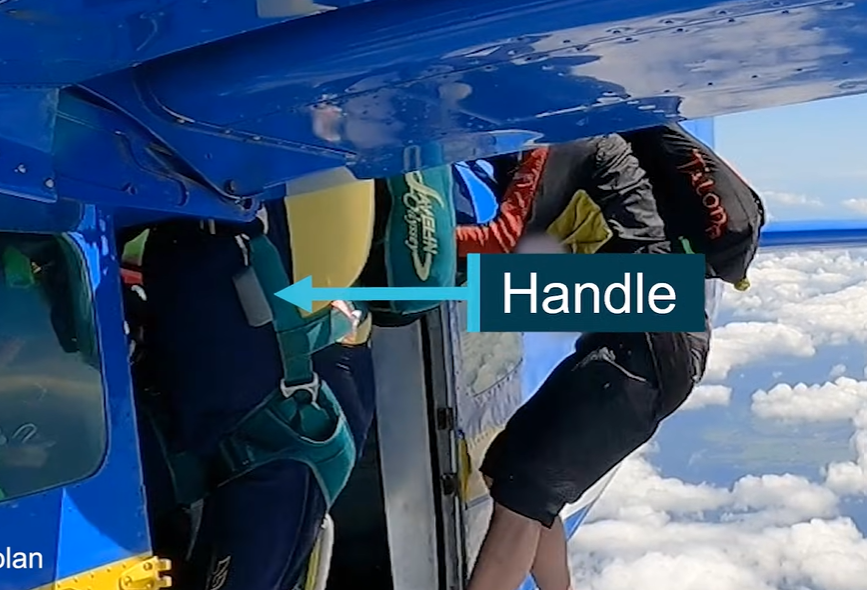
According to a video shot from the aircraft, the handle for the reserve parachute of the first parachutist who set out of the Cessna Caravan aircraft snagged on the wing flap, causing it to deploy inadvertently within seconds.
The accidental deployment caused the parachutist to fly suddenly backwards as he hit the aircraft’s wing with their legs.
Officials at the safety bureau noted that the sudden movement led the parachutist to hang from the plane and the hit to the wing “substantially damaged” the Cessna aircraft.
“The parachute then wrapped around the stabiliser, suspending the parachutist below the aircraft,” the Australian Transport Safety Bureau said in report. The other parachutists continued to exit the aircraft while the two others remained in the doorway, the video of the incident showed.
The snagged parachutist hanging from the aircraft then used a hook knife to cut at 11 rope lines of their reserve parachute to free himself. He was able to release his main parachute successfully despite getting stuck in the remaining lines of the reserve parachute.
“The pilot recalled feeling the aircraft suddenly pitch up, and observed the airspeed rapidly decreasing,” said ATSB’s chief commissioner Angus Mitchell.
He added that the pilot was initially unaware of what happened and believed the aircraft had stalled, so they applied some power. “But upon being told there was a skydiver hung up on the tailplane, they reduced power again,” the investigation revealed.
The diver sustained minor injuries but landed safely after the flight.
“With all parachutists out of the aircraft, the pilot assessed they had limited pitch control, given the substantially damaged tailplane, which still had a portion of the reserve parachute wrapped around it,” Mr Mitchell said.
The aircraft also landed safely despite concerns from the pilot who had declared May Day to the Brisbane centre air traffic control, informing that the aircraft had minimal control input.
“The pilot, who was wearing an emergency parachute, prepared to bail out during the descent if they deemed they did not have sufficient control to land the aircraft. But, descending through about 2,500 ft, they assessed they would be able to land,” the ATSB said in a statement.
This incident has caused the ATSB to issue important guidelines to parachutists, asking them to be mindful of handles on their chutes, especially when exiting the aircraft.
Hook knives are also a “lifesaving” equipment to have handy in the event of a premature reserve parachute deployment, Mr Mitchell said.
“Fatal parachuting accidents have occurred in the past due to aircraft being loaded outside the centre of gravity limits, which highlights the importance of conducting aircraft weight and balance calculations prior to each load,” Mr Mitchell said.
