Medetomidine is an animal tranquilliser with more sudden and dangerous withdrawal effects than other sedatives
PHILADELPHIA – A lethal sedative that has caused carnage in the US is now being mixed into one of the most popular drugs used by young people in the UK, experts have warned.
Medetomidine is a “potent” tranquilliser usually used by vets on large animals.
But there are increasing reports of it being found in samples of ketamine, the drug of choice for Gen Z.
The latest government figures show that usage of ketamine among 16-24-year-olds in England has tripled since 2016. In the north-west, doctors have set up the first ketamine clinic to treat children due to an influx of youngsters suffering the ill effects of addiction.
Medics at Alder Hey children’s hospital in Merseyside said they have experienced a “surge” in under-16s suffering ketamine-induced uropathy (a urinary tract blockage) since January.
Ketamine use is “very widespread, with reports of it being so cheap in some parts of the north-west that it can be bought with pocket money”, they said in a report published in June.
Now, young people using ketamine are being warned they are even more at risk because it is being mixed with other sedatives that have ravaged parts of the US.
Greater Manchester’s Early Drug Warning system reported last month that several recent lab samples of drugs sold as ketamine had contained medetomidine.
“The combination of ketamine and medetomidine is likely to result in extreme prolonged sedation and could be fatal,” the organisation warned, adding that it may leave people “extremely vulnerable and at risk of sexual assault or robbery”.
It noted that medetomidine is 200 times stronger than xylazine, another sedative which is sometimes found to be mixed with ketamine.
The National Poisons Information Service has recorded 254 detections of medetomidine in the UK in 2025, up from 20 in 2024.
The UK’s Advisory Council on the Misuse of Drugs confirmed in October that medetomidine had been detected in the UK illicit drug supply and that it had recommended adding it to the list of prohibited Class C substances.
Britain may be following in the footsteps of the US state of Pennsylvania, where xylazine was also banned last year, and the gangs who control the drug supply replaced it with the stronger veterinary sedative.
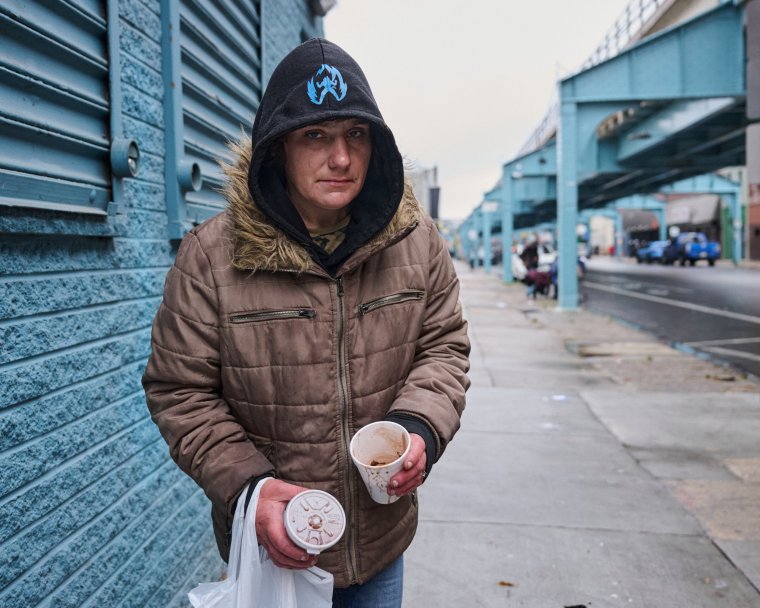
Jen, 34, used to feel the unpleasant symptoms of drug withdrawal coming on – back when the “dope” sold on the corners of the gritty streets of Philadelphia consisted mostly of xylazine and the synthetic opioid fentanyl.
Now, she takes the new variety of tranq, which the dealers mix with fentanyl, and enters a blackout stupor on Kensington Avenue, the main street running through the neighbourhood and one of the poorest zip codes in America.
“I know five people that have died because of the withdrawal,” Jen says. This could place medetomidine in a league of its own in terms of the potentially fatal effects of coming off the drug. Reports like this are yet to be backed up by official data, but are common among drug users and harm-reduction workers.
Naloxone, or narcan, is often used by police and paramedics to reverse fentanyl overdoses. But Paul Chazot, professor of Pharmacology at Durham University, has warned that if an opioid is cut with medetomidine, narcan will not work because the drug “affects the body in a different way”.
What is happening in this small corner of northeast Philadelphia has ramifications for the drug supply in the UK.
Kensington Avenue was one of the first places in the US where xylazine was detected, prior to it being linked to around 7 per cent of overdose deaths in the country. Xylazine emerged in the UK’s drug supply in 2022 with fatal consequences. Medetomidine appears to be following a similar path.
Steve Rolles, senior policy analyst at Bristol-based Transform Drug Policy Foundation, told The i Paper: “The irony of the enforcement approach designed to protect people is that it’s done the exact opposite – ketamine use has leapt upwards since it was banned, it’s cheaper and more available than ever, there’s been a tenfold increase in deaths – and now we have the growing threat from adulteration.
“Legal ketamine for medical use obviously never contains medetomidine because there are quality control and accountability systems entirely absent from the illegal market.”
Blaming policymakers, he warned that anyone using drugs should be aware “we don’t just have synthetic opioids in the supply but also various veterinary anaesthetics as part of an entire menu of potentially very risky drugs that we know very little about”.
Jen describes the experience of entering withdrawal if she fails to get her next fix. “I throw up uncontrollably. I wouldn’t wish the sickness, or this addiction, or disease, on my worst enemy. I’ve overdosed at least 27 times,” she told The i Paper during a recent visit to Kensington Avenue.
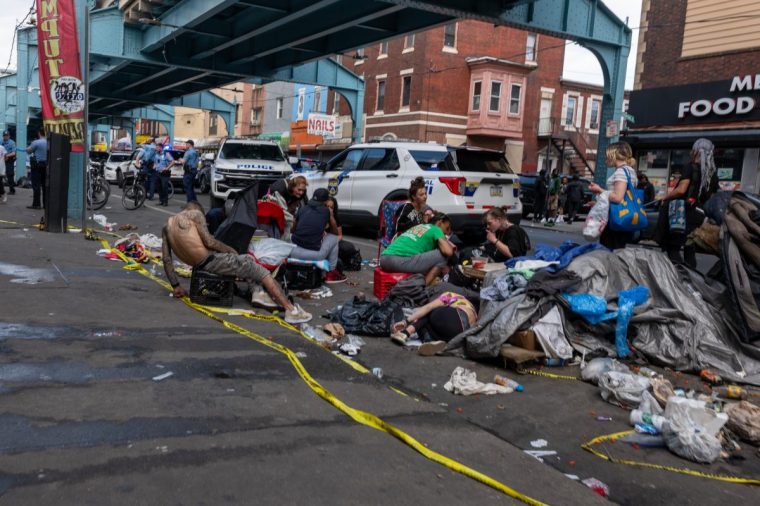
Dozens of people line the sidewalks, immobilised and hunched over from the central nervous depressant effects of the drugs. A handful of charitable organisations offer free food, medical support and addiction services to those affected.
Many shop fronts are closed, with their outdated signage providing a hint as to how many decades they have been closed. The street, often the site of shootings, sits under a loud metro line and “the Kensington pause”, in which all activity and conversation stops for several seconds, occurs every eight minutes or so when a train goes overhead.
The area was once a manufacturing hub, but fell on hard times from the 1970s and became an epicentre for the heroin trade. This was turbocharged in the 2010s as the prescribing of opioid painkillers by doctors left patients experiencing withdrawals. The gangs then adulterated heroin with fentanyl, the potent synthetic opioid responsible for the majority of US overdose deaths.
That was before xylazine, which is far cheaper, was mixed into the dope – leaving users with wounds that can require limbs to be amputated. Now, following the crackdown, xylazine – which can cause non-healing skin lesions – has been replaced with medetomidine.
“Medetomidine is exponentially stronger than heroin or ketamine,” says Christopher Moraff, the founder of the local drug-checking lab PA Groundhogs, who first detected medetomidine in the street drug supply in April 2024.

When public health officials in Philadelphia first began testing for the drug in May 2024, medetomidine was found in 29 per cent of fentanyl samples analysed. Six months later, the drug was found in 87 per cent of samples.
“The first time I witnessed somebody under the influence of medetomidine, it was like they had been hit by a tranquilliser dart,” says Moraff. “They thought it was dope [fentanyl], and they were face down on the floor, completely unconscious for like six hours.”
Its growing prevalence has left those who use it facing a perfect storm of issues, as the highly visible local police increasingly crack down on open drug use and homelessness — carrying out raids and pushing people into treatment through a criminal justice diversion scheme.
Sean, 38, recently had life-saving surgery after complications from taking medetomidine-adulterated drugs. “My neck was really swollen and closing on my airways from smoking and shooting up in my neck,” he told The i Paper. “They said if I hadn’t actually gone in that day, I probably would have died.”
Sean says he got the taste for opioids aged 13 after he was given them before having his wisdom teeth taken out. “I was getting high at such a young age.”
The potential pressure on the NHS is also a major concern. Dealing with patients addicted to medetomidine is part of a “terrifying new normal” for Philadelphia’s healthcare system, says Peterson Wagner, a University of Pennsylvania graduating medical student who has been working in emergency rooms.
“When someone begins withdrawing from medetomidine, they experience totally unpredictable and very dangerous heart rate elevations and body temperature increases, which are so life-threatening that current hospital policy is for anyone with suspected medetomidine withdrawal to be immediately rushed to the ICU.”
Back on Kensington Avenue, Strachan, a Londoner in his early 30s who moved to Philadelphia four years ago, is proof that just about anyone can end up here. He says he lost his job at a cancer research lab 18 months ago, and has been using the medetomidine-adulterated dope for about six months, after becoming homeless.
Your next read
“You just need something to numb the experience of being on the streets,” he says, sitting indoors at Sunshine House, a harm reduction hub. “I used to use only meth, and then came down here because drugs are cheaper and there’s a lot more resources if you’re homeless.”
Strachan quickly became dependent on medetomidine, which hospitals are only now in the process of developing non-life threatening detox plans for.
“There was a guy in my shelter who had a stroke, became brain dead in hospital and died,” he says. “My family all think I’m mad for staying here. I’ve been avoiding facing up to what I’ve lost: my career, my house, my boyfriend.”
But Strachan says he’s now “planning on going to rehab so that I can start the new year afresh”.
Additional reporting by Steve Robson
