Dutch director Jetske Mijnssen gives the opera a modern sheen with mixed results – but the music is magical
Now regarded as one of Handel’s greatest works, Ariodante has had a curious production history. After a short London run in 1735 it was consigned to the vaults for two centuries: Alexandra Coghlan argues in a programme note that it has now found its true audience, because it’s essentially a Romantic opera in Baroque disguise.
Its lurid plot tells of valiant Ariodante and virginal princess Ginevra, whose nuptials are poisoned by the lies of the jealous Polinesso. The plot’s characters traverse a landscape of murderous intrigue, suicide, and a duel to the death, after which, with the baddie despatched, we reach a conventionally happy ending. Here are all the ingredients of a satisfactory melodrama. So why should we care?
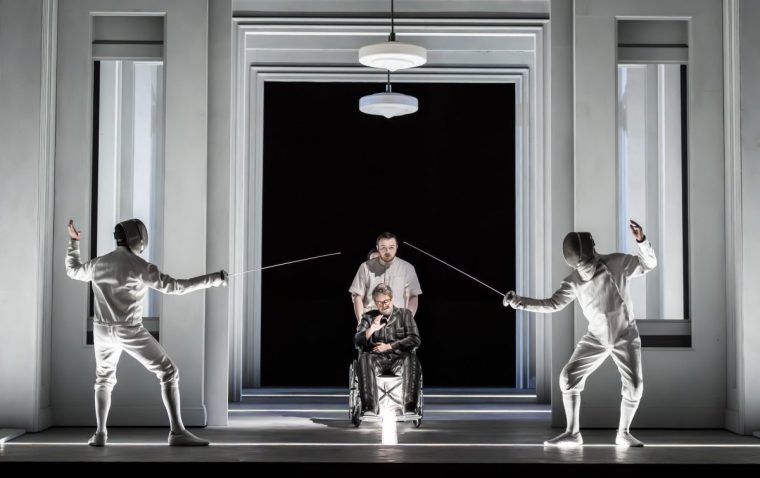
The Dutch director Jetske Mijnssen’s answer is that we should see the opera as being about “a group of young people who experience pain and suffering for the first time”. She envisions the central pair as being “young, beautiful, rich, happy, and in love”. And she acknowledges the Netflix series The Crown as one of her influences.
Mijnssen’s “beautiful, rich, and happy” young people behave like spoilt brats, trashing their expensive abode and mocking their servants like certain Tory politicians in the Bullingdon Club; the staging of the first act veers between mindless mayhem and pretentious stylisation. It also makes a number of half-digested feminist points, which sit oddly with the thrust of the work.
Just as misguided is Mijnssen’s treatment of Handel’s arias, which combine coloratura and melodic grace in a way never heard before. They are also very long, and Mijnssen seems to take that length as a challenge to fill with business, rather than as something to savour, and she creates an obtrusive – and in this context completely irrelevant – subtext to the stereotypical role of the King.
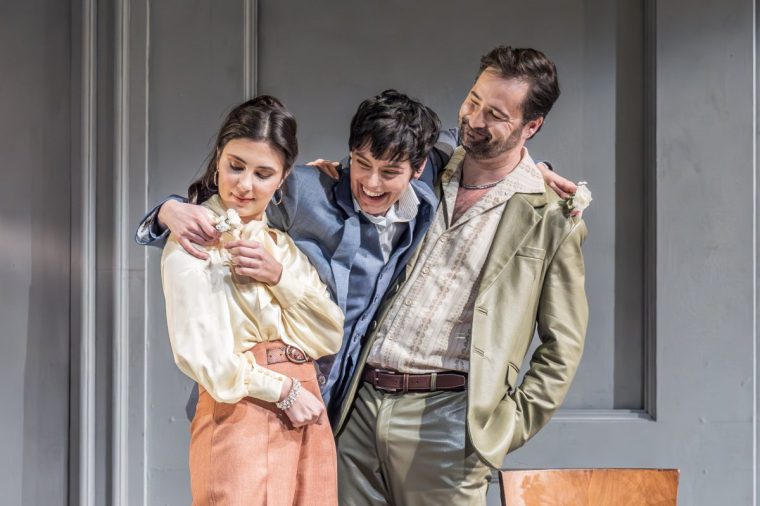
But as the opera progresses, Mijnssen calms down, allowing her cast to celebrate Handel’s magical cavalcade of vocal beauty. The way mezzo Emily D’Angelo sings it, time stands still for Ariodante’s tremendous suicide aria, as it also does for soprano Jacquelyn Stucker in hers. Elena Villalon, as Ginevra’s friend Dalinda, has a warm, sweet sound, as does lyric tenor Ed Lyon as the credulous brother of Ariodante. Peter Kellner brings what dignity he can to the misconceived role of the King.
The other star of the evening is conductor Stefano Montanari, who brings out all the beauties in the score, at times adding to them by putting down his baton and playing the organ, or picking up a violin to join in the fun. Musically speaking, this is a fabulous evening.
To 21 December
