Ministers of 46 member states signed up to European human rights laws have backed plans to look at how to tackle concerns over addressing migration within the legal framework.
The chief of the body which oversees the European Convention on Human Rights (ECHR) said ministers had taken an “important first step forward together” to agree a political declaration on migration and the ECHR, and support a new recommendation to deter smuggling of migrants “with full respect for human rights”.
Council of Europe secretary general Alain Berset told reporters that the “living instrument” is possible to adapt and work will begin to adopt the declaration in Moldova in May 2026 following a meeting of ministers in Strasbourg on Wednesday.
He said: “This is really the starting of a process on a consensus basis. That’s the most important point for today.
“All 46 member states have reaffirmed their deep and abiding commitment to both the European Convention on Human Rights and the European Court of Human Rights.
“This is not rhetoric. This is a political decision of the highest order.
“But ministers have also expressed their concerns regarding the unprecedented challenges posed by migration and the serious questions governments face in maintaining societies that deliver for citizens.”
Deputy Prime Minister David Lammy attended the meeting and was expected to urge ministers the rules “must not stop” tackling the problem of illegal migration.
Mr Berset added that commitments from member states to reaffirm the ECHR’s rights and freedoms but also recognise governments responsibility to safeguard national interests such as security “are not contradictory”.
“They must and they can also be reconciled,” he said.
Ahead of Wednesday, Prime Minister Sir Keir Starmer and his Danish counterpart Mette Frederiksen warned that interpretation of ECHR needed to change to show governments could get a grip on the problem and prevent voters turning to “the forces that seek to divide us”.
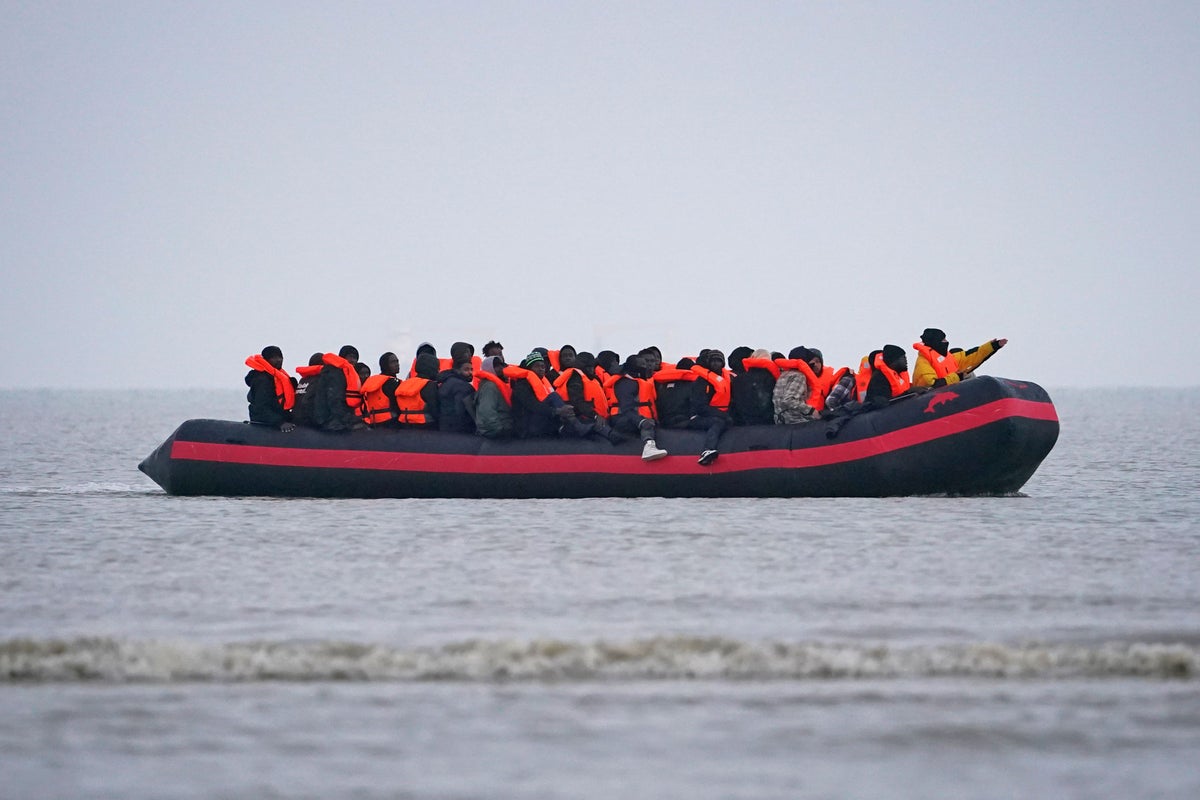
Labour’s poll ratings have plummeted since the general election, with the rise of Nigel Farage’s Reform UK partly caused by concerns about the impact of immigration – both legal and through small boat crossings of the English Channel.
The UK and Denmark are among a number of countries grappling with migration problems which are pushing for changes in the way the treaty is interpreted, notably in its Article 3 protection against inhuman or degrading treatment and the Article 8 right to a family life.
Both articles have been used to prevent people with no right to be in the UK being sent back to their home countries.
Labour, unlike the Tories and Reform UK, are committed to remaining within the ECHR, which was drawn up in the aftermath of the Second World War.
In a Guardian column, the Prime Minister and Danish counterpart Mette Frederiksen acknowledged the “current asylum framework was created for another era”, adding: “In a world with mass mobility, yesterday’s answers do not work. We will always protect those fleeing war and terror – but the world has changed and asylum systems must change with it.”
Sir Keir has adopted a series of hardline immigration measures, modelled on those spearheaded by Ms Frederiksen’s centre-left Danish government, in order to decrease the number of migrants crossing the English Channel.
The Government is expected to bring forward homegrown legislation to change how the Article 8 right to family life is interpreted in UK courts, and is also considering examining the threshold for Article 3 rights.
Elsewhere Foreign Secretary Yvette Cooper is also meeting with European counterparts in Brussels on Wednesday to discuss more cooperation over tackling illegal migration and increasing removals.
She said: “To strengthen our borders at home, we need to increase cooperation with other countries on innovative solutions – including on prevention, law enforcement and returns.”
