House Speaker Mike Johnson said that the House of Representatives will not vote to extend the enhanced tax credits for Obamacare, leaving more than 22 million at risk of losing their health insurance.
Rather, Johnson and the House leadership talked about the GOP taking up its own legislation on health care. This comes as Republicans in the Senate tee up a vote on their own health care plan on Thursday.
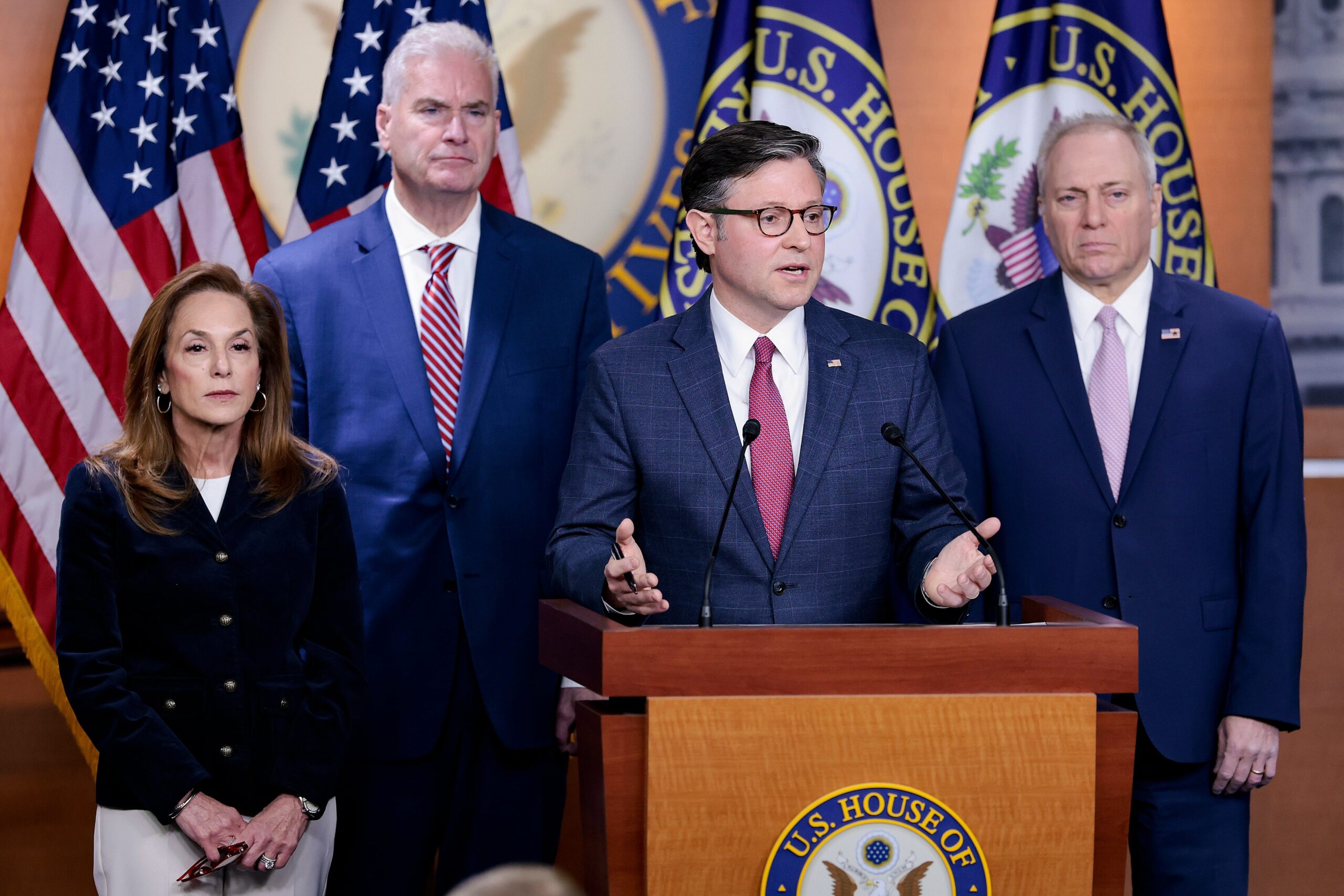
“In the coming days, what you’re going to see is the other party, the Republican Party, continuing to do the important work that we’ve already begun to actually lower the cost of health care and reduce fraud,” Johnson told reporters.
“Democrats won’t, remember, they don’t actually want to fix this problem,” he claimed. “But you’re going to see a package come together that’ll be on the floor next week.”
Anywhere between 22 million and 24 million Americans receive their health insurance through the Affordable Care Act’s health insurance marketplace. In 2021, the Biden administration expanded tax credits for the marketplace, also known as Obamacare, during the Covid-19 pandemic.
The 2022 Inflation Reduction Act extended the subsidies for an additional three years until the end of this month. They opposed a continuing resolution to keep the government open in October until a handful of moderate Democrats broke to reopen the government in November.
Since then, Republicans have scrambled to come up with their own plan. On Thursday, Senate Republicans will vote on legislation by Sens. Bill Cassidy (R-La.) and Mike Crapo of (R-Idaho) to transfer some of the money into health savings accounts to buy so-called “bronze” health care plans or catastrophic care plans.
The legislation would also ban the money from going toward abortions or transition care for transgender people. The money would also ban gender transition care from being considered an essential health benefit for health care plans sold on the Affordable Care Act’s marketplace and ban Medicaid from covering either of them. Republicans attempted to insert similar language in the One Big, Beautiful Bill, but it failed.
A Republican plan is far from a foregone conclusion since Democrats almost uniformly oppose the legislation in the Senate.
“I mean, if the Senate can’t move something with 60 votes, I mean, that seems to be an even bigger problem,” Rep. Dusty Johnson of South Dakota told The Independent.
Sen. Susan Collins, who has her own separate plan on health care, said she is still looking at the specifics of the plan, while Sen. Lisa Murkowski said she is still reviewing the Cassidy-Crapo legislation.
“A lot of us still have questions about implementation of some of it, but I think it’s important that the Republicans are hopefully going to be putting a plan out,” she told The Independent. “You need one.”
But it’s not just in the Senate. Many Republicans in the House, including Rep. Marjorie Taylor Greene of Georgia, who is resigning in January, have criticized Johnson for not coming up with a plan to prevent premiums from doubling or even tripling for their constituents.
Health care is just one part of a laundry list of items for Republicans, who control both the House and the Senate, to finish. Congress must pass its annual defense bill, the National Defense Authorization Act, before the end of the year.
In addition, Congress will once again vote on legislation to keep the government open at the end of January.
