The author’s support for Palestine Action could result in the withdrawal of her work from sale. We should be grateful for her courage – and terrified for our country’s future
Sally Rooney, the best-selling Irish author, is a canary in the pits of ever more illiberal Britain. Her soft and steady cheeps need to be heeded before she is silenced, and the rest of us go deathly quiet, because of the terror induced by repressive government measures.
Though you may know of Rooney for her wildly popular – sometimes controversial – books about young people in love, more recently her name has made headlines for her involvement in the High Court case about the proscription of the protest group Palestine Action. Rooney has long been a financial supporter of the group. In August she wrote a stark and strong defence of her beliefs and actions in The Irish Times, where she stated that her royalties would financially support Palestine Action.
In the High Court in late November she laid out how, given this, continuing to ban the group’s activities in the UK could make it illegal for her to receive royalties from her agency here, and thus lead to the withdrawal of her books from sale. “The disappearance of my work from bookshops would mark a truly extreme incursion by the state into the realm of artistic expression,” she said.
Politics and culture are colliding here. The threat of Rooney’s work being withdrawn from sale in Britain speaks to the seriousness of the broader issue. This July, Keir Starmer, a self-avowed resolute friend of Israel, and Yvette Cooper, then home secretary, banned Palestine Action, after its activists broke into RAF Brize Norton in June this year and spray-painted two planes, which police said caused £7m of damage.
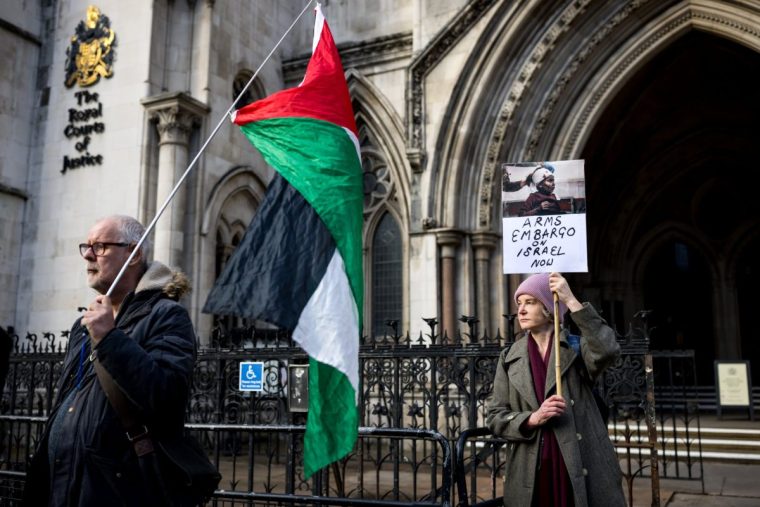
The court case is a result of a challenge by Huda Ammori, the co-founder of the group; Rooney has joined the campaign to reverse the injunction. The right to protest is guaranteed by the UN and all other international upholders of democracy.
The independent producer of the BBC dramatisations of her novels – Conversations With Friends and Normal People – has told her agent they’d had “unambiguous legal advice” that if Rooney was using royalties from the TV dramas to fund Palestine Action, sending her payments would be a terrorism offence. She therefore believes it is no longer possible for her to publish or produce any new work within the UK while this proscription remains in effect.
Rooney told the court that this legal uncertainty affected her rights as an artist. “If… Faber & Faber Limited are legally prohibited from paying me the royalties I am owed, my existing works may have to be withdrawn from sale,” she said. “My novels have been influential and popular in Britain, where I am among the best-selling literary authors of the last decade.”
This young and gifted writer is not only putting money where her mouth is, she is refusing to surrender to Starmer’s repressive measures.
In one witness statement, Rooney argued that Palestine Action’s activity in the UK came from a “long and proud tradition of civil disobedience – the deliberate breaking of laws as an act of protest… I myself have publicly advocated the use of direct action, including property sabotage, in the cause of climate justice. It stands to reason that I should support the same range of tactics in the effort to prevent genocide.”
The repercussions for following her conscience, she warns, could be punitive and far reaching. But publishers are weaklings. Over the years, too many have capitulated to external forces.
Your next read
Rooney could be next in line. Other institutions can also follow the power. We have seen them doing exactly that in Donald Trump’s USA.
Whose side are you on? I suspect millions of her fans will be solidly behind Rooney, not least because of the prospect that her new work will not be available to buy here. And you would expect all the loud defenders of free speech to be so too. But there’s the rub. Among the latter, one finds an awful lot of prevarication and anti-Palestinian invective. This is different, they say. In one incident in a green room before a show, my fellow panellist said he was a free speech champion, but that people who criticised Israel “had to be shut down. That is non-negotiable.”
I would like to know if the Free Speech Union and Pen UK are backing Rooney. Same question to uncompromising free speech artists and authors. So far, I haven’t heard them resoundingly stick up for her. Free speech and expression, apparently, are conditional. Or complicated. Or complex. Given the widespread anti-Palestinian sentiment, it’s difficult not to think that such equivocation comes not only from Rooney’s commitment to Palestine Action, but from her support for Palestine in general.
It’s uncontroversial to champion anti-Russia or anti-China writers, and yet all over the so-called free EU, writers and artists producing works sympathetic to Palestine and honest about this Israeli government’s inhumane acts are being denied funding, even having prizes withdrawn. In 2019, for example, multiple award winning British-Pakistani novelist Kamala Shamsie was stripped of the Nelly Sachs Prize because she is part of the boycott Israel movement.
We should be deeply grateful to Rooney for standing up for what’s right at great personal and professional cost. Power grabs power. If the proscription is not invalidated, the country moves further towards authoritarianism. And we become more compliant, less free, and realise too late what we have lost for ever.
