With Washington distancing itself, the UK’s role in Ukraine has never been more essential
As US shuttle diplomacy intended to end the war in Ukraine continues, there is an increasing focus on just what security guarantees Kyiv will be offered to ensure any peace is more than just a pause between bouts of Russian aggression.
Before he met Sir Keir Starmer, France’s Emmanuel Macron and Germany’s Friedrich Merz in Downing Street on Monday, Volodymyr Zelensky said that “the key is to know what our partners will be ready to do in the event of new aggression by Russia. At the moment, we have not received any answer to this question”.
It is unclear if that meeting brought him any clarity. While Starmer spoke of the need for “hard-edged security guarantees” and Macron wrote on X that “we are preparing robust security guarantees”, Ukrainians remain sceptical.
There is an understandable concern that once the guns fall silent, then “everyone forgets Ukraine, and the war becomes history”, as one Ukrainian official told me.
With Washington increasingly distancing itself from Europe, it will be up to the UK and its European partners to shoulder the lion’s share of any such support.
Although actual membership of Nato seems unacceptable to both Moscow and Washington (and, though they avoid admitting it in public, many European members of the alliance), the current US draft seems to envisage offering Kyiv something akin to its guarantee of mutual assistance.
This is, however, less “hard-edged” than sometimes assumed. Article 5 asserts that an attack against one member “shall be considered an attack against them all”, but only commits other members to take “such action as it deems necessary” – which could be armed force, but just as easily be a strongly worded diplomatic communiqué.
Hence the notion developed by the “coalition of the willing”, spearheaded by Starmer and Macron, of a European “reassurance force”. Troops on the ground would monitor the ceasefire and help the Ukrainian forces regenerate their capacities, while aircraft patrol the skies against air attacks and provocations.
The trouble is assembling and, above all, sustaining this “Multinational Force–Ukraine (MNF‑U)“. What is needed is a commitment three times the size of the force in-country at any time, likely to be tens of thousands strong. The British and French armies are already over-stretched and many other countries broadly supportive of the idea are not willing to commit their own combat troops, including the Poles, Italians and, though officially still sitting on the fence, probably the Germans.
After all, it is not just about assembling promises of troops, but being able to sustain such a force, probably for years, and agreeing rules of engagement that would make it meaningful.
Besides, both Washington and Moscow in effect have a veto. Europe wants some sense that, in a crunch, the USA would come to its aid. At present, the Trump administration is unwilling to give the coalition a clear answer.
Any deployment would also be contingent on a ceasefire deal. Putin has made it clear he will not sign any agreement that would allow what he sees as a Nato taskforce by another name in Ukraine, although it might be possible to make this palatable to him by including troops from nations Russia regards as friends, such as India.
There is a general consensus that the best security for Ukraine comes from Ukrainians. Helping Kyiv quickly develop and demonstrate greater capacities to defend itself is the best way of deterring future Russian aggression.
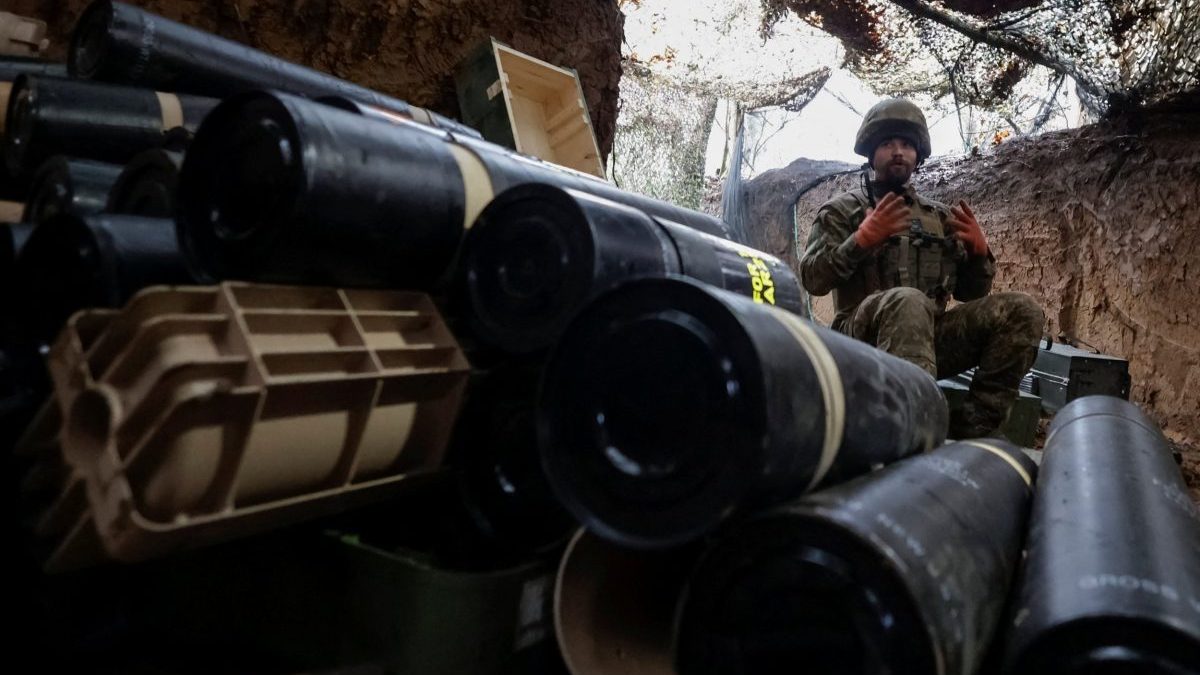
This means continuing and extending current programmes to support Ukrainian forces – notably the UK’s Operation Interflex, which so far has trained more than 61,000 troops (and allowed us to gain valuable lessons from their experiences) – as well as showing a willingness to expand the provision of modern equipment after a ceasefire.
Some stocks of weapons and ammunition could be prepositioned close to Ukraine’s borders, in Poland and Romania, ready to be handed over if war resumes.
Better yet if Ukraine can produce its own, so that it is not dependent on the charity of others in the future. The UK is already playing a role: the Octopus interceptor drone was developed in Ukraine with support from British scientists, for example. In the future, manufacturers such as BAE may open factories in Ukraine, too.
Your next read
In 2021-22, the West failed to deter Putin with “strategic ambiguity”: warning him against invading Ukraine but leaving the exact penalties unclear. Given the toothless responses to his 2008 invasion of Georgia and 2014 annexation of Crimea, Putin did not take this seriously.
One of the best ways the UK can help Ukraine in this context is through “strategic clarity,” building a package of credible and meaningful measures to support Kyiv and punish any future aggression.
This may mean MNF-U, but also everything from the automatic “snapback” of any sanctions lifted as part of a peace deal to renewed military resupply. This then has to be communicated to Russia with not just conviction but precision: less overheated rhetoric, more specifics.
