For more than 60 years, audiences have been revelling in a spoonful of sugar, dancing penguins and Dick Van Dyke’s highly questionable Cockney accent in the joyful classic, Mary Poppins.
But while the film may have gone on to become one of the most beloved family films of all time, its origin story is far from supercalifragilisticexpialidocious. In fact, production on the 1964 classic was so riddled with issues – not least the fact that the author of the books on which the film was based hated the casting of Van Dyke as loveable chimneysweep Bert – that it is amazing the film ever got made at all.
The wildly popular story about a magical nanny who arrives in early 1900s London to entertain young Jane and Michael Banks – and remind their parents of the things that make life living – started life as a series of books written by the Australian writer P. L. Travers, in which the titular nanny was far stricter and dowdier than the Julie Andrews incarnation, though no less magical.
Walt Disney, the film-maker who had achieved legendary status since the release of Snow White and the Seven Dwarves in 1937, had become interested in the books because his two daughters were obsessed with them, but Travers had declined to sell the rights twice already because she (correctly, as it turned out) assumed Disney would make his version more sentimental.
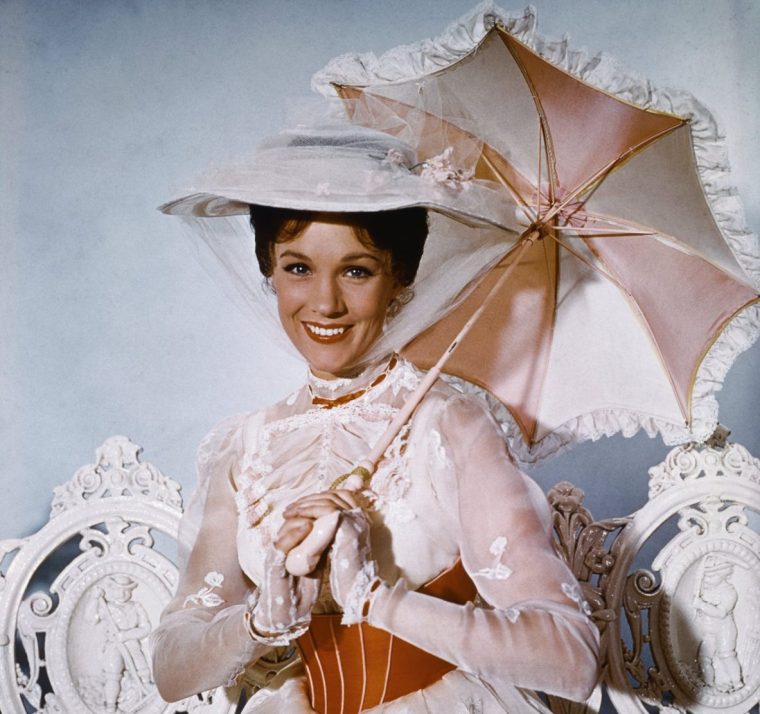
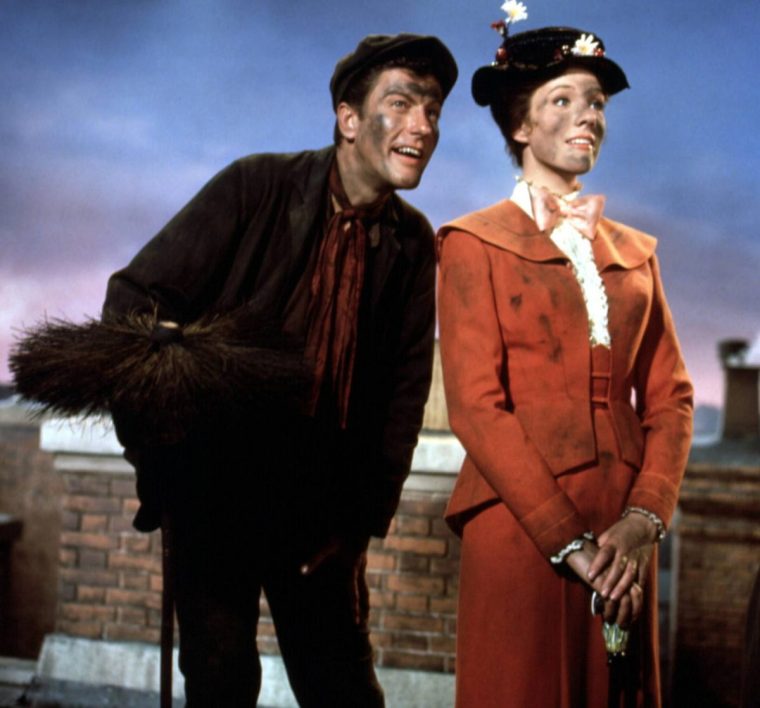
In 1959, Travers finally relented, although her distrust over certain issues – particularly casting and the use of animation – would continue. Her friend, the writer Brian Sibley, told ABC’s 20/20 news show last year that “she could be an old dragon – very intimidating and quite scary at times”.
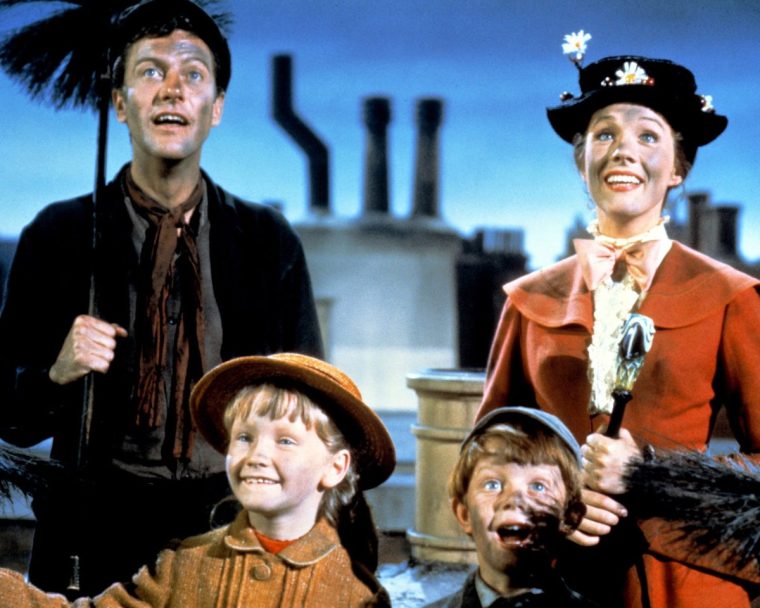
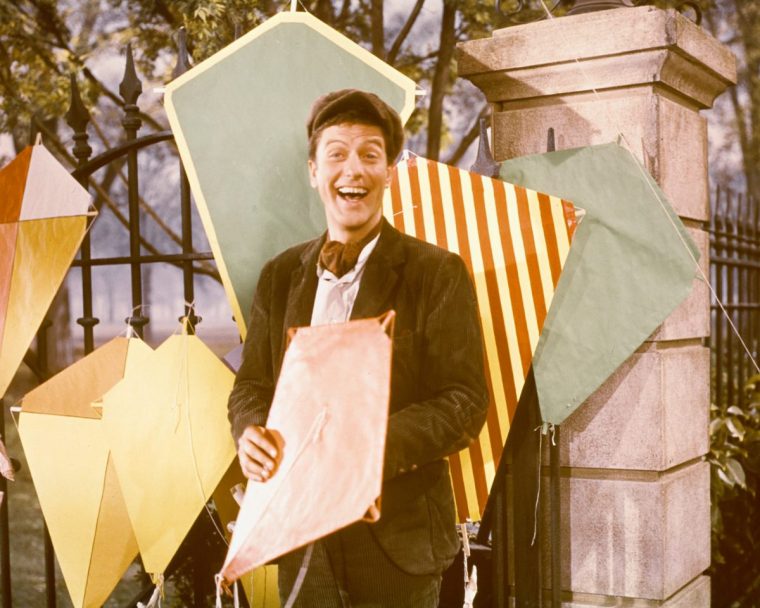
Van Dyke, who turns 100 this month, once said: “[Travers] hated me.” The author “didn’t think I was right. Didn’t think Julie [Andrews] was right. She wanted all of the animation taken out…” Bert wasn’t actually in Travers’s books; he was a character added in by Walt Disney to be a narrator and companion for Poppins (Van Dyke also played the villainous bank boss Mr Dawes Sr, with the aid of lots of prosthetics). But Travers had strong views, nonetheless.
Of course, it didn’t help that Van Dyke, who had become a household name in the early 60s on the CBS sitcom The Dick Van Dyke show, was an alcoholic at the time. “I would go to work with terrible hangovers, which if you’re dancing is really hard,” he would later recall. He got sober in the 70s.
Also struggling during production was his co-star Julie Andrews, making her film debut after stage success and desperately trying to juggle the unfamiliar demands of Hollywood with a new baby. Her first child, Emma, had been born the year before. Andrews had initially turned down the role due to her pregnancy but Walt Disney was so sure she was right for it after seeing her in Camelot that he halted production until she was ready.
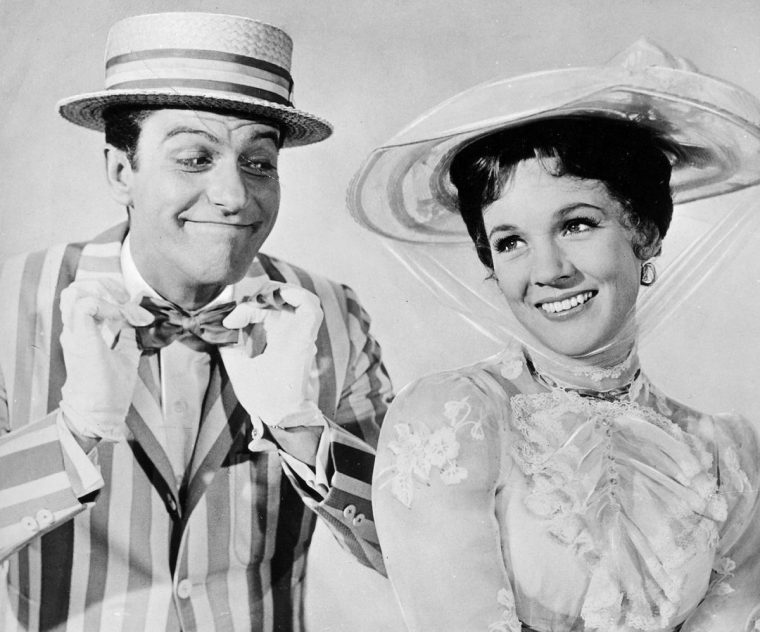
“I’d just given birth to my daughter Emma,” Andrews said in 2013, “and the following morning, my phone rang in the hospital, and the voice said: ‘Hello?’ I said: ‘Who is this?’ She says: ‘P. L. Travers.’ I almost sat up in bed. I said: ‘Oh, Miss Travers, how sweet of you to call!’
She said: ‘Yes. Well, I understand you’re going to be playing the part of Mary Poppins.’ I said: ‘Yes, as I understand it.’ And she said: ‘Well, talk to me.’ ‘I said: ‘Well I’m feeling a bit woozy right now. I just had a baby yesterday.’ ‘Well,’ [Travers said], ‘you’re far too pretty, of course. But you’ve got the nose for it.’”
Andrews had had enormous success on Broadway in Camelot and London’s West End in My Fair Lady, but had no experience at all on screen. Disney was also a bit of an amateur, in that he had only worked on animation and success in live action was far from guaranteed. Although the film would go on to win an Oscar for visual effects, the new techniques were risky, and Andrews nearly died filming the iconic scene where Poppins flies using an umbrella.
“There was a very dangerous day right at the end of filming when I was in this excruciatingly painful harness,” Andrews told The Late Show with Stephen Colbert in 2017. “And I was hanging around up there for the longest time with the umbrella. I thought I felt the wire leave and drop about six inches. I was nervous and very tired.”
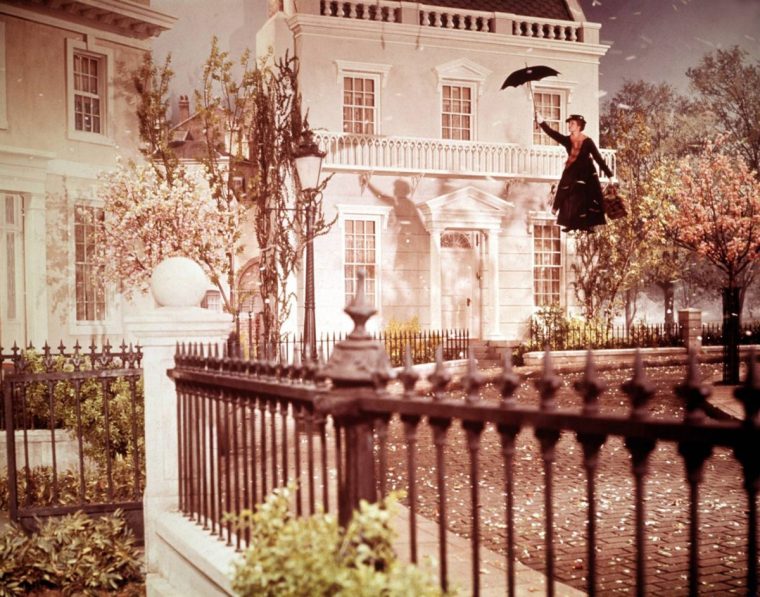
Afraid, she called down and asked to be lowered gently. But her fears were realised and she fell. “I plummeted to the stage. And there was an awful silence for a minute and I did let fly with a few Anglo-Saxon four-letter words, I have to admit.”
Travers wanted the animation taken out, but Disney was insistent. The special effects were achieved using (at the time) revolutionary techniques including the sodium vapour process – a sort of old-fashioned green screen, where actors were filmed in front of a white screen lit with the same sort of yellow seen in streetlamps.
In some of the film’s most iconic scenes, such as Bert dancing with cartoon penguins during “Jolly Holiday”, Andrews and Van Dyke would dance in front of the white screen trying desperately to look as if they had creatures alongside them. The live-action footage had animation added in post-production to make it looks like both were happening on screen at the same time.
Van Dyke loved being a part of the visual effects process so much that he later became quite an aficionado. “When I wasn’t filming, I was hanging out with the animators,” he later said. “I spent a lot of time working with cartoon characters, which is what gave me the appetite for effects in the beginning. Looking at Mary Poppins today, it’s amazing how well the technology does hold up and that was way before computers.”
Travers did not feel the same way. After the premiere of the film, during which she cried – not happy tears, according to her biographer Valerie Lawson – Travers approached Walt Disney, thinking there was still time to alter the film before public release. “The first thing that has to go is that animation sequence,” she said. But Disney simply replied: “Pamela, that ship has sailed.”
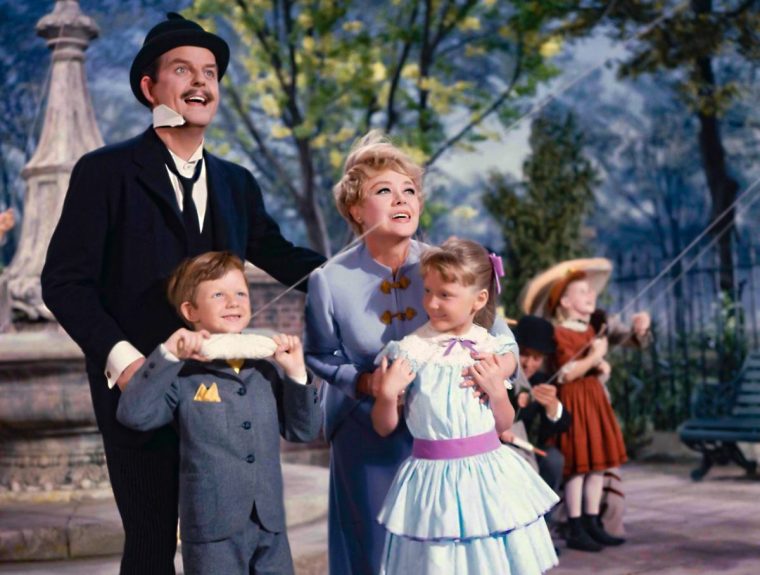
There were other difficulties, too. The actors playing the children hated each other. Karen Dotrice, who played Jane, aged nine, loathed Matthew Garber, then seven, who played her adorable brother Michael. “He was a real ounce of trouble-and-a-half,” she said in 2024. “It’s terrible because I wish I had a bunch of nice things to say about him, but we were kids. And I couldn’t stand him and he couldn’t stand me. That’s the truth of it. I was raised to be prim and proper and he was a naughty boy.”
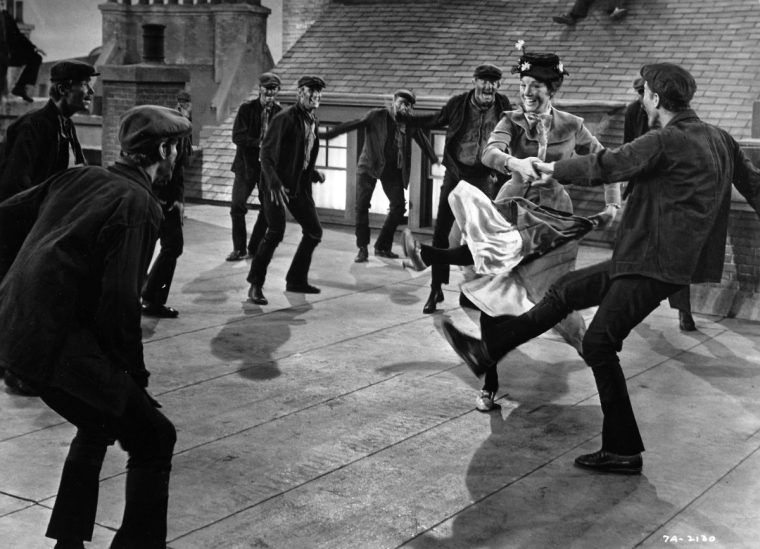
Dotrice had fonder memories of her other co-stars. In a piece for Variety, she wrote: “Dick Van Dyke would do all these goofy dances. And Julie Andrews. Everybody smoked back then. I have memories of Mary Poppins smoking a cigarette.”
Despite all of those difficulties, and Travers’s many misgivings, when the film was finally released in August 1964, it was an instant hit. The original review in The Hollywood Reporter at the time read: “Walt Disney’s Mary Poppins is the kind of film that creates not fans but evangelists. Singlehandedly it might well make repeat moviegoing a national habit. The question is not: Have you seen Mary Poppins? The question will be: How often have you seen Mary Poppins?”
Quite. And the answer, for me at least, is dozens. As a viewer, I think you can feel even today the novelty that the cast and crew felt in 1963: Disney’s delight in the animations and the freedom of the newer technology; Andrews’s rookie energy and enthusiasm. Even Van Dyke’s bad accent has a certain charm to it, an aggressive cheeriness that comes through in spite of its ridiculous inauthenticity.
It’s interesting to compare Mary Poppins with Bedknobs and Broomsticks (1971), that other Disney mishmash of live action and animation. The rights were bought in the 60s but development was stalled for years because it was so similar to Mary Poppins.
It stars Angela Lansbury, who was incidentally originally considered for the part of Poppins, and it too features magical creatures and literal flights of fancy (in this case under the sea instead of up into the sky). But it feels somehow more manufactured and less spontaneous. It lacks the feeling of freshness, the magic really, that makes Mary Poppins so special.
Whatever the issues with the books’ author, co-star fall-outs and stunt disasters, for many fans, the film remains to this day practically perfect in every way.
‘Mary Poppins’ is streaming on Disney+
