UK households cut back on Christmas spending at the fastest rate in nearly five years, new figures show.
Data from Barclays shows that card spending fell 1.1 per cent in November compared to the same time last year, as people dealt with financial uncertainty over what was to come in the Budget. That’s the biggest drop since shortly after the Covid pandemic, in February 2021.
In addition, while falling, inflation remains high and household bills have been putting cost pressures on families all year.
The combination of those concerns and unknowns has driven British people to reign in the spending in the run-up to Christmas – though it appears they still loosened the pursestrings over one prominent weekend.
Despite that fall in month-long spending, the bank confirmed retailers generally saw their busiest day of the year, with spending almost two-thirds higher (62 per cent) than on the average day of the year.
In perhaps a sign of where retail growth can be found, TikTok Shop announced its UK sales were the highest ever on Black Friday, with 27 products sold per second and the number of shoppers using the site increasing by more than a quarter (28 per cent) compared to 2024.
While it’s expected that physical stores still outsold online sales across the board, discount website VoucherCodes data revealed British people were likely to spend more than £3.7m every minute on Cyber Monday.
But for many firms, online or otherwise, the real concern will be of whether November’s spending has simply been pushed back later in the year to the pre-Christmas run-up, or if the nation’s economic situation is enough to have consumers collectively spend less in total.
“The latest card spending figures from Barclays show that consumers have been rattled by all the pre-Budget speculation that the taxes they pay might rise or that their employers could be clobbered again,” said AJ Bell’s head of financial analysis, Danni Hewson.
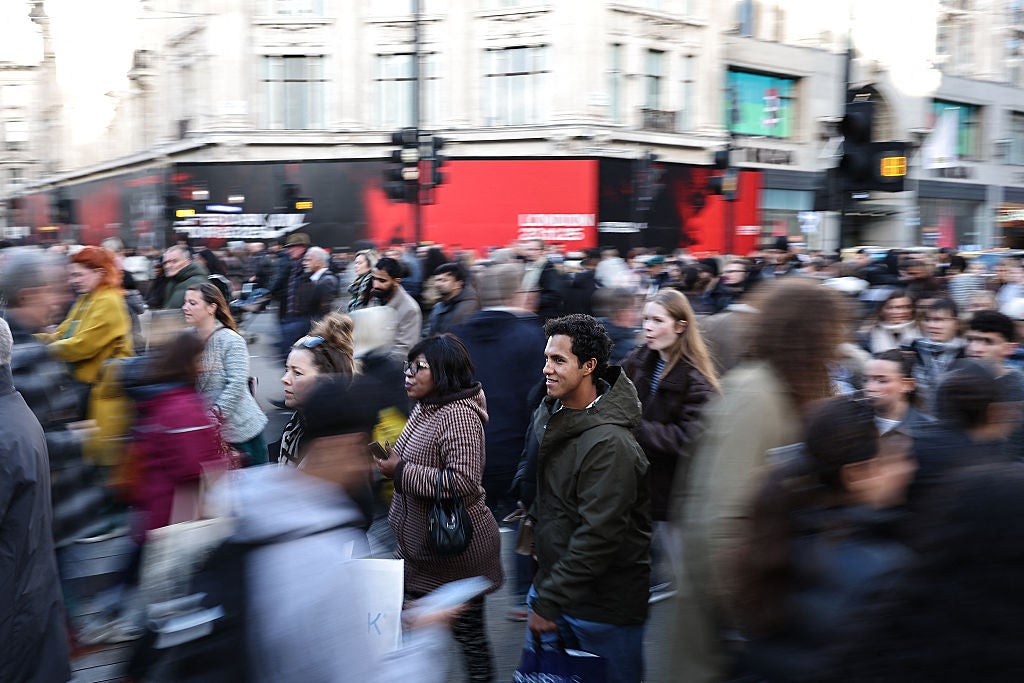
“Worries about the economy, especially the labour market, have made people wary, and many are hyper aware that saving rather than splurging might be the best course of action this Christmas. But people also can’t resist a bargain, especially if they had their eye on a particular item for a while, so it’s not surprising that tills rung out on Black Friday.
“The past couple of years have made households incredibly savvy about their spending. They know ‘shrinkflation’ when they see it and with prices in the pub jumping up as well it’s no surprise many people are planning to drink less this Christmas.
“One trend that’s not going away is people’s desire to feel healthier – either through cutting back on how much alcohol they drink or by splurging on things like vitamins and beauty treatments – and that’s likely to continue into the New Year as resolutions give people that extra nudge.”
Jack Meaning, chief UK economist at Barclays, added: “Even with a boost from Black Friday, consumer spending remained muted as we moved through the final quarter of the year. 2025 has been defined by this economic deceleration.
“The question remains as to whether easing interest rates and falling inflation can offset this trend and spur a rebound in consumer spending, or whether tightening fiscal policy and continued uncertainty will see the malaise continue in 2026.”
