Ukraine is just the beginning if Trump cuts off support – and Europe knows it is next in line
A frustrated, vengeful Donald Trump could soon abandon Ukraine and cut it off from vital US support, dramatically turning the tide of the war in Russia’s favour.
The US President has lashed out again at Ukrainian President Volodymyr Zelensky as US peace efforts limp on, saying he needs to “get his act together and start accepting things” because Russia has the “upper hand” in negotiations.
Trump lobbed his latest bombshell at efforts by Ukraine’s European allies to end the war in a Politico interview published on Tuesday. “They talk, but they don’t produce,” he said. “And the war just keeps going on and on.”
He did not deny that he could abandon peace talks, after one of his sons suggested that he might, saying that was “not correct but not exactly wrong”.
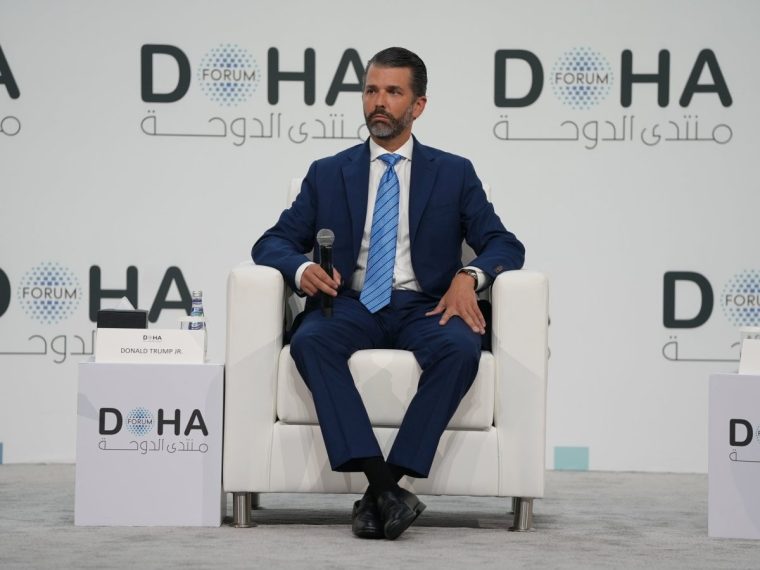
Donald Trump Jr on Monday told Sky News: “I think he may. What’s unique about my father is, you don’t know what he’s going to do.”
He added: “The American public doesn’t have the appetite [for funding the war].”
The original 28-point peace plan cooked up between US and Russian aides prompted outrage among Ukraine’s Western allies for accepting maximalist demands by the Russian President, Vladimir Putin, including surrendering Ukrainian land, neutering its army, allowing Russia to effectively veto its membership of Nato, and offering full amnesty for perpetrators of war crimes committed during Russia’s invasion.
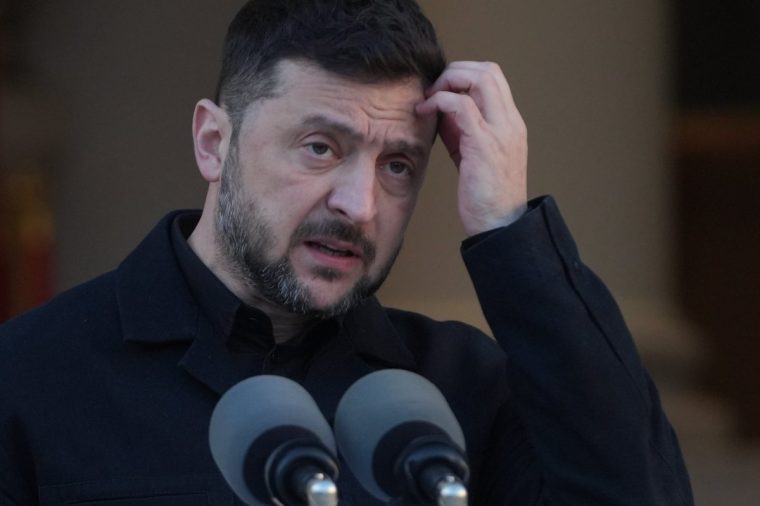
A recording of Steve Witkoff speaking with a top Putin aide revealed Trump’s special envoy had coached the Russians not to back down on their demands when dealing with the US President.
European allies have rallied around Ukraine to push back against some of the demands, with their revisions in turn rejected by Russia. Moscow has likewise ramped up its claims that Europe and Ukraine are obstructing peace, while lavishing praise on Trump’s efforts.
Although Trump has expressed frustration with Russia’s intransigence, he has reserved the majority of his ire for Ukraine and its European allies, whom he views as an obstacle to his desired rapprochement with Russia – as well as the lucrative business opportunities he believes will follow.
Trump could pull the plug
Western allies now fear the US will abandon its support for Ukraine, after months of pivoting away from traditional allies and towards Russia, leaving Kyiv short of weapons, aid or intelligence.
“If Trump abandons the negotiation process, which is a likely scenario, and fully disengages, the immediate impact would not be Ukraine’s collapse but a significant shift in the war’s military and political dynamics in Russia’s favour,” Natia Seskuria, associate fellow in international security at the Royal United Services Institute, told The i Paper.
The US spent $130.6bn (£98bn) on Ukraine between 24 January 2022 and 31 August 2025, according to Germany-based think-tank the Kiel Institute, while Europe contributed $201.7bn (£151.5bn).
In July, the White House paused some military aid to Ukraine, reportedly including Patriot air defence missiles and precision-guided weapons. Although weapons deliveries were later restored, Trump announced that future assistance for Ukraine would be funded by Nato allies.
However, Ukraine is reliant on America for certain capabilities that cannot be replaced by European allies. The “critical vulnerability” is intelligence sharing, according to Seskuria.
“US intelligence underpins Ukraine’s ability to conduct deep-strike targeting, cue air and missile defence, and anticipate Russian operations. A full cutoff would degrade situational awareness and weaken air defences. European partners lack the scale and integration to replace this capability quickly.”
In March, the US paused intelligence sharing with Ukraine for days following Trump’s extraordinary blow-up with Zelensky in the Oval Office, apparently to force Ukraine into negotiating with Russia.
That hampered Kyiv’s ability to strike the engines of Russia’s war machine in long-range strikes on its territory, and to defend civilians from Russia’s nightly drone and missile blitzes on Ukraine’s cities.
Last month, one report suggested the US was threatening to cut intelligence sharing and weapons supplies for Ukraine again to force it to sign up to the peace deal.
It comes at a dangerous moment for Ukraine, with its President facing a major corruption scandal and troops under pressure on the front line. While both sides are bogged down in a war of attrition in the eastern Donbas region, Russia’s rate of advance has increased over recent months as it throws more soldiers into the fight and Ukraine struggles with a lack of manpower.
Europe is a long way off replacing the US
Europe, which has been reliant on America for security for decades, would be hard-pressed to provide the same level of support for Ukraine as the US.
While a “coalition of the willing” including Britain, France and Germany has said it will provide security to Ukraine after any peace deal, disagreements over risks, costs and strategy have resulted in little progress and the effective sidelining of Europe from talks.
“The US still has excessive military capabilities compared to other Nato members which means if the US exits this whole game, the coalition of the willing will not have the capabilities to provide Ukraine with the same degree of monetary, intelligence, weapons, etc support,” says Dr Marina Miron, of the War Studies Department at King’s College London.
“In terms of arms, there are huge delays. The Europeans and the UK are rearming themselves, and with rising energy prices, that’s also quite difficult.
“Europe and the UK want a seat at the table and they want to back Zelensky as much as they can, but realistically – from my view – they don’t really have a lot of leverage in order to influence what the US is doing.”
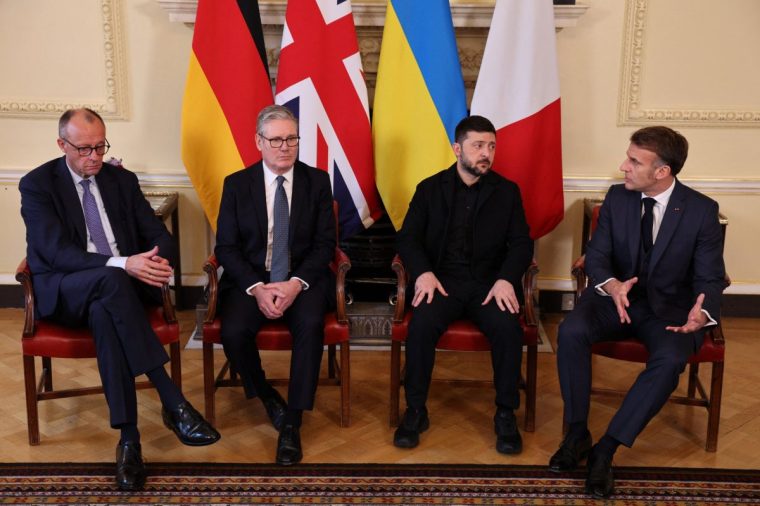
On Monday, Sir Keir Starmer invited Zelensky to London alongside French President Emmanuel Macron and German Chancellor Friedrich Merz to discuss plans “complementing” Trump’s Ukraine peace deal.
Zelensky admitted: “There are some things which we can’t manage without Americans, things which we can’t manage without Europe, and that’s why we need to make some important decisions.”
Seskuria said: “Militarily, European states can increase arms deliveries, training and logistics support, but integrated intelligence, surveillance, and reconnaissance (ISR) capabilities would remain a critical vulnerability in Washington’s absence.
“Politically, achieving the unanimity needed for robust guarantees is challenging, as member states have different threat perceptions, willingness and capacity to commit forces abroad. Europe can sustain a significant portion of Ukraine’s defence effort, but only the US can provide the full spectrum of guarantees necessary to change Moscow’s calculus.”
The real winner would be Russia
The implications of a US withdrawal do not stop with Ukraine. If Ukraine falls, Europe will be more vulnerable than ever. This was emphasised last week in extraordinary but – for the Trump administration – not unprecedented language.
The US national security strategy codified the direction Trump’s America has taken since his return to the presidency in January, downplaying Russia’s threat and parroting its regime, chastising and blaming European allies for prolonging the Ukraine war, and declaring that Europe is, essentially, no longer its concern.
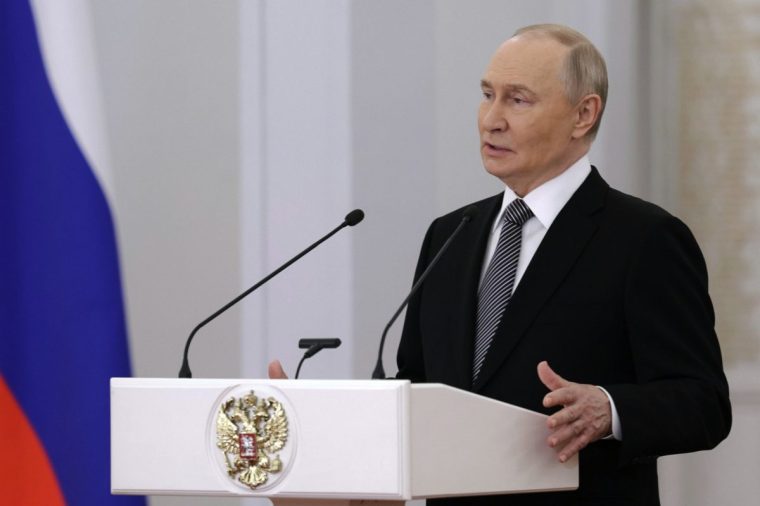
The Kremlin declared the document to be “largely consistent with our vision”.
Democrats in Congress warned that the strategy could torpedo America’s alliances and see European politicians pushed back.
Poland’s Prime Minister Donald Tusk said: “Europe is your closest ally, not your problem. And we have common enemies… this is the only reasonable strategy of our common security. Unless something has changed.”
German foreign minister Johann Wadephul said Europe did not need “outside advice”.
US disengagement from the continent’s security will only embolden an increasingly revanchist Russia to pursue its openly stated aims of directing the political and security arrangements of countries it views as in its orbit.
Moscow has long deployed an array of attacks from “grey zone” activity all the way to war, from the 2008 invasion of Georgia, downing of civilian flights by Russian separatists and electronic warfare campaigns, to sabotage of infrastructure and the murder of dissidents and foreign civilians.
European leaders are under no delusion that Putin will stop his attempts to subdue Ukraine and other countries, even if Trump hands him a rump of the country. Putin has repeatedly stated that he does not view Ukraine as a sovereign country and that it should not be allowed to dictate its own political future.
While European leaders are emphasising the irreplaceable role of America, Trump’s actions are likely to galvanise efforts by Europe to move away from the US, removing its military, political and economic leverage over the continent.
Your next read
“Clearly, there is a developing schism between Europe and the United States,” said Dr David Jordan, senior lecturer in Defence Studies at King’s College London.
“The US is increasingly losing the trust of its allies. These allies will wish to maintain a balance, of course, but I suspect that more acts of saying ‘we’re not going to buy American [weapons]’ will be seen.”
“I wouldn’t write the US off, far from it, but I think we’re going to see the Europeans effectively turn round to say to Trump, ‘we welcome your input and influence, but we’ve got this. We have a particular approach, and we’re not going to step back from it.’”
