London’s Metropolitan Police is deploying facial recognition technology in a bid to curb the use of illegal e-bikes.
Metropolitan Police Commissioner Sir Mark Rowley lauded the technology as one of the most significant innovations in crime-fighting in decades, asserting it has already aided in the apprehension of thousands of criminals.
The increasing prevalence of dangerous riding and phone-snatching incidents involving e-bikes has become a growing concern across the capital.
Sir Mark indicated that police cameras possess the capability to rapidly scan the faces of illegal e-bike riders, enabling their interception in targeted operations.
This push aligns with government efforts to expand police utilisation of facial recognition to combat crime. However, the technology has drawn considerable criticism.
Earlier this year, the Equality and Human Rights Commission (EHRC) described the Met Police’s policy on live facial recognition as “unlawful”.
The equalities watchdog further stated that the existing rules and safeguards surrounding the force’s deployment of the technology “fall short” and could exert a “chilling effect” on individuals’ rights, particularly during protests.

Currently, police use three types of facial recognition: retrospective, used in criminal investigations to search images from crime scenes against images of people taken on arrest; live, using live video footage of people passing cameras and comparing their images with a list of wanted people; and operator-initiated, a mobile app that allows officers to check someone’s identity without arresting them.
The Home Office funded £12.6 million in facial recognition last year, with £2.8 million spent on national live facial recognition, including mobile vans and fixed location pilots.
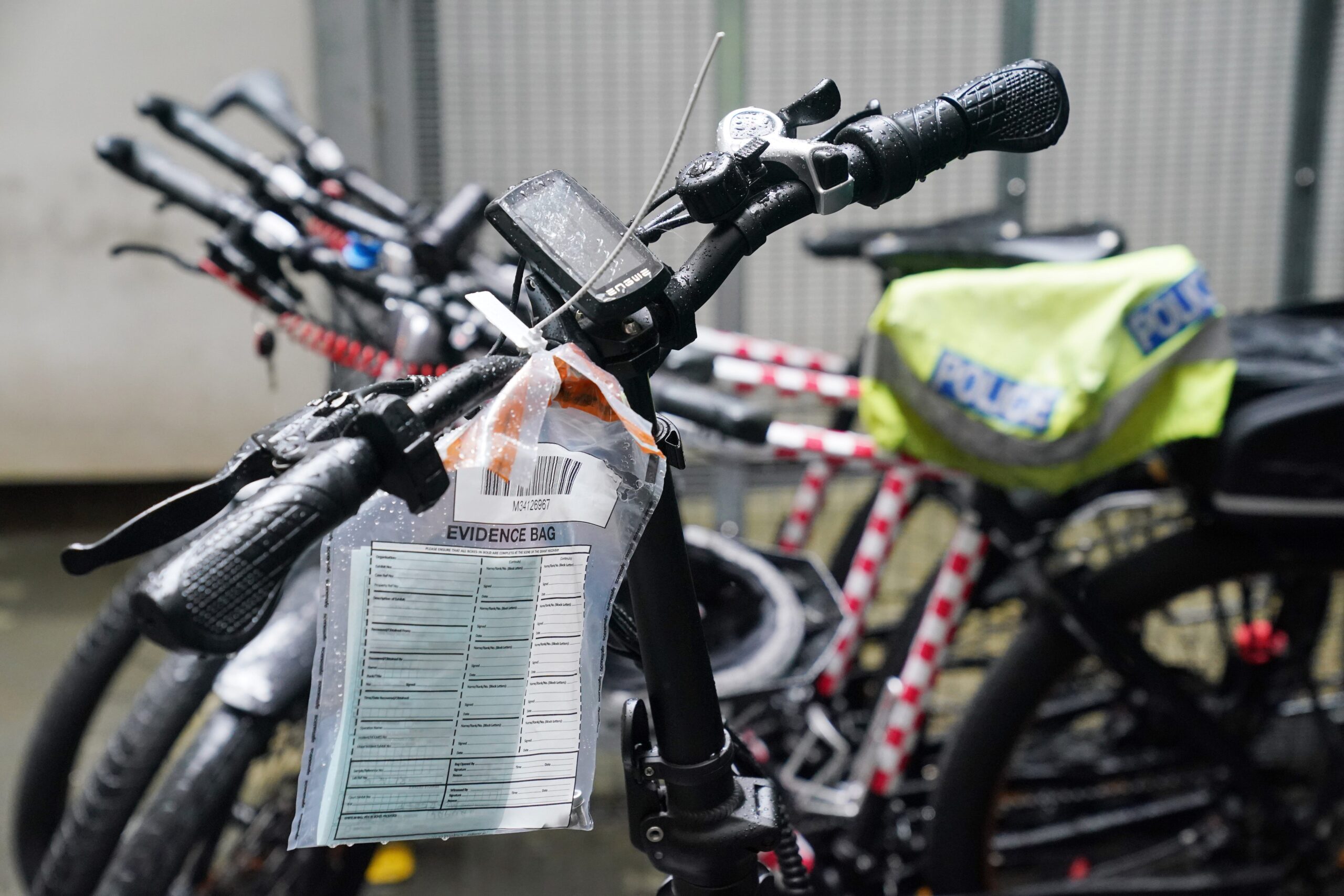
Sir Mark said the Met has been seizing e-bikes at an increasing rate.
He added: “This issue comes up in every borough.
“It comes up whether you talk about it in inner city boroughs, or Westminster, and then in outer London, in places like Bromley and Kingston, it keeps coming up.
“That’s why we’re making a big point about this.”
Sir Mark said “tremendously powerful” facial recognition technology has helped the force arrest the best part of 1,000 criminals over the last year, including those guilty of serious offences and sex crimes.
He said: “It has many uses and it will pick up people that speed, so it will pick up people on e-bikes and in all sorts of situations.
“It’s one of the biggest innovations in fighting crime we’ve seen in decades and that’s why we’re investing more in it, and Londoners will see more bad people taken off the streets through facial recognition than they have in previous years.”
Sir Mark added that rules around e-bikes and e-scooters are clear and “pretty tough”, with e-bike motors required to cut out at 15.5mph and e-scooters banned in London unless they are hire scooters.
Police have found some are illegally modified to reach faster speeds or to enable them to be powered without the pedals being turned. Conversion kits are available online for as little as £300.
E-bikes travelling above 15.5mph are treated as motorbikes, which must be registered, taxed and insured, and are seized by police if they break the law.
Once an illegal e-bike has been seized, the hazardous and recyclable parts are removed and the bike is crushed down.
The crackdown is part of phase two of the force’s A New Met For London plan launched on Tuesday.
