MI5’s initial failure to disclose all it knew about the Army’s top spy in the Provisional IRA during the Troubles was a “significant failure”, an independent report into the activities of Stakeknife has said.
The final report of Operation Kenova said that MI5 had “earlier and greater knowledge” of Stakeknife than it had at first stated.
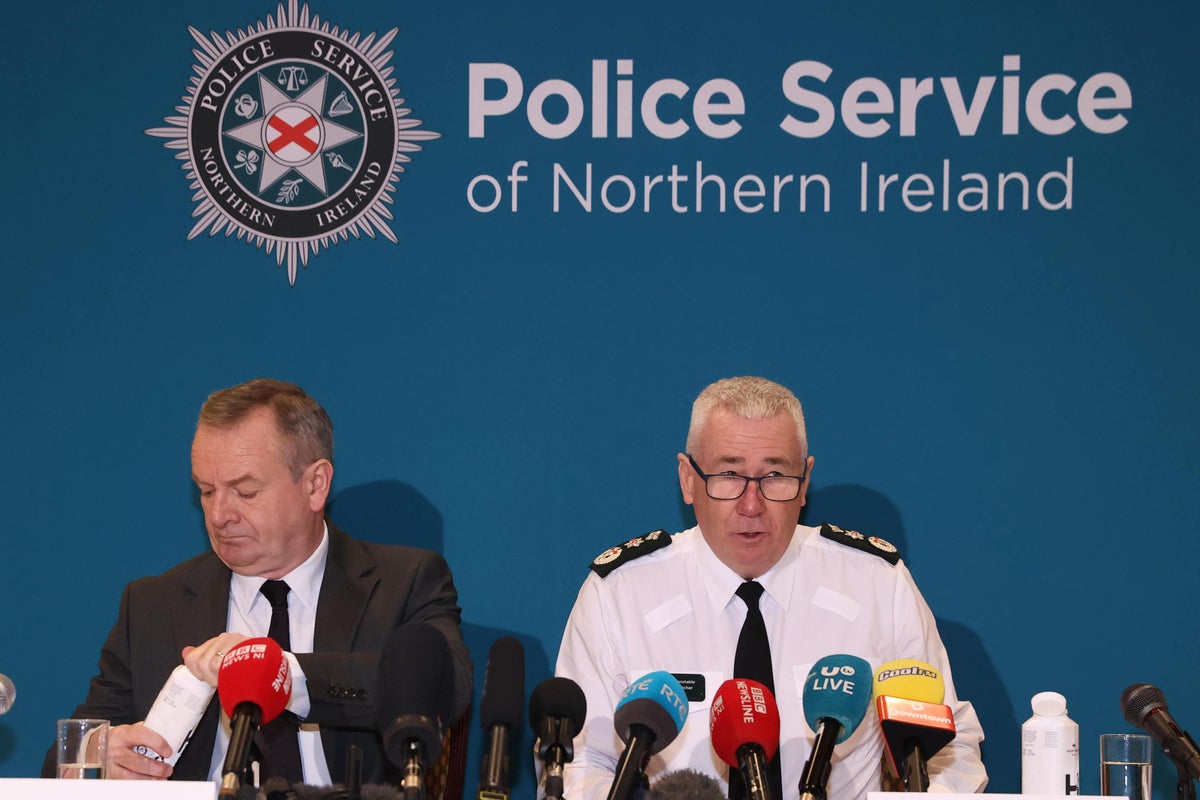
The UK Government has been urged to name Stakeknife, with Police Service of Northern Ireland (PSNI) Chief Constable Jon Boutcher stating the refusal to do so is “bordering on farce”.
Operation Kenova found in its interim report that more lives were probably lost than saved through the operation of Stakeknife, an agent who “committed grotesque, serious crime” including torture and murder.
Following the final report, Kenova chief Sir Iain Livingstone said there is a “compelling ethical case for the UK Government to derogate from the Neither Confirm Nor Deny (NCND) policy regarding the agent Stakeknife’s identity”.
He added: “It is in the public interest that Stakeknife is named.”
The agent was widely believed to be west Belfast man, Freddie Scappaticci, who was 77 when he died in 2023.
Mr Boutcher, who led the Kenova investigation before taking charge of the PSNI, said Scappaticci had been a “critical person of interest” at the heart of Operation Kenova.
He told a press conference in Belfast: “No statement about the identity of Stakeknife can be made without reference to Freddie Scappaticci.
“He is publicly alleged to have been a senior member of the IRA internal security unit and to have been Stakeknife.
“To directly quote a solicitor for the Kenova families who spoke to the BBC in 2024, the dogs in the street know that Fred Scappaticci is the agent Stakeknife.
“Scappaticci remained a critical person of interest at the heart of Operation Kenova, and strong evidence was found implicating him in serious criminality.”
Following the publication of the interim report last year, MI5 told Kenova it had found previously undisclosed material.
Sir Iain said the material had come eight months after the establishment of Kenova and two months after the final prosecution decisions, and the timing meant Kenova “was prohibited from investigating their contents”.
He said: “The further material revealed MI5 had earlier and greater knowledge of the agent than previously stated.
“The very fact that material owned and held by MI5 was not timeously disclosed understandably undermined the confidence of communities that state authorities had cooperated fully with Kenova.
“It was a significant failure on the part of MI5.”
MI5 director general Sir Ken McCallum offered sympathies “to the victims and families of those who were tortured or killed by the Provisional IRA’s internal security unit during the Troubles”.
The final Kenova report, published on Tuesday, updates 10 recommendations made in the interim report last year, including a call for the UK government to acknowledge and apologise to bereaved families and surviving victims.
It also calls for a full apology from the Republican Movement for the Provisional IRA’s abduction, torture and murder of those it suspected of being agents.
The final document includes a report of Operation Denton, which reviewed a series of attacks carried out by loyalists with involvement by some members of the security forces in the 1970s known as the Glenanne Gang.
It finds that an “easily defined Glenanne Gang did not exist”.
The report contends the term “evolved” to become a “convenient shorthand construct to group together the horrific activities of a broader network of paramilitary groups, primarily the wider UVF and Mid Ulster UVF acting with corrupt members of the security forces, including the RUC and UDR”.
It also finds that the UVF was responsible for the 1974 Dublin and Monaghan bombings, and there was no specific intelligence that could have prevented the attacks, which claimed 33 lives. It remains the biggest loss of life on any single day of the Troubles.
Kenova’s 10 recommendations also include a call to designate the longest day, June 21, as a day to remember all those lost, injured or harmed as a result of the Troubles.
The probe was initially set up to investigate the activities of Stakeknife within the PIRA’s internal security unit and commenced in 2016.
It examined 101 murders and abductions linked to the unit responsible for interrogating and torturing people suspected of passing information to the security forces during the conflict.
In total, it discovered 3,517 intelligence reports from Stakeknife, including 377 in an 18-month period.
However, the report found that “time and time again”, the reports were not acted on, apparently prioritising the protection of the agent over those who “could and should have been saved”.
The Public Prosecution Service (PPS) in Northern Ireland previously announced that no prosecutions would be pursued after consideration of the last batch of files from the investigation.
Some 32 people, including former police, former military personnel and people linked with the IRA, were considered for prosecution on a range of charges from murder and abduction to misconduct in public office and perjury.
However, the PPS found there was insufficient evidence to pursue cases.
The report also finds that the cultivation and recruitment of Stakeknife started in the 1970s and he continued to operate as an agent into the 1990s.
He was offered “financial incentives” during and after the period when he was operationally active, ranging from the equivalent of an annual wage to lump sums of thousands of pounds, including to assist with the purchase of a property.
Kenova was unable to ascertain how much money he was paid in total.
The report also found there had been two incidents when his handlers took him out of Northern Ireland for a holiday when they knew he was wanted by police for murder.
