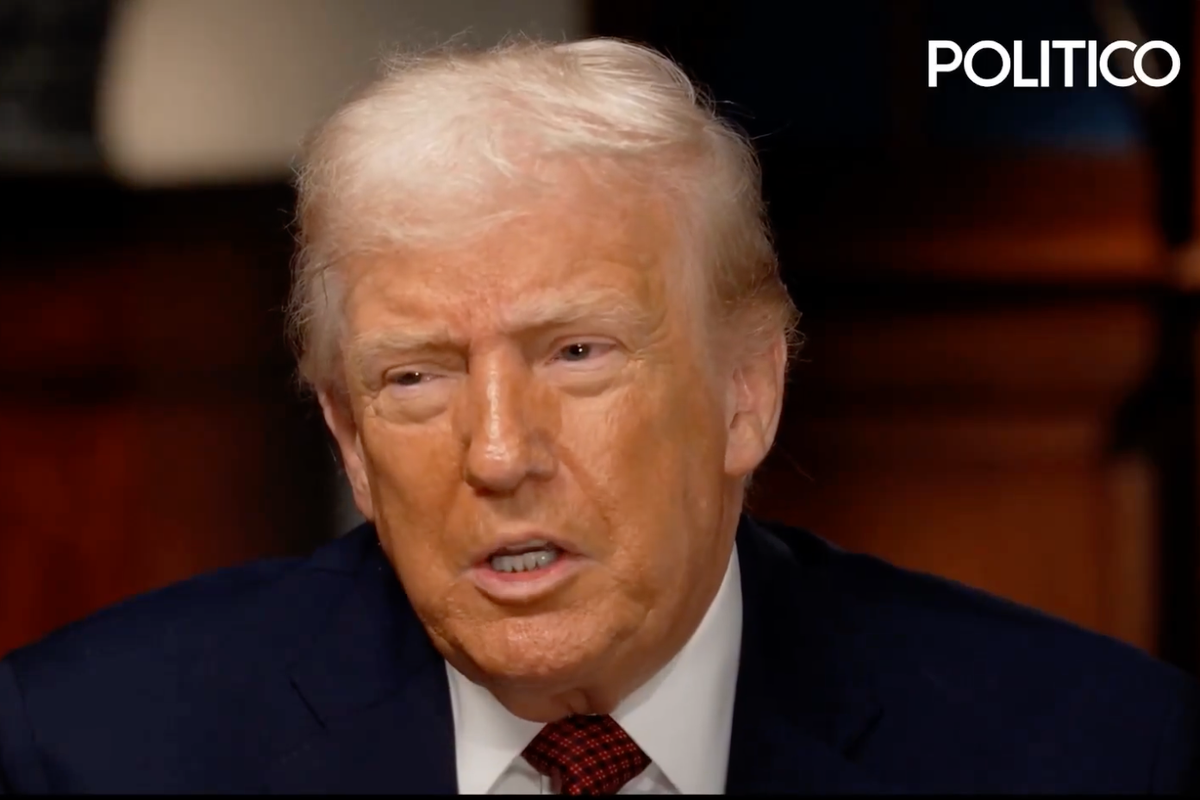
President Donald Trump is set to embark on the first in a series of public appearances that the White House says are meant to address voters’ concerns about rising prices on Tuesday, but he is already having trouble answering questions about the subject.
He brusquely dismissed a Politico reporter’s attempt to press him on how Americans should respond to an imminent increase in health insurance premiums — as Obamacare subsidies expire — at the same time they are trying to do holiday shopping and budget planning for 2026.
Trump initially was noncommittal when reporter Dasha Burns pressed him, in the interview published Tuesday, on whether he’d support a temporary extension to Covid-era tax credits for consumers who buy health insurance on Affordable Care Act exchanges, telling her, “I don’t know” and pivoting to his recent proposal to replace the subsidies with direct payments meant to help Americans purchase “much better healthcare.”
But when Burns started to ask him about the financial squeeze that the massive hike in healthcare costs would put on Americans this holiday season, the president cut off her query.
“Look, don’t be dramatic,” he said dismissively.
When asked directly if Americans’ healthcare premiums would go up when the Obamacare subsidies expire at year’s end, Trump replied: “I want to give … I’m giving them money. I want to give the money to the people to buy their own healthcare. That’s a good thing, not a bad thing.”
The president repeated his recent claim that Democrats are against his idea for direct payments because they “want the insurance companies to continue to make a fortune” and inisisted once again that he wants the same funds that would be used for extending the tax credits to “go to the people and let the people go out and buy their own healthcare.”
But individuals have no way to purchase less expensive healthcare coverage on their own because the structure of the American healthcare system requires pooling of risk through insurance, whether obtained through employer-based coverage or through exchange marketplaces such as those established by the 2010 healthcare reform law that the GOP has spent years trying to undo without offering a viable alternative.
After Burns told him that “most likely premiums will go up” without intervention, Trump could only stammer in response: “Uh, well…”
“Your premiums could go down if you did what I want to do. I want to give the money,” he said, though he did not explain how premiums would go down simply by giving Americans direct payments to purchase insurance outside the structure meant to lower premiums by sharing the cost across a larger group of consumers.
The president’s failure to offer a viable plan to reduce healthcare costs outside of his vague proposal for direct payments comes as his administration struggles to convince voters that he has made good on promises to lower the cost of living.
Trump’s victory in last year’s presidential election came in large part due to voters’ belief that he would do a better job of lowering costs than his Democratic opponent, former vice president Kamala Harris.
But since taking office the president has imposed massive tariffs on imports from most of America’s trading partners while making the baseless claim that the tariffs — which are import taxes paid by American companies and passed on to consumers in higher prices — are paid by foreign governments.
Opinion polls have consistently showed dissatisfaction with his administration’s economic record in recent months, and voters who elected gubernatorial candidates in New Jersey and Virginia last month did so because those candidates made affordability a centerpiece of their respective campaigns.
At the same time, Trump has dismissed voter concerns about affordability as a “Democratic scam” and a “hoax.”
Asked to defend his record on the economy, Trump told Burns he has “made a fortune for the United States” since returning to power by bringing in what he claims is “trillions” in foreign investment, much of it from authoritarian states such as Saudi Arabia and Qatar.
When pressed on what grade he’d give himself, he replied: “A-plus-plus-plus-plus-plus.”
