Ukrainian President Volodymyr Zelensky has asked for long-range missile systems to help his country strike deeper into Russian-held land
Ukraine will be able to choose how billions of pounds of frozen Russian assets are spent if Europe ploughs on with plans to release them, with options ranging from missiles to reconstruction.
The UK has frozen around £25bn of Russian assets since the invasion, while the EU holds about €210bn (£184bn), with the total coming to about £265bn worldwide.
British sanctions minister Stephen Doughty told The i Paper that the UK is “exploring every possible” way to legally spend Russian assets frozen in British bank accounts to support Ukraine – a move that would break nearly four years of deadlock. The EU is hoping to settle the plan to use Russian assets as soon as next week.
One diplomatic insider stressed that the spending of the assets would be led by Ukraine, with the UK and its allies keen to fit around Kyiv’s requirements rather than donate what is easily available.
Such a large fund would be likely to cover a diverse range of support, the insider said.
The purchases would also reflect the situation on the battlefield at the time any assets were spent. If the war is still raging, it is more likely to fund military equipment, but if a ceasefire is on the horizon it will be used for reconstruction efforts.
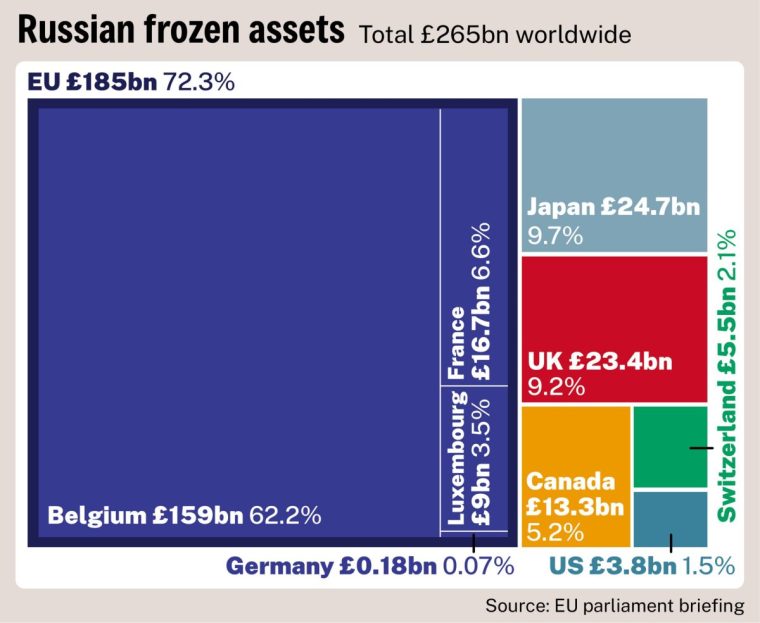
So far, the UK and its allies have only spent the interest accrued on the assets in support of Ukraine, totalling around £6bn last year.
This is largely down to fears of legal challenges and other repercussions from Russia, particularly from Belgium, which holds most of the assets, but also that it could set a dangerous precedent.
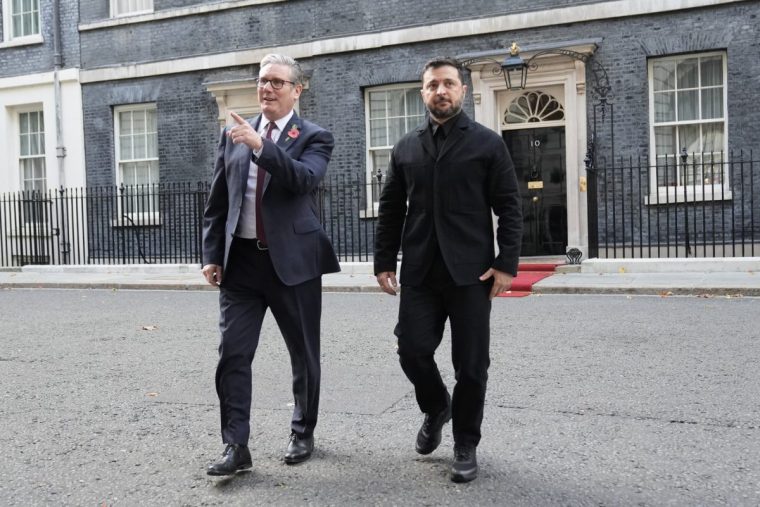
But, Prime Minister Sir Keir Starmer has said that the UK is “ready to progress” to using the full value of frozen Russian assets to support Ukraine.
Unlocking them would more than double Britain’s contribution to Ukraine’s war effort at little cost to the taxpayer. The funds could be spent on a range of military capabilities – but some politically sensitive items are likely to remain out of reach.
Missiles, artillery and vehicle repairs
Kyiv has repeatedly asked that the assets be used to support Ukraine against the invasion. “Anyone who delays the decision on the full decision of frozen Russian assets is not only limiting our defence, but also slowing down the EU’s own progress,” Ukrainian President Volodymyr Zelensky told European leaders last month.
Zelensky has asked for further long-range missile systems to help his country strike deeper into Russian-held land or even Russian territory.
Defence insiders said it was too early to speculate on which, if any, military capabilities the frozen assets could be spent on. But they pointed to the previous contributions the UK has made to Ukraine, paid for with the interest on the assets, which range from high-end missiles to vehicle repairs.
The money has so far paid for the delivery of millions of rounds of artillery ammunition, and support contracts to help maintain and repair Ukrainian equipment and vehicles, the Ministry of Defence said.
It has funded thousands of drones, hundreds of electronic warfare systems and more than 30 vehicles for military transportation.
Smaller products, such as ammunition and drones, have a quicker lead time for production and are invaluable for soldiers, so may be the focus of any new funds.
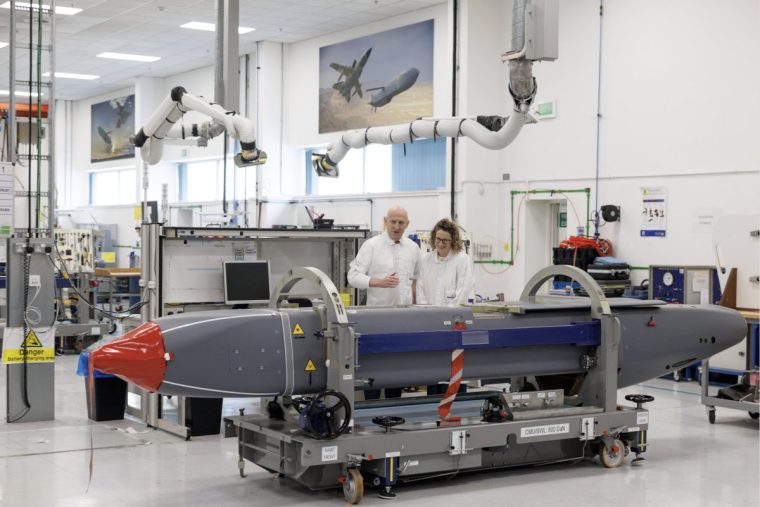
The UK has already supplied Storm Shadow missiles, which have a range of 155 miles, cost around £2m each, and have been used to hit targets within Russia. The Ministry of Defence has ordered new Storm Shadows from manufacturer MBDA to replace those it has given away, and may be able to increase that order.
Ukraine has asked for more Patriot missile systems and batteries, which cost around £3.1m per warhead, and is in talks with the US about upgrading its arsenal. However, the procurement pipeline on these advanced missile systems can be years-long, and it’s not clear when any orders placed now would come to fruition.
Sam Cranny-Evans, an associate fellow at defence think-tank Rusi, said Ukraine has been “fairly consistent” in its requests for long-range missiles, so Patriots and other air defence assets like the German-made IRIS-T, along with ammunition “would be high up there”.
Cranny-Evans also suggested that armoured vehicles would be high on Ukraine’s wishlist.
“There has been an emphasis on helping Ukraine to choose what it wants rather than getting what the West has available,” he said.
“You can see Denmark is procuring howitzers from Ukrainian companies, for instance, rather than buying things from European companies and delivering them, so if the funds or control of them is transferred to Ukraine, it could give more freedom and flexibility in how they equip their forces.”
Some products may still be off-limits for political, rather than financial, reasons.
Germany’s long-range Taurus missiles have long been high on Zelensky’s wishlist, but its leaders have consistently rejected this out of fear of being drawn into the war.
While there has been some wavering on the German position, there are no current indications that releasing the frozen assets would alter their decision.
Rebuilding Ukraine
Frozen Russian assets could also be used to support the rebuilding of Ukraine. The country has been devastated by the Russian invasion, with around 10 per cent of Ukrainian homes and more than 500 cultural sites damaged.
The total cost of reconstruction and recovery in Ukraine is forecast at $524bn (£393bn) over the next decade; approximately 2.8 times the estimated nominal GDP of Ukraine for 2024, according to the World Bank.
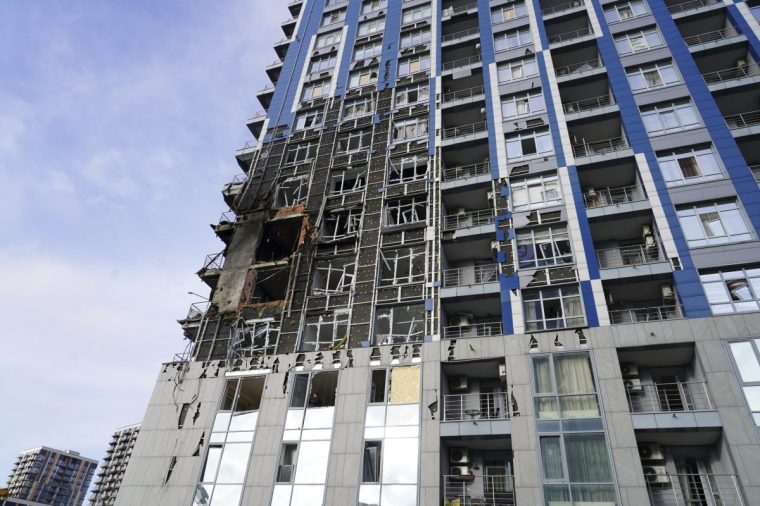
The EU has agreed to provide billions in reconstruction funding, and part of this is already being funded with the interest from frozen assets.
The UK has joined its allies in this, committing up to £4.1bn in fiscal support through World Bank loan guarantees to boost the Ukraine’s economy and up to £1.2bn in aid for humanitarian, energy, and reconstruction programmes.
This is funding anti-corruption work, a social recovery programme and a private finance initiative to bring in investment for small businesses, and the money has already enabled the reconstruction of six key bridges in the Kyiv region, according to the UK Government.
