The US President’s comments may be ‘disingenuous’ but they are a worrying sign of alignment with Putin, experts warn
The UK and Europe must “push back against” the White House’s efforts to impose its peace deal, an expert has said after Donald Trump accused Volodymyr Zelensky of failing to read the Americans’ latest proposals.
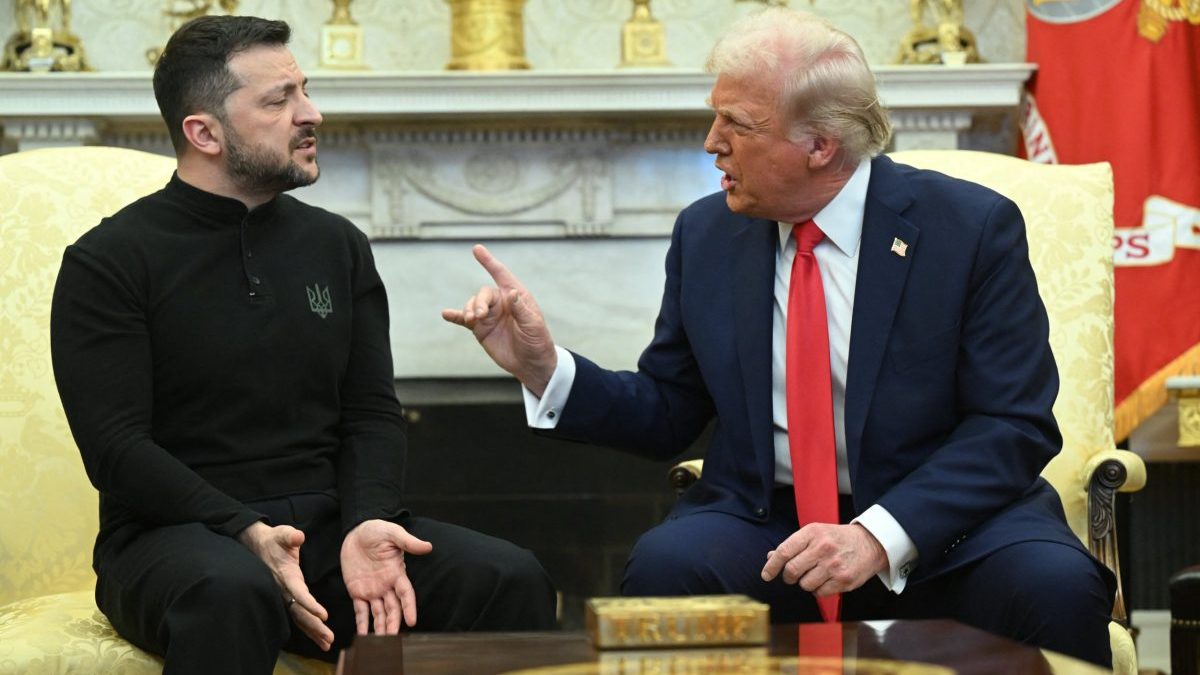
“I have to say that I’m a little bit disappointed that President Zelensky hasn’t yet read the proposal, that was as of a few hours ago,” the US President said on Sunday night, claiming Ukrainian negotiators “love” the plan.
Zelensky said he would be briefed by negotiators and “some issues can only be discussed in person”. On Monday, Ukraine’s President was meeting Sir Keir Starmer, French President Emmanuel Macron, and German Chancellor Friedrich Merz, at No 10 for talks expected to focus on how to respond to US proposals for ending the war with Russia.
Dr David Dunn, a professor in international politics at the University of Birmingham, said the peace plan remained “massively favourable” to Russia.
What’s the latest on Russia-Ukraine peace plans?
The comments from Trump follow three days of talks in Miami last week between US officials and Ukrainians, including senior negotiator Rustem Umerov. These have reportedly resulted in a revised draft of the 28-point peace proposal originally proposed by the White House last month.
Widely viewed as being favourable to Russia, the initial US-backed plan required Ukraine to reduce the size of its army, concede more territory to the Russians and pledge not to join Nato.
This was followed by talks in Geneva between delegations from the US, Ukraine and its European allies, from which reports emerged of a counterproposal containing terms more favourable to Ukraine.
Earlier this month, Vladimir Putin held five hours of “constructive” talks at the Kremlin with US envoy Steve Witkoff, but aspects of the plan remained unappealing to Russia and a breakthrough was not reached.
Amid the most recent talks in Florida, officials in Washington and Kyiv said over the weekend that any “real progress” towards ending the war was dependent upon “Russia’s readiness to show serious commitment to long-term peace”.
Dunn told The i Paper: “What the White House wants is peace. They’re not particularly concerned about the nature of that peace, all Trump wants to talk about is ending the fighting without a realisation that doing so on terms favourable to Russia is likely to end up being to the detriment of European security, and cause the prospect of Russia coming back for more having gotten what it wanted in the first place.
“There’s a lot of pressure on Zelensky to accept that, and a lot of European diplomacy aimed at trying to prevent that being the end result.”
John Lough, head of foreign policy at London-based think tank the New Eurasian Strategies (NEST) Centre, agreed that the Trump administration’s motives in pushing through a peace deal may not have Ukraine’s long-term interests at heart.
“I don’t think Trump and his close team care at all about Ukraine’s long-term security – they want to notch this up as another success, Trump gets his Nobel Peace Prize, and the US then basically normalises relations with Russia,” Lough said.
“If they go down that route, it will lead to a very substantial rift with the Europeans.”
What is Trump’s goal?
Monday’s meeting at No 10 takes place after continued Russian air strikes in Ukraine over the weekend.
It also follows Trump’s claim that Zelensky had “not read” the latest US proposals.
On Sunday, the US President told reporters in Washington that Ukraine’s negotiators “love” the plan and that Russia was “fine with it”.
He said: “Russia’s you know, Russia I guess would rather have the whole country when you think of it. But Russia is, I believe, fine with it, but I’m not sure that Zelensky is fine with it.”
Ukraine’s President said he was “determined to keep working in good faith”.
In his weekly address to his nation on Monday morning, Zelensky said “substantive discussions” had been held with Trump’s envoys.
“The American envoys are aware of Ukraine’s core positions, and the conversation was constructive, though not easy. We continue our work,” he added.
Dunn said the latest apparent jab at Zelensky from the Oval Office was “partly disingenuous” but also “worrying for a variety of reasons. Trump is somebody who often twists things and deliberately misleads people, and that’s what’s happening here.
“What Zelensky said and what Trump said are completely different things: Trump said he [Zelensky] hasn’t read the document, Zelensky said he was still studying the document; one is diplomatic speak for, ‘I need more time to work out how to respond to this,’ whereas Trump is portraying it as if Zelensky is nonchalant and can’t be bothered to read things.”
This description of Zelensky by the US President is worrying, Dunn said, “because it allows Trump to criticise him, portray him as not serious and portray to his own base that America can be justified in walking away.
“The fact he’s doing this suggests he may be inclined to walk away and not support Ukraine, while saying positive things about Russia. Again, we see Trump supporting the aggressor and not the invaded nation. That seems to be the direction of travel of this White House.
“The Russians know how to get the Trump administration to do its bidding in a very transparent way, and the Americans are saying, ‘Yes please, give us some more.’”
Lough added that the US President’s comments appear indicative of “some alignment between Trump and Putin on their desire to try to remove Zelensky from the game”.
“[Trump] goes through these phases of seeing Ukrainians as being the obstacles to peace,” he continued.
“What’s interesting I think this time is that he’s picking on Zelensky personally, and suggesting that his staff takes a different view on what’s been proposed.
“Trump is very frustrated by Zelensky; he sees him as being surprisingly inflexible.
“But the point here is that I think any Ukrainian leader in Zelensky’s position would not be able to sell to their country this idea of simply abandoning territory that they currently occupy without something very substantial in return, like cast-iron security guarantees – which they are not going to get.”
What must Zelensky and Starmer do?
The main goal of Monday’s “choreographed” meeting at No 10 would be to “demonstrate solidarity with Ukraine and symbolically push back against the White House’s efforts to impose its peace on Ukraine,” Dunn said.
“They could talk about the weather in that meeting, but it’s the message it sends across the Atlantic of European support for Ukraine, solidarity with Ukraine.”
He added that European leaders are likely to continue “tutoring Zelensky on what to say, how to play the Americans, how to walk the fine line by not giving in to their demands without upsetting them and causing them to walk away.
“There will obviously be discussions on what more the Europeans collectively can do for Ukraine, perhaps even talking about the next steps regarding the freeing of access to the frozen [Russian] assets in Brussels.”
Lough, meanwhile, suggested that an eventual “landing zone” for a peace deal could see Ukraine would have no cap to its armed forces or limit to weapons in its arsenal, be free to trade with foreign armies, and eventually integrate into “a sort of successor organisation of Nato”.
“Now is the moment for the Europeans to show much greater confidence and determination to go alone here, if they have to, because the US is making clear that Europe is expected to exercise leadership and be responsible for European security,” he added.
“After decades of looking to Washington, this is not something that’s easy for Europe, and we have a European Union that’s divided on the issue. There are countries that are not aligned with the so-called coalition of the willing, and that’s a big problem.”
In future negotiations, Ukraine and its European allies are likely to continue objecting to any transfer of Ukrainian territory to Russia, and insisting that any ceasefire be accompanied by security guarantees from both the US and the “coalition of the willing” convened by the UK and France.
Speaking ahead of his meeting with Zelensky, Macron and Merz, Starmer called for “hard-edged security guarantees” for Ukraine if the fighting stops.
The Prime Minister told reporters: “If there is to be a ceasefire, it needs to be just – because Ukraine has taken heavy, heavy losses and paid a very heavy price for a war which was not of their making – but it’s also got to be lasting, because we know Putin does not respect agreements that don’t have hard-edged security guarantees behind them, so that’s what we’ll be focusing on.”
Despite the US administration saying European leaders hold “unrealistic expectations” about the war, Starmer also paid tribute to Trump.
Your next read
“You can never get from conflict to peace by an easy, straight route,” the Prime Minister said.
“It’s always a complicated business, but I do think that we’re making progress, and I think what President Trump has been able to achieve in the last few weeks, getting it this far, has been the furthest we’ve got in the four years.
“And I therefore pay tribute to him for that, and hopefully we can make some further progress this afternoon.
