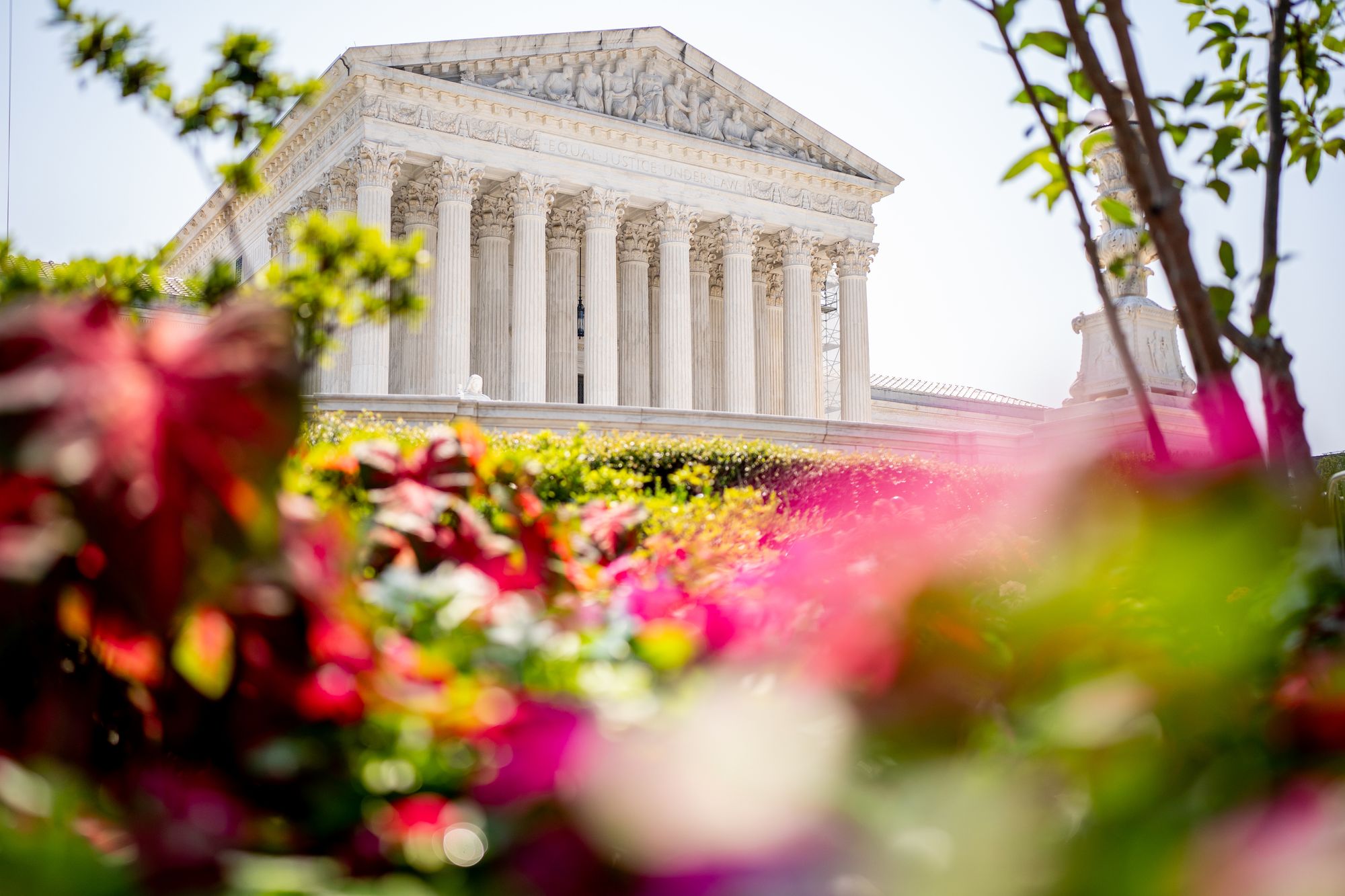
The U.S. Supreme Court has opted not to hear an appeal over the removal of 17 books from public libraries.
The justices let stand a lower court’s decision allowing the removal of the books in a rural Texas county, including ones dealing with themes of race and LGBT identity.
The lower court rejected an argument made by residents that removing the books was unlawful under the U.S. Constitution’s First Amendment protections against government abridgment of free speech.
The decision by the New Orleans-based 5th U.S. Circuit Court of Appeals applies to the states of Texas, Louisiana and Mississippi but does not set a nationwide legal precedent.
There has been a surge in book banning in public schools and public libraries in recent years in many locations around the United States, driven by conservative groups and new state laws limiting what kinds of books children can access.
Llano County is a rural area about 80 miles (130 km) from the Texas state capital Austin. The dispute began in 2021 when one faction of local residents asked the Llano County library commissioner to remove the disputed books, which covered topics including transgender issues, race and slavery in the United States, puberty and bodily functions like flatulence.
The 17 works at issue include the 1970 book “In the Night Kitchen” by acclaimed author Maurice Sendak due to the depiction of its main character, a boy named Mickey, as nude in some of its illustrations as he visits a surreal kitchen in a dream.
The library commission ordered librarians to comply with the demands, and residents who pushed for the book removals were appointed to a local county board.
A different group of county residents sued to challenge the book ban, alleging their First Amendment rights had been violated.
At issue is a First Amendment principle called the right to receive information. The Supreme Court long ago concluded that the First Amendment encompasses a fundamental right to receive information and ideas, as it is necessary for the meaningful exercise of other First Amendment rights such as freedom of religion, expression, speech, assembly and the press.
A federal judge in 2023 ordered county officials to restore the disputed books to the library system. But the 5th Circuit in a 10-7 decision reversed the judge’s ruling and sided with the county. The 5th Circuit concluded that public library patrons have no right to receive information under the First Amendment.
Writing for the 5th Circuit, Judge Stuart Kyle Duncan asserted that “no one is banning” books by removing them from libraries.
“If a disappointed patron can’t find a book in the library, he can order it online, buy it from a bookstore or borrow it from a friend,” wrote Duncan, a judicial appointee of Republican President Donald Trump. “All Llano County has done here is what libraries have been doing for two centuries: decide which books they want in their collections.”
The Supreme Court ruled in a 1982 case that school boards may not remove books because they dislike the ideas contained in those titles. The justices splintered in their reasoning at that time, leaving the scope of the First Amendment right to receive information unclear.
In another case, the Supreme Court in June ruled in favor of Christian and Muslim parents in Maryland who sued to keep their elementary school children out of certain classes when storybooks with LGBT characters are read.
