Tougher tax rules make life more complicated for self-employed expats as Spanish authorities crack down
British self-employed expats in Spain face tougher tax rules next year as the authorities clamp down.
All card payments received by self-employed workers and businesses will now be reported to the tax authorities, no matter how small they are.
Until now, banks only had to report card payments if they were over €3,000 (£2,618).
Spain’s government hopes to crack down on unreported income and combat tax fraud.
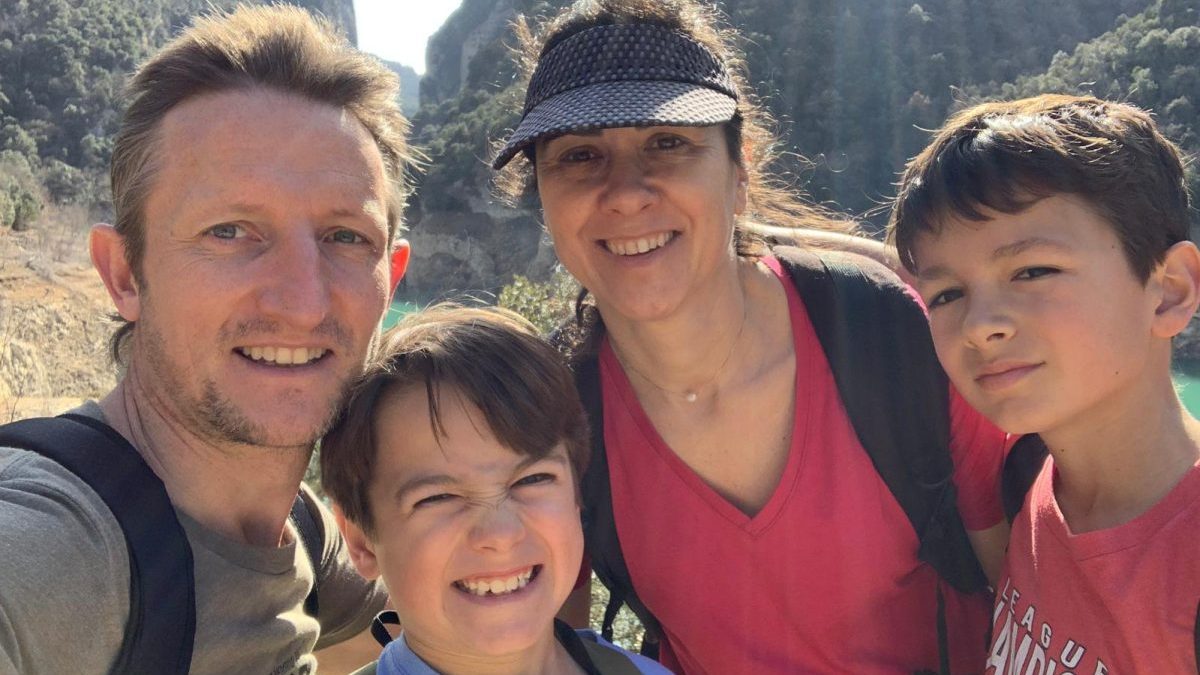
For the likes of Neil Wendover, a British seafood consultant who lives in Barcelona, it means life as a self-employed worker will be more complicated.
Wendover, 46, who is originally from Bristol, arrived in Spain from the United States just over three years ago and at first worked as a staff member for an American company.
Under the so-called “Beckham Law“, set up when the former Manchester United footballer joined Real Madrid in 2005, Wendover was paying 24 per cent income tax. This approach was designed to attract high-value foreign workers by offering them low tax rates.
When Wendover decided to go it alone as a consultant in 2023, his tax rate rose to 45 per cent. His income as a freelancer, or autonomo, varies per month from zero to €35,000 (£30,500).
The married father of two sons said he earns on average €7,000 (£6,100) per month so his estimated salary is €120,000 (£105,000) per year.
“The tax situation has been challenging to understand, and I had to take on an accountant which was an extra expense,” he told The i Paper.
“I am slowly starting to understand the tax system. My problem has been cash flow. These are all learning processes. I have been investigated three times but have won each time.”
Wendover said his treatment at the hands of the tax authorities has been “brutal” as each time he has been given only ten days to respond to allegations relating to investigations.
“I love everything about Spain except this. It truly makes life difficult,” he added.
He said he would advise Britons to “ideally avoid being an autonomo in Spain – choose a different country”, and if they did go ahead, to “be aware of the consequences” involving reporting, tax and other complications and get a good accountant.
Alistair Spence Clarke, a chartered accountant of Spence Clarke in Marbella, which deals with many British expats, said: “More data means more [tax] inspections. We advise our self-employed clients to keep separate personal and business accounts to help avoid problems.
“It’s not such a big deal for typical expat clients. It is the retail self-employed clients that this is targeting – those that don’t declare all their sales.”
Spanish government statistics from June 2024 showed there were 3.4 million self-employed workers in the country.
Of these, 2.9 million were Spaniards and 456,461 were foreigners. The number of British autonomos was not disclosed but 54,334 came from non-EU countries in Europe.
There was a rise of 6,187 in foreign self-employed workers between 2023 and 2024. The service industry was the largest group employing foreign freelancers.
A Spanish treasury spokesman said: “We do not keep figures of self-employed workers by nationality.”
Your next read
The spokesman did not comment on the forthcoming changes.
A Spanish National Statistics Institute survey in 2022 found there were 293,000 Britons living in Spain.
To work as a self-employed person in Spain, UK citizens must either have residency in Spain, or have a digital nomad visa or an entrepreneur’s visa.
