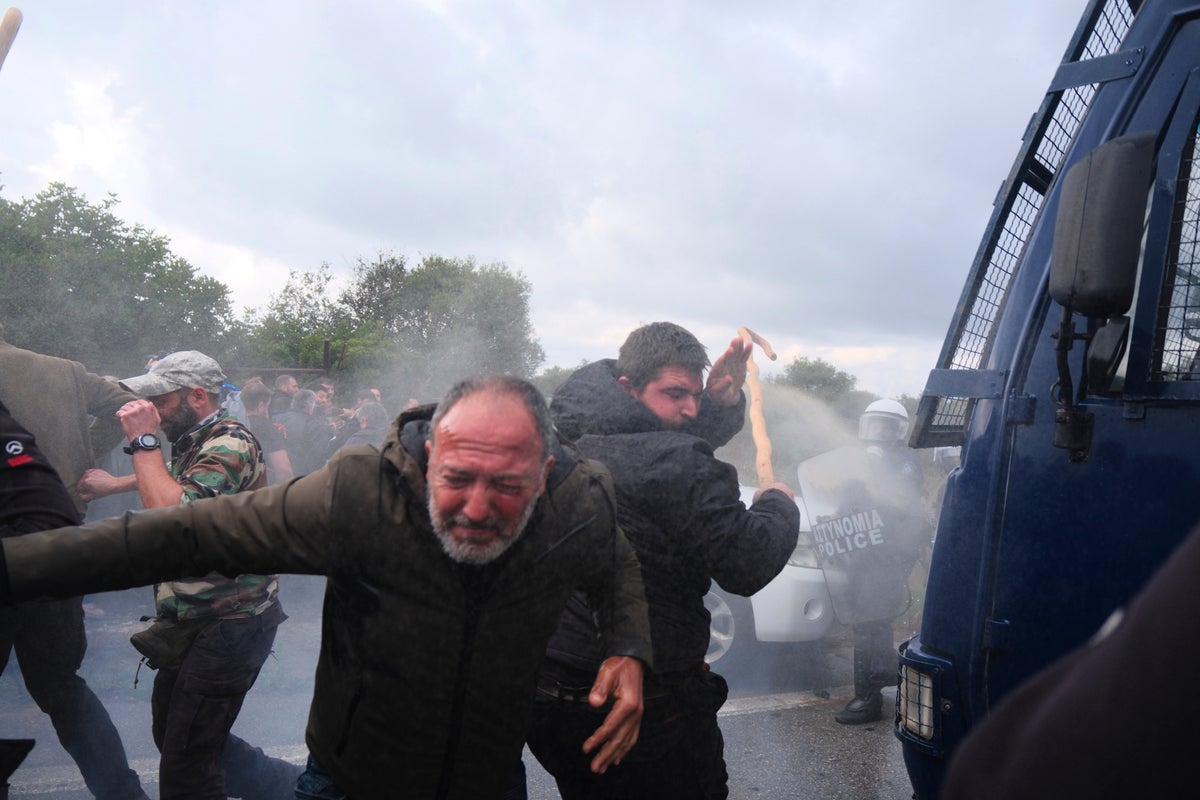
Greek farmers have significantly escalated their protests, causing widespread disruption across the country, including blockades at border crossings, roads, and even an airport on the island of Crete.
The action follows delays in European Union subsidies, which have been held up amid ongoing corruption investigations.
Local media reports indicate that thousands of trucks are participating in at least 20 separate blockades.
Prime Minister Kyriakos Mitsotakis, whose government’s popularity has been affected by the dispute, has urged farmers to end the demonstrations, stating: “The government is open for dialogue.”
The protests stem from allegations made by European prosecutors in February, claiming that thousands of farmers, aided by state employees, had for years faked land and livestock ownership to qualify for EU funds.
In response, Greece’s centre-right government has pledged to reform OPEKEPE, the state agency responsible for handling these EU subsidies.
Greek authorities have also launched their own investigation into farmers’ applications and tax records.
The government has confirmed that more than 40,000 farmer applications are currently under inspection, and while it has committed to distributing 3.7 billion euros ($4.3 billion) to farmers this year, it has acknowledged the payment delays.
Some of the farmers’ rallies, which began last month, have turned violent.
On the island of Crete on Monday, police fired tear gas to disperse a group of protesting farmers who hurled stones at them as they tried to reach the airport of Heraklion, state TV ERT said.
Airport operations had been suspended due to the action since 1200 GMT, an airport official said. Another official said that protesters had crossed into the flight corridors.
Another group tried to block the airport of Chania and damaged police vehicles.
In the north, farmers disrupted traffic at the Promachonas and Kipi border crossings with Bulgaria and Turkey respectively. A customs official at the Kipi checkpoint said that only trucks with sensitive goods were allowed to cross.
Roadblocks were also set up in southwestern and central Greece, where farmers have said they aim to block the Volos port this week.
