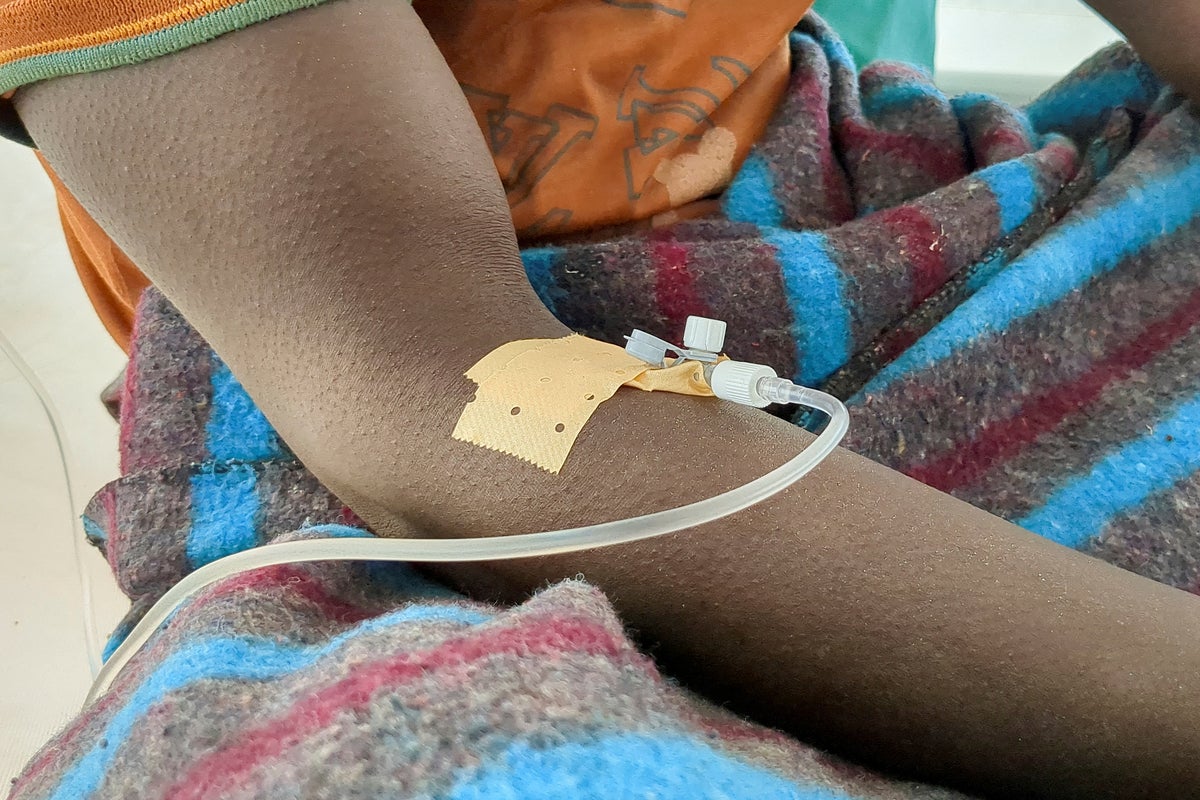
The Democratic Republic of Congo is battling its worst cholera outbreak in 25 years, with almost 2,000 lives lost since January, the UN children’s agency announced on Monday.
The devastating human cost was tragically highlighted in Kinshasa, where 16 out of 62 children at one orphanage died within days of the disease taking hold, UNICEF reported.
“Congolese children should not be so gravely affected by what is a wholly preventable disease,” stated UNICEF spokesperson John Agbor.
Cholera, a severe and potentially fatal diarrhoeal illness, spreads rapidly through untreated sewage and contaminated drinking water.
The crisis in the DRC is exacerbated by ongoing conflict and a critical lack of clean water.
This contributes to a wider surge across Africa, with health authorities raising the alarm over a 30 per cent increase in cases compared to last year, notably in Angola and Burundi.
Since January, 64,427 cases and 1,888 deaths have been recorded, including 14,818 infections and 340 fatalities among children. Seventeen of the country’s 26 provinces are currently impacted.
Compounding the issue, only 43 per cent of the population has access to basic water services – the lowest rate in Africa – and just 15 per cent use basic sanitation.
More funding is urgently needed for sanitation, hygiene, and health services. While the government has a cholera elimination plan with a proposed budget of $192 million, UNICEF is appealing for about $6million for 2026 to sustain its rapid response work.
Mr Agbor warned: “Without additional funds and coordinated action, many more lives could be lost.”
Congo has also battled an Ebola outbreak this year after cases were first reported in September.
It was reported that 43 people died following the outbreak, but after a period of 45 days with no new confirmed cases, the outbreak was declared over by the World Health Organisation (WHO) last week.
