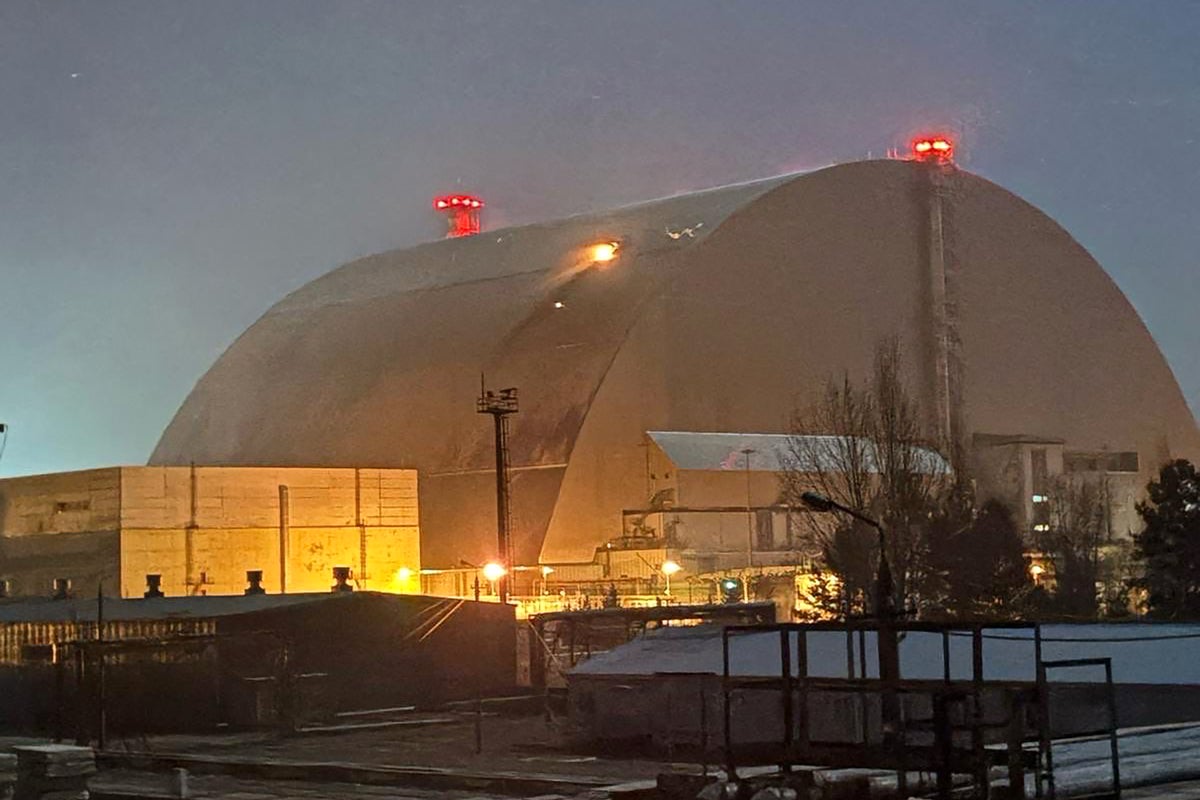
The protective shield at the Chernobyl power plant can no longer contain radioactive material due to damage caused by a drone strike earlier this year, the UN’s nuclear watchdog has warned.
In February, the plant was damaged by a drone armed with a warhead, which pierced the outer shell, helping prevent radiation leaks from Chernobyl’s reactor Number Four. Ukraine said Russia was behind the attack, but the Kremlin denied responsibility.
Rafael Grossi, the director of the International Atomic Energy Agency (IAEA), said an inspection last week found that the structure had “lost its primary safety functions, including the confinement capability”. No permanent damage has been done to the load-bearing structures or monitoring systems.
Although repairs have been carried out, the site requires a “comprehensive restoration” in order to “prevent further degradation and ensure long-term nuclear safety”, Mr Grossi said.
In February, the drone punched a hole in the structure of the outer shell and briefly started a fire around the reactor, which was destroyed in 1986 when the plant exploded and sent radiation across Europe. It remains the world’s worst nuclear accident, killing 31 people.
Radiation levels at the shuttered plant in the Kyiv region have not increased, the IAEA said, as the drone strike did not breach the plant’s inner containment shell.
The shield was built in 2016 to prevent the release of radioactive material into the atmosphere due to the Chernobyl disaster. The plant’s last working reactor was closed in 2000.
In the first weeks of its February 2022 invasion, Russian forces occupied the plant and the surrounding area – which lies around 130km north of Kyiv – before withdrawing from northern Ukraine in late March.
Russian forces have been accused by Ukraine and its European allies of playing fast and loose around key nuclear sites, including both Chernobyl and Zaporizhzhia, which is the largest nuclear power plant in Europe. It has been occupied by Russia since 2022.
Speaking on Saturday at the Reagan National Defense Forum, Donald Trump’s outgoing Ukraine envoy, Keith Kellogg, said efforts to end the war depended on the two outstanding issues of the Donbas and the Zaporizhzhia Nuclear Power Plant.
The Zaporizhzhia plant, which is not in service, needs reliable power to cool its six shutdown reactors and spent fuel, to avoid any catastrophic nuclear incidents.
