Among other things, Dmytro Kuleba says he was told Jared Kushner was a ‘no-name’ and not to cultivate him as a contact
Earlier missteps when it came to dealing with Donald Trump’s team may be having an impact on Ukraine’s efforts to secure a favourable peace deal with Russia.
Ukraine’s former foreign minister Dmytro Kuleba says he was told by Ukrainian President Volodymyr Zelensky’s chief of staff last year that Trump’s son-in-law, Jared Kushner, was a no-name and not to cultivate him as a contact for Ukraine.
Kuleba, who stepped down in September 2024, said he met Kushner early that year, but his efforts to establish a connection were not supported by Andriy Yermak, who was Zelensky’s right-hand man until he was forced to resign last month following an anti-corruption raid on his home.
The revelation potentially exposes one of Ukraine’s biggest own goals, given the role that Kushner, along with US Special Envoy Steve Witkoff, is playing in leading the Trump administration’s peace negotiations, first in Gaza and now in Ukraine.
The initial text of the US-backed peace proposal, shared with Ukraine last month, heavily echoed Moscow’s own proposals, and while discussions are still taking place, many fear that Trump will push through a deal that favours Russian interests over Ukraine’s, given his desire to claim a win.
Asked how Russian President Vladimir Putin and not Ukraine had been able to forge such good relationships with the Trump administration, Kuleba told me: “That’s a painful story to tell.”
“Some domestic mistakes were made in the way the outreach to the Trumpist camp was conducted,” he said. “There was no systemic, reliable communication channels built – that’s the fact.”
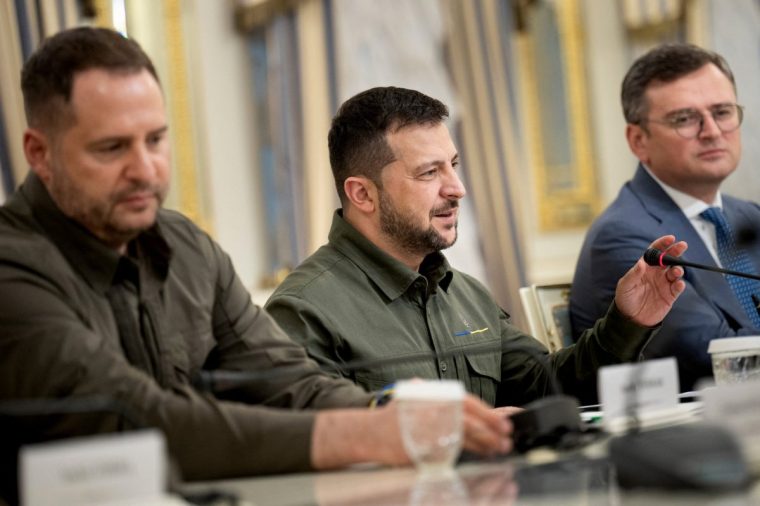
Kuleba said that in March 2024, before Trump’s re-election, he started a note on his phone called “Trump’s Circles”, aimed at targeting those around the then-Republican presidential candidate.
He said that back then, it was difficult to gauge who might serve as National Security Adviser and Secretary of State if Trump reclaimed the White House. But he said that Kushner, given his constant proximity to Trump as his son-in-law, and his role in the first administration, was an obvious person to try to befriend.
“I met Kushner in early 2024 at a private dinner in Europe, and we were introduced to each other and exchanged contacts. I came back to Kyiv, and I briefed the Ukrainian President that I can develop this contact, and I believe it would be helpful long-term,” Kuleba said. “Yermak was completely opposed to it, and for a very simple reason, because he wanted to be the sole communicator with the United States.
“So, he basically said that Jared Kushner is no one, is no name, and we have to bet on other people.”
Zelensky’s office was contacted for comment, but directed inquiries to Yermak, who hit back and accused Kuleba of creating fake news.
“I’ve always treated every American official, including Jared Kushner, with full respect. Ukraine values its strong relationship with the United States — with the President, both parties in Congress, and the American people,” he told The i Paper.
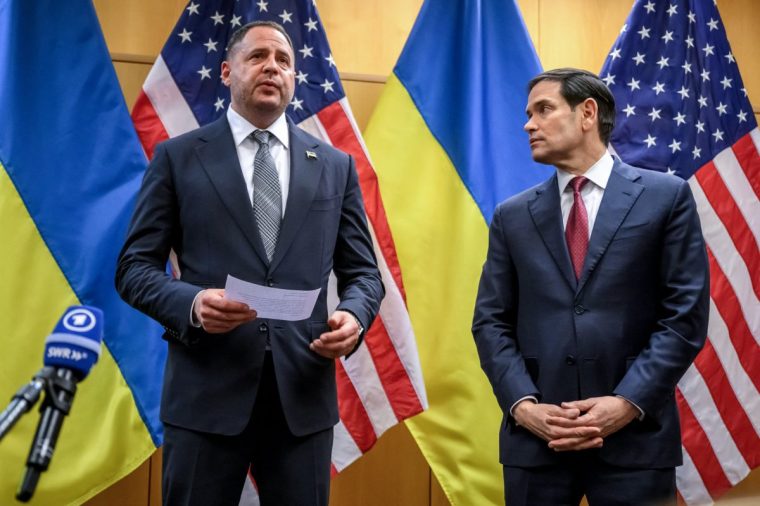
“If someone now chooses to say otherwise behind my back, that says more about their personal agenda than about my actions or views. Speaking up only now, when it’s convenient, isn’t just unfair — it’s cowardly,” he added.
Kuleba said of his recollected conversation with Yermak that it was one of Kyiv’s “strategic mistakes”.
“You have to build relationships; it takes time, and if we had, even if not me personally, but someone else had started building a relationship with Jared, at least it would do no harm,” he said. “As we observe now, it would have been extremely beneficial for Ukraine if Jared had a better understanding and empathetic attitude towards our country.”
Kuleba added that nations are like humans, and that Russia, the US and European countries had also made mistakes.
“If this were the only mistake that we made, I would have been happy,” he said. “But we made many more mistakes. Some of them were made because of the lack of experience. Others, out of the lack of judgment.”
Kuleba warned that Russia was learning from its mistakes better than Ukraine, which had become overconfident after its early successes.
“We became overly passionate. We were euphoric. We began to believe that victory is within reach,” he said. “So instead of learning lessons, we began to believe in our perfection. And Russia learned its lessons, and this is where we are.”
Europe and Ukraine have been frantically trying to push back on the initial, US-based peace proposal – which, among other things, would see Kyiv hand over territory in eastern Ukraine and stop it ever joining Nato – but much will depend on the White House.
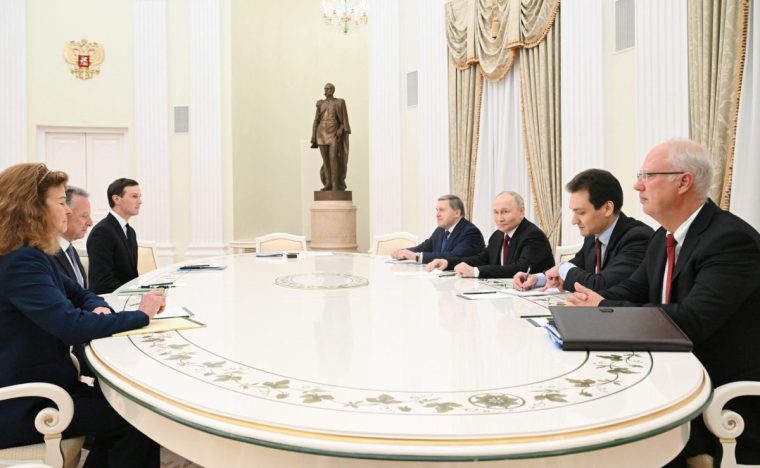
On Monday, Kushner and Witkoff spent five hours in Moscow discussing the peace deal.
Kuleba warned that Russia was also on course to wage war against Nato in Europe, which he said would be a test of the military alliance’s future.
Your next read
“If things do not change in Europe and in the way Europe and America support Ukraine, Putin is going to wage a war against a Nato ally in Europe within years. We are not talking about decades,” he said.
He also said Europe’s response in the first 24 hours would determine whether Nato would survive, as Putin’s goal was not to claim territory but to try to expose the alliance’s collective defence clause, Article 5, as hollow.
“Nato is proudly and fairly arguing that it is the most successful defence alliance in human history because no one ever dared to attack it — that’s a fair point,” he said. “But now you [would] have to prove the same point after being attacked.”
