After months on the sidelines of US-led peace talks, Europe is trying to rise to the challenge of guaranteeing Ukraine’s post-war future in the event of a ceasefire.
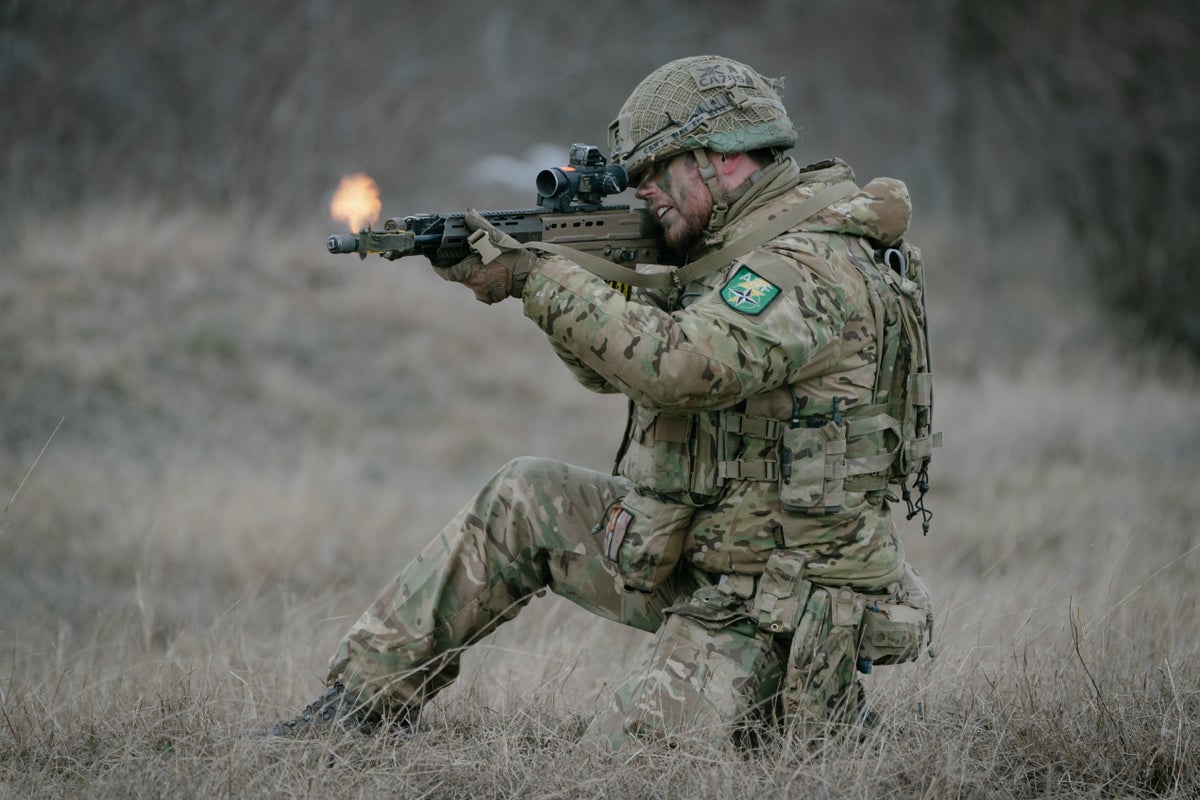
Britain and France are leading the push for a so-called Reassurance Force in Ukraine to retrain the army and uphold a peace deal if it emerges.
Downing Street said Britain is making plans for the multinational force drawn from partners on the continent, despite the Kremlin’s rejection this week of any foreign deployment as “unacceptable”.
Thousands of allied troops could be sent to cities across Ukraine to help the army recover its strength and stand as an independent deterrent to Russian aggression – if both sides can agree to terms.
The plans are months in the making, forged from discussions between Kyiv and the Coalition of the Willing about what security guarantees are needed to end the war.
A European presence on the ground was initially dismissed when Washington unveiled a draft peace proposal last week that ruled out the deployment of international peacekeepers.
But the US appears to have warmed somewhat to Europe’s model for security after its contributions helped foster decisive progress in talks.
What could a Reassurance Force look like?
Over the last nine months, the Coalition of the Willing has committed to protecting Ukraine by helping reconsolidate its military, protecting its airspace and deploying a small number of troops.
During a virtual meeting with coalition members last week, French president Emmanuel Macron said a taskforce has been set up to whittle down ideas into tangible military commitments.
The focus would be to restore Ukraine’s army to full strength which would serve as an independent deterrent against future aggression. Former British Army Colonel Philip Ingram told The Independent that European training forces already working with Ukrainian soldiers in their home countries would likely be redeployed to help the military closer to home.
“This could be done on a series of bilaterals between Ukraine and contributing nations, and therefore negate it being labelled as Nato and allowing Russia to be told to mind their own business,” he said.
Ingram assessed that it would likely be more of a “presence force”, rather than a large military buffer capable of facing down the Russian army.
It is still unclear how big this contingent could be; earlier in the year, analysts gave estimates varying hugely from 20,000 to 100,000. But by August, military chiefs were already reportedly scaling back their ideas to something more “realistic”.
The coalition is also weighing up air support based in nearby countries, Macron said last Tuesday. This is less likely to face criticism from Washington: Trump has already given his blessing to putting European fighter jets in neighbouring Poland.
Who would be involved?
The taskforce announced by Macron would be led by France and the UK with participation from Turkey and the United States. Macron said around 20 unspecified countries have committed to some active involvement by air, land or sea.
Britain is still committed to stationing troops in Ukraine, Downing Street confirmed. Just before the US revealed its initial draft for peace, defence secretary John Healey said more than £100m was being prepared to cover the cost of sending forces to Ukraine in the event of a ceasefire, and that military units had already been chosen.
France is also positioning itself for a leading role, though Macron has been careful not to agitate his domestic audience. He said on French radio that France would not rush to send troops, and would station the force “in fallback positions in Kyiv or Odesa”.
“We shouldn’t sow panic among the French, because there are a lot of people … who want to scare us, and who are saying that we’re going to immediately send troops. That’s false,” he said.
Turkey has been the most hesitant to commit to specifics. The defence ministry confirmed recently that the army was ready to “contribute to any initiative aimed at ensuring security and stability in our region”, but said a ceasefire needed to be agreed before any firm commitments can be made. Macron signalled Turkey could have play a naval role, given its position on the Black Sea.
Washington has intentionally kept out of these discussions, but appeared more involved in recent weeks.
After hailing unprecedented progress in talks with Ukraine in Geneva, helped along by Europe weighing in, US Secretary of State Marco Rubio joined the virtual coalition meeting in an encouraging show of support.
It is still unlikely the US will back Europe’s promise with a physical presence. Trump has repeatedly ruled out putting boots on the ground.
What do the experts say?
A small but effective force in Ukraine could still play an important role in helping the country rebuild after four years of bitter warfare, experts say.
Leo Litra, visiting fellow with the European Security Programme at the European Council on Foreign Relations, argued that a smaller force would “not undermine the rationale of the mission”.
“The US mission in Vietnam started with 900 American instructors; the International Security Assistance Force mission in Afghanistan with 5,000 troops,” he noted. The US would still need to provide the main guarantees – air defence, intelligence, surveillance – to deter an actual invasion, however.
Sophia Besch, senior fellow in the Europe Program at the Carnegie Endowment for International Peace, agreed that Europe risks promising military action they cannot deliver on – and should focus on support.
“Europeans cannot speak a credible American backstop into existence,” she said. In the meantime, she argued that Europe can help Ukraine recover its footing through training and regrouping forces.
