Russia would be quickly defeated in any conventional war with the UK and Nato, despite Vladimir Putin’s claim that Moscow is “ready right now” for a wider conflict in Europe, diplomatic and intelligence sources have said.
At the same time, senior officials warn Russia remains a dangerous adversary willing to use any means necessary to destablise its rivals.
In Moscow on Monday, shortly before he sat down for five hours of inconclusive Ukraine peace talks with Donald Trump’s envoys, Putin warmed to one of his favourite themes – that it is Europe, not the Kremlin, which has “no peace agenda” for the continent.
He told the Russian media: “We’re not going to war with Europe; I’ve said that a hundred times. But if Europe suddenly wants to fight us and starts, we’re ready right now.” Such would be the ferocity of a Russian onslaught against Europe, Putin added, “there would be nobody left to negotiate peace with”.
The remarks fit into a decades-long history of Russian – and Soviet – bluster towards the West.
But they also raise the question of whether the Russian President, who has turned his country into a de facto war economy, has the military and financial resources to pursue a wider conflict in Europe.
‘Sabre-rattling for internal consumption’
Putin is widely regarded as wanting to turn Russia and its economy into a formidable war machine. Three months ago the Kremlin announced its biggest conscription drive in almost a decade, which if fulfilled by the start of 2026 would leave Russia with 1.5 million active service personnel. The target would mean Moscow has more men under arms than America, which according to the Pentagon has 1.3 million military personnel.
In 2024, Russia’s military expenditure was estimated at £118bn-£125bn by the Stockholm International Peace Research Institute (SIPRI).
This is roughly double its 2021 defence budget, and significantly higher than UK spending of £62.2bn.
Yet British defence chiefs and their Nato counterparts are bullish in the assertion that Russia would be outgunned – and outspent – in a conventional conflict against European nations and their allies.
Speaking in February last year, then Admiral Sir Tony Radakin, then chief of defence staff for Britain’s Armed Forces, said Moscow had shown “military weakness” by failing to impose its numerical superiority in Ukraine.
In a fight with Europe, he said, “Russia will lose, and will lose quickly”.
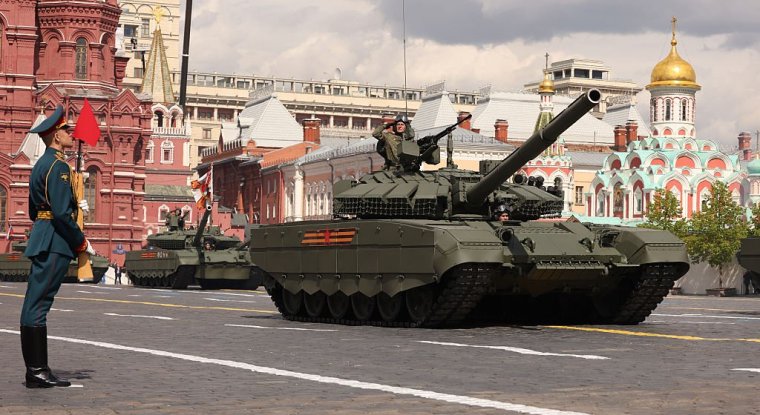
Radakin’s successor, Air Chief Marshal Richard Knighton, said lat month that despite Russia’s incremental gains in Ukraine, its aim of destabilising Nato on its eastern flank was weakened by the alliance’s decision to increase defence spending. He said Putin was seeing “his war aims eroded – we’ve got a stronger Nato. A rearming, bigger Nato.”
In total, Nato has about 3.4 million active military personnel – more than double that of Russia.
According to research by the International Institute for Strategic Studies, a London-based independent think-tank, Nato has around 22,000 military aircraft, of which 5,600 are fighter jets, compared to 4,300 and 1,115 respectively for Russia. The same study suggests the alliance has a two-to-one advantage over the Kremlin in tanks and a near three-to-one superiority in artillery.
For this reason, experts argue that the Russian President is playing to his domestic audience when he squares up to Europe.
John Foreman, a former UK defence attaché to Moscow until 2022, told The i Paper: “A lot of this is purely for internal consumption, to convince Russians that the generalissimo is in charge and will carry on fighting to keep Russia safe.”
The diplomat said Russia was following a decades-old tactic of trying to divide the West, adding: “It is a stretch for Moscow to go from that to a direct confrontation with Europe and a nuclear alliance which is conventionally superior to Russia.”
Russia could attack ‘as soon as tomorrow’
However, there is a view among some senior European commanders and intelligence services that while Russia may be unlikely to triumph in a head-on military collision with Western countries, it could yet seek to confront Nato on an alarmingly short timescale.
Lieutenant General Alexander Sollfrank, head of Germany’s joint operations command and an experienced Nato officer, said last month that despite its vast commitment of men and material in Ukraine, Moscow was capable of a limited but direct attack on the alliance’s eastern flank.
He told Reuters: “If you look at Russia’s current capabilities and combat power, Russia could kick off a small-scale attack against Nato territory as early as tomorrow.”
Sollfrank stopped short of saying the Kremlin was actively planning such an assault – widely regarded as being most likely against one of the Baltic States, or in the Suwalki Gap between Lithuania and Poland leading to the Russian enclave of Kaliningrad.
In his view, such a move was “in the realm of the possible”, not least because Russia’s air force and navy remained largely intact.
He added: “Whether it will happen or not depends to a large extent on our own behaviour.”
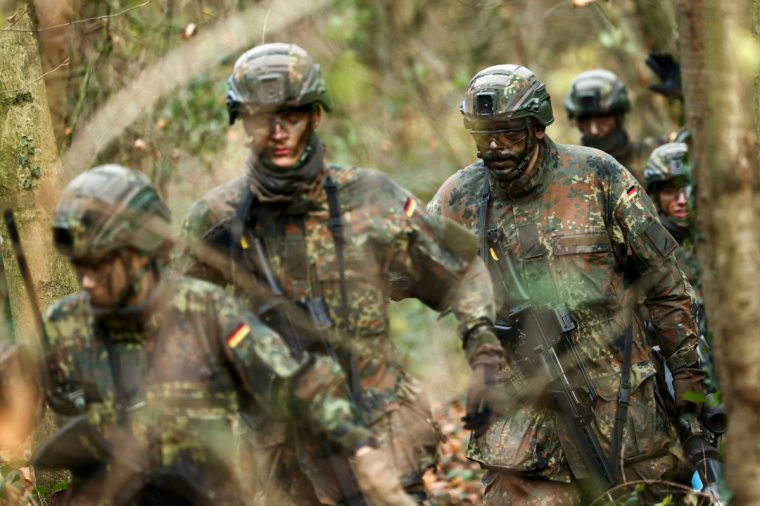
The remark was most likely a reference to the West’s own deterrence strategy in the face of Moscow’s ongoing hybrid warfare against Europe, which ranges from drone incursions into Poland and Romania to surveying, and potentially interfering, with sub-sea cables and pipelines off the coast of the UK.
The Kremlin has previously denied claims of recent drone incursions, dismissing the accusations as “nothing new”. It routinely insists that activities in European waters by Russian “spy ships”, which Moscow insists are scientific research vessels, are innocuous.
One European intelligence source said Britain and its allies had to be aware of the risk that Russia is preparing to fight – or, indeed, may already well be fighting – a new type of war for which the West is unprepared.
The source said: “We have to be careful about not falling into the old trap of being ready to fight the last war and not the next one. The world is now a place where drones can replace expensive jets and disinformation can destabilise a society without invasion.
“Moscow will see sabotage, sowing division and undermining European resolve as being as much a path to victory as sending columns of battle tanks down the Suwalki Gap.”
Missile stockpiles and Russia’s ‘imperial ideology’
In many Western capitals, there is a lingering sense that while Moscow is unlikely to seek a military confrontation imminently, it may be preparing for one by the end of the decade.
The US Army Secretary, Daniel Driscoll, is a rising star in the Trump administration and has played a central role in the seemingly stalled talks over Ukraine. He has reportedly warned an audience of Western diplomats that Moscow is stockpiling long-range weaponry for use either against Ukraine or possibly European nations.
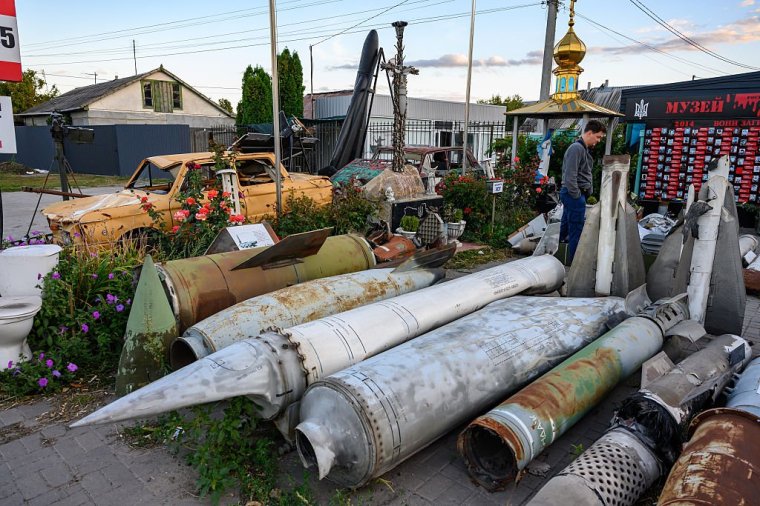
According to Ukrainian defence intelligence estimates, Russia has expanded its production capacity to manufacture about 2,900 cruise and ballistic missiles per year, including Kinzhal hypersonic missiles capable of reaching speeds of nearly 8,000mph. Nato officials have warned that Moscow’s pace of rearmament could put it in a position to launch a wider assault on the alliance by 2029.
The result, according to analysts and military chiefs, is an urgent need for Europe to deter an adversary capable of deploying a spectrum of strategies, including hybrid tactics and a willingness to threaten the use of nuclear weapons.
The intelligence source said: “The calculus for Nato is ensuring that Putin always understands that whichever of the options he goes for, he will lose. A bully has to be shown strength.”
According to one school of thought, the West is paying the price for allowing the Kremlin’s imperialism towards its neighbours to go unchecked for generations.
Your next read
Kristina Hook, a conflict management expert at independent think tank the Atlantic Council, argues Moscow’s penchant for expansionism not only lies at the root of Russian atrocities committed in Ukraine, but is also a persisting menace to other European countries.
She said: “Russia’s imperial ideology has never been confronted with the kind of accountability needed to dismantle it. As long as this ideology persists unchallenged, the threat will not stop at Ukraine’s borders.”
