As more and more countries boycott over Israel’s participation, the camp, carefree Eurovision Song Contest we used to love is gone
The Eurovision Song Contest has always been about more than music: it is a celebration of the sheer, silly chaos that ensues when thousands of people gather to enjoy thumping euro-beats, ridiculous costumes and the enthusiastic waving of tiny flags. But that spell has surely now been broken with ongoing tensions over the participation of Israel, leading to the exit this week of Ireland, Spain, the Netherlands and Slovenia – a move that threatens to rip the core out of the biggest-hearted event in pop.
At its best, the competition is an escape hatch from the drudgery of 9-to-5 life. Peak Eurovision is a holiday from the everyday – a glitter-festooned safe space where all that matters is zany outfits, madcap grooves and a delectable drizzle of douze points. But as we are now discovering, the moment the shadow of the real world intrudes, that magic vanishes in a puff.
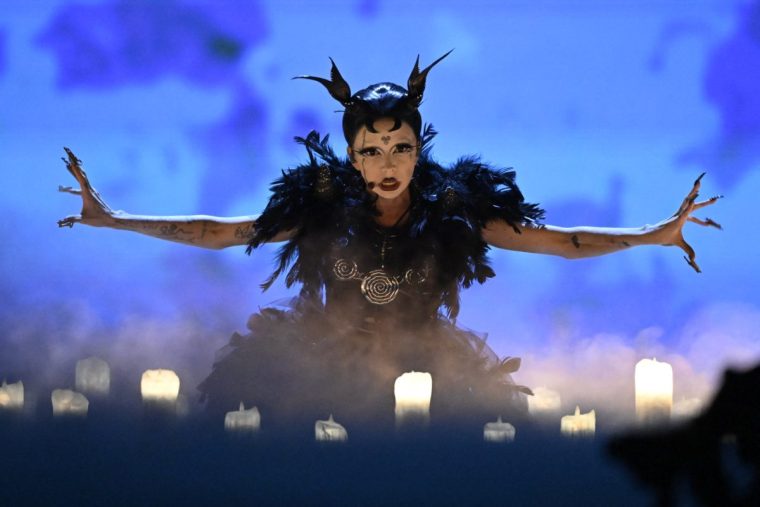
Controversy over Israel’s participation has been brewing for several years. The contest’s organiser, the European Broadcasting Union (EBU), was forced to introduce new “fair play” rules this year, following complaints by Irish singer Bambi Thug about the behaviour of the Israeli delegation in 2024.
Meanwhile, Israel’s thumpingly average 2025 entry, “New Day Will Rise” by Yuval Raphael, received a massive public vote across Europe – suggesting some viewers were motivated by politics rather than the quality of the music. That may not have been a first, but rarely has such a divisive political issue been brought to the fore so obviously. A pop wonderland that had been all about sweetness and silliness had been forced to step into the cold, gray light of day – a vibe that was never going to work with Eurovision.
This week, the dispute over Israel escalated further. With the EBU confirming that the nation would participate in Vienna next May, four countries announced they were not participating. Meanwhile, Germany and Austria insisted they would boycott if Israel were omitted. A dagger has been plunged into the heart of the Eurovision community.
Eurovision isn’t the first global event to be impacted by politics. Both the United States and the Soviet Union boycotted various Olympic Games at the height of the Cold War. The last World Cup was dogged by Qatar’s human rights record. Who knows what will happen when the football jamboree pitches up in Donald Trump’s America this summer? Eurovision, too, has had its moments. Georgia backed out in 2009 after the EBU vetoed its anti-Putin entry, “We Don’t Wanna Put In”. And of course, Russia was thrown out after invading Ukraine. That year, first place went to Kyiv’s Kalush Orchestra ahead of the UK’s Sam Ryder – a vote that was first and foremost an expression of empathy with Ukraine.
Your next read
But this latest quarrel is much more significant and potentially fatal to Eurovision. Spain is one of the Eurovision Big Five – and an enthusiastic member of the Eurovision fanbase. The Netherlands and Ireland have historically performed strongly – Ireland, of course, being neck and neck with Sweden with a record seven wins. And Slovenia’s participation has been regarded as a symbol of Eurovision’s willingness to move beyond its historical Western borders and engage with Central and Eastern Europe.
Nor will their departure settle the matter. Other countries are expected to follow Spain, Ireland and the rest out the door – and you can only imagine the scrutiny the BBC will be under in the weeks leading up to Vienna. In those circumstances, who in their right mind would wish to represent the UK? Poor Olly Alexander was forced to become an expert in international affairs when he faced calls to withdraw over Israel’s participation in 2024. Those same pressures will be magnified many times over in 2026 – turning what should be a pop dream into a nightmare.
Let’s be honest, Eurovision was never about the tunes. How many winners of the past 20 years can anyone name off the top of their heads? It was about fun, community, escapism – but how do you have fun when people are rowing about war crimes in the Middle East? You can’t – which means the camp, carefree Eurovision Song Contest we used to love is gone. Who is to say if it will ever return?
