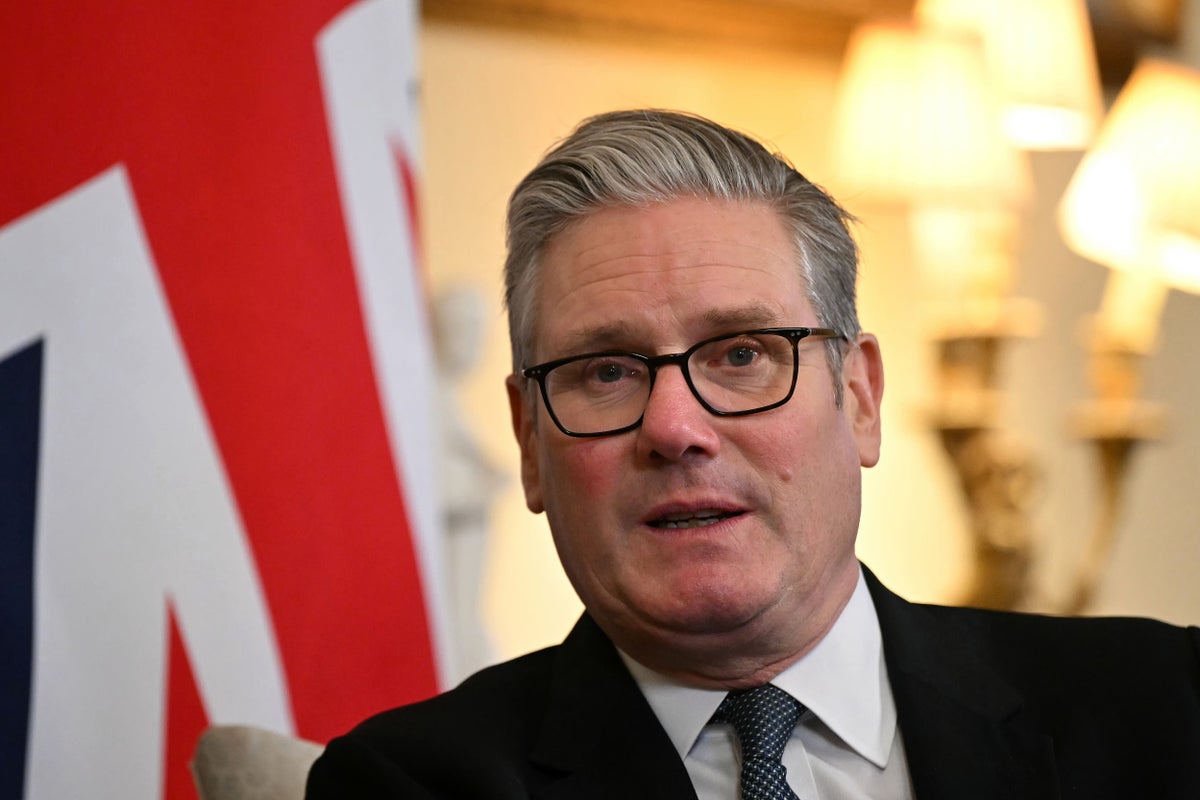
Sir Keir Starmer has set out moral and economic arguments for lifting children out of poverty as the Government launched its strategy on the issue, largely driven by the £3 billion decision to scrap the two-child benefit cap.
The plan – long-awaited by campaigners – comes with around 4.5 million children living in poverty in the UK.
The Prime Minister said the statistics are “shocking” and came with an “individual human cost” in terms of skipped meals and poor accommodation.
He asked: “Should any of this really be happening in a country like ours?”
There was a “basic moral argument” for taking action, with poverty acting as a “huge barrier to potential” for children.
“After all, if you are arriving in your classroom hungry or tired from sleeping in a cold bed, then you are simply not in the best position to learn. We should not stand for that,” he said.
Tackling child poverty is a “sound investment” because it can “improve their life chances and strengthen our economy for the long-term”.
The Government is seeking to justify the decision to hike taxes in the Budget by £26 billion, with a significant amount of the money used to fund welfare payments.
Sir Keir said tackling child poverty would “alleviate pressure on our public services” and ease cost-of-living pressures for the working poor.
The Prime Minister said the 116-page strategy “is a symbol of the promise we made to the British people”.
“That Britain deserves change. And that this Government is dedicated to unlocking the potential of us all,” he said.
The plan has been welcomed by some charities as a good starting point, but Big Issue founder Lord John Bird warned against “warm words” and a strategy he said was lacking in “ambitious targets”.
The crossbench peer, who experienced poverty as a child, said: “In this challenging economic climate, there is every reason to worry warm words will not translate into tangible progress.”
The National Children’s Bureau said it wanted to see “binding targets for further reductions over 10 years but this level of ambition is sadly missing”.
The key move to scrap the two-child benefits limit from April next year – already announced in last week’s Budget – will result in an estimated reduction of child poverty by 450,000 by 2029/30 at a cost of £3 billion.
The Government has said combining other measures such as the wider rollout of free school meals means the overall effect of its strategy will be to lift 550,000 children out of poverty by 2030.
It has pledged a rule change from next year to extend eligibility for upfront childcare costs to people returning from parental leave, which it said will make it easier for new parents who receive universal credit to get back to work.
The strategy will “also end the unlawful placement of families in bed and breakfasts beyond the six-week limit” the Government said, confirming it will continue an £8 million pilot programme for the next three years across 20 local authorities with the highest numbers in this situation.
The most recent figures showed there were 2,070 households in England with children at the end of June which had been in bed-and-breakfast accommodation for more than six weeks.
By law, such accommodation is meant to be used only as a temporary measure in an emergency and for no longer than six weeks.
Councils would also have a legal duty to notify schools, health visitors and GPs when a child is placed in temporary accommodation, in an amendment to the Children’s Wellbeing and Schools Bill that is going through Parliament.
Some 2,070 households in England with children at the end of June had been in bed-and-breakfast accommodation for more than six weeks.
The Government said it will work with the NHS to “end the practice of mothers with newborns being discharged to B&Bs or other forms of unsuitable housing”.
Homelessness charity Crisis said such a measure has “the potential to save lives, as we know young children have tragically died in unsuitable temporary accommodation”.
Homelessness minister Alison McGovern told BBC Breakfast: “It really, really shocked me to find out that in the five years to 2024, 74 children, including 58 babies, died, and one of the causes that was attributed to their death was the effect of temporary accommodation and that’s because of poor healthcare.”
She said she would “consider myself a failure” if newborns are still being discharged to B&B accommodation when she finishes in her job.
Both Crisis and Shelter called for the Government to unfreeze housing benefit and build more social-rent homes, which the latter said could help “relegate homelessness to the history books”.
Child Poverty Action Group chief executive Alison Garnham said while the ditching of the two-child limit and expansion of free school meals “will improve the lives of children up and down the country”, the Government “must now build on this momentum to achieve more tangible change for children”.
Save the Children UK said the strategy contains “bold measures to improve childhoods – not the sticking-plaster measures of the past”, while The Children’s Society said: “If fully delivered, the commitments made today have real potential to transform children’s lives.”
The Institute For Public Policy Research (IPPR) think tank said its analysis suggested regions with higher child poverty will see larger proportional increases in household income from the two-child limit being scrapped.
It said in 2026/27, the mean income for households receiving such benefits will rise by 0.32% in Yorkshire and The Humber, 0.31% in Wales and 0.30% in the North West.
The organisation said the North West will see the largest reduction in child poverty by the end of this Parliament, with around 90,000 children lifted out of poverty.
