Europe has floated an unprecedented use of frozen Russian assets to raise some £80 billion for Ukraine to cover its struggling military and put pressure on Putin to end the war.
The EU has been locked in talks for months about how to harness assets frozen in Europe. But caution continues to hold up delivery at a crucial time in diplomacy.
Belgium, which holds the majority of the assets, fears it could have to pay back everything on its own if Russia successfully challenges the plan. Its backing will depend on the EU sharing out responsibility.
Russia has already vowed to strike back with “the harshest reaction” against any “illegal action” by the EU around its frozen assets. It said on Thursday it was already preparing a response.
On Thursday, Russia’s former president Dmitry Medvedev launched into a tirade on social media, saying stealing frozen assets could be seen as a justification for war.
He wrote on X: “If the crazy EU does steal frozen Russian assets for a “reparations loan,” we may view it as a casus belli with all the relevant implications for Brussels & Co. Then, these funds may have to be returned, not in court but as real reparations paid in kind by Russia’s fallen foes.”
Kyiv’s European backers will be hoping to solidify an agreement at a summit later this month as Russia and Ukraine continue to work through peace terms.
How would the plan work?
As it stands, the European Commission is looking to find 90 billion euros ($105 billion) for Ukraine through frozen assets or international borrowing.
The money would support military costs and help cover basic services crippled by nearly four years of conflict.
Ursula von der Leyen, the Commission president, estimated the loan would cover two-thirds of Ukraine’s funding needs for the next two years. Other partners could cover the rest, she said.
Britain also holds about £25 billion of frozen Russian assets and is looking to coordinate with EU states to tap the assets. Some €290 billion (£250 billion) were frozen in the west after Russia’s full scale invasion.
Could Belgium scupper the deal?
Leaders had aimed to agree on a reparations loan for Ukraine by October – but hopes were dashed by opposition from Belgium.
Belgium holds most of the assets Europe wants to harness. Euroclear, a central securities depository in Brussels, holds around £160 billion. The main issue is that its government is wary that a successful legal challenge could leave the country having to repay the entire amount on its own.
“It would mean bankruptcy for Belgium,” foreign minister Maxime Prévot has explained.
As such, Belgium would want guarantees from his EU partners that they would share responsibility in the event of any challenge against the state or Euroclear. Otherwise, they suggest the EU borrows the amounts needed on the markets.
Europe needs to move faster. For months, Kyiv’s backers have deliberated over how to employ frozen assets. As they talk, Russia continues to cut deeper into Ukraine, weakening Zelensky’s negotiating position.
Europe could share responsibility
Germany’s Friedrich Merz on Thursday came out in favour of equally dividing up responsibility in order to move forwards with the plan. Belgium could not reasonably rely solely on political promises and deserves legally binding assurance, he said.
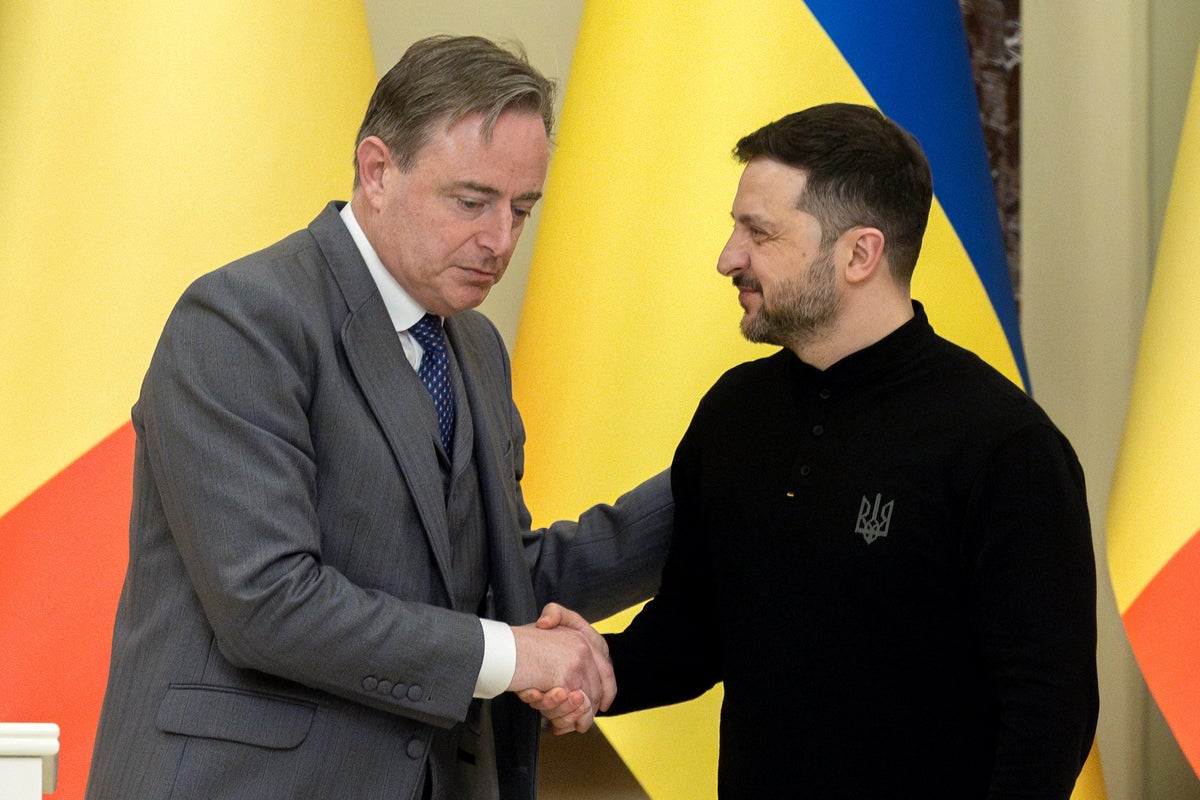
Prime Minister Bart De Wever said he hoped to have a fruitful discussion with Mr Merz on Friday, but would not be pushed into backing a plan.
“I can still determine my own position, even if there are large, strong neighbours whom I like very much and greatly respect politically, who might ask me (to do) something differently. I have only one responsibility: that is the interests of the Belgian taxpayers.”
The European Commission hopes to find agreement between members by December 18. In the meantime, Russia will be trying to unsettle Europe’s nerve.
Russian Foreign Ministry spokeswoman Maria Zakharova told reporters on Thursday: “Any illegal actions involving our assets will not go unanswered… Preparations for a package of countermeasures in the event of actual theft and seizure of Russian Federation assets are already under way.”
