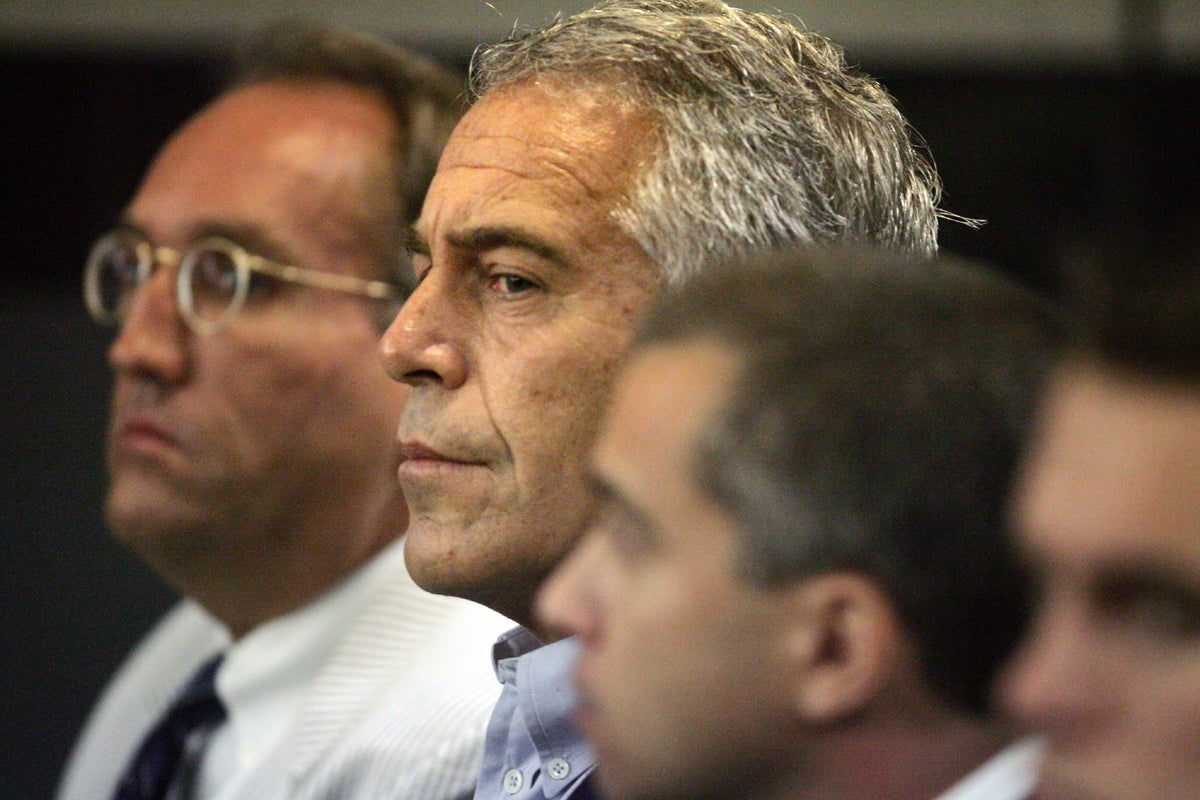
A federal judge in Florida has ordered grand jury materials surrounding an investigation into convicted sex offender Jeffrey Epstein to be unsealed, marking the first of several expected decisions to publicly release grand jury documents in cases tied to the late financier.
District Judge Rodney Smith ordered the release of material from grand jury investigations from 2005 and 2007. The judge had previously denied the request but revisited the decision Friday after Donald Trump approved a measure that compels the Department of Justice to release all investigative files in its possession.
The order from Smith, a Trump appointee, did not attach a deadline. The Justice Department must publicly disclose files in its possession — which do not include the documents shown to grand juries that considered indictments against Epstein and his associate Ghislaine Maxwell — by December 19.
Separate requests to unseal grand jury materials are underway in New York, where Epstein died in prison awaiting trial on sex trafficking charges 2019. Another judge is mulling the release of grand jury documents in the case against Maxwell, who is serving a 20-year prison sentence after she was found guilty of recruiting and grooming young women and girls in connection with Epstein.
Those requests are pending.
Lawyers for Maxwell said this week that releasing grand jury files from her case could complicate her long-shot attempts to get a new trial.
“Releasing the grand jury materials from her case, which contain untested and unproven allegations, would create undue prejudice so severe that it would foreclose the possibility of a fair retrial” should she successfully win a retrial, they wrote.
Attorneys for Annie Farmer, who testified under oath that Maxwell groomed and assaulted her when she was a teenager, also wrote to the judges overseeing the cases this week, warning that any denial of the motions to unseal the documents “may be used by others as a pretext or excuse for continuing to withhold crucial information concerning Epstein’s crimes.”
“Epstein’s victims have been denied justice for far too long by multiple government administrations of both parties,” they wrote. “Even now, the government has failed to investigate anyone other than Epstein himself and one of his accomplices, Ghislaine Maxwell, and there is no indication that the Department of Justice (or any of its offices) is taking action against other critical inner circle Epstein accomplices despite congressional investigations and public reporting concerning his sex trafficking ring’s financial infrastructure.”
In July, the Justice Department determined “no further disclosure” in the Epstein case “would be appropriate or warranted,” sparking public outcry that only fueled accusations that the government was concealing Epstein’s ties to a wider network of powerful figures — including Trump — allegedly connected to a sex trafficking conspiracy.
Last month, the president reluctantly agreed to sign a measure approved by Congress that compels the Justice Department to release all investigative materials from the Epstein case in its possession.
The materials in Florida stem from an abandoned federal case against Epstein that resulted in what critics have called a “sweetheart” deal for state charges and a brief jail sentence.
A Palm Beach grand jury indicted Epstein on one state felony charge of solicitation of prostitution in 2006, a case that was then referred to the FBI. In 2007, an assistant U.S. attorney crafted a draft indictment outlining 60 criminal counts against Epstein, along with a memo of evidence against him.
Then-U.S. Attorney Alex Acosta then arranged a controversial agreement for Epstein to plead guilty to two state charges as well as a prison sentence and a requirement that he register as a sex offender in exchange for the federal case to be dropped.
Epstein then pleaded guilty to state charges of solicitation of prostitution and of solicitation of prostitution with a minor under the age of 18. He was released after serving less than 13 months in state prison.
