The hidden story behind a “remarkable” Roman mosaic uncovered in Rutland has been revealed by archaeologists.
Described as “one of the most significant mosaics discovered in the UK”, the Ketton mosaic was first unearthed during an excavation on a farmer’s field in 2020. Experts initially believed it depicted famous scenes from Homer’s famous epic Iliad – but a new study has shed a different light on the tiles.
While the tiles do depict the famous story of the Trojan War, their scenes are actually from a “long-lost” version of the tale first popularised by the Greek playwright Aeschylus, according to a new study from archaeologists at the University of Leicester.
Three dramatic panels depict the duel between the Greek hero Achilles and the Trojan prince Hector, the dragging of Hector’s body, and its eventual ransom by King Priam, where Hector’s body is weighed for gold.
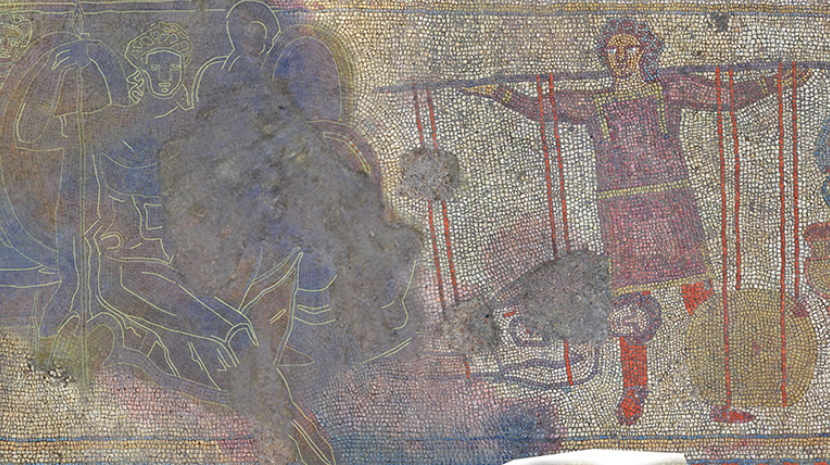
Experts said that while this version of the mythical story has been lost to history, it was one of a number Romans would have been familiar with.
The panels formed an extravagant floor of the dining room at the northern end of the main villa building, which experts believe dates to the third or fourth century AD.
Dr Jane Masséglia, lead author of this new research and associate professor in Ancient History at the University of Leicester, said the study also shows how Romans in Britain were inspired by design choices from across the Mediterranean.
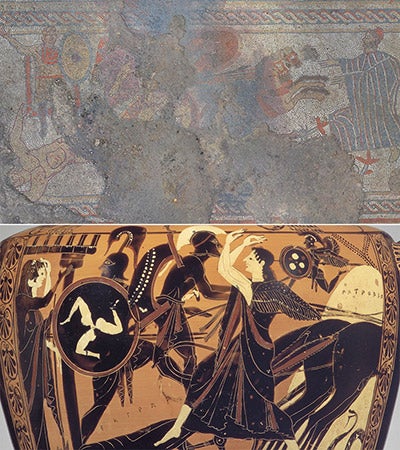
“In the Ketton Mosaic, not only have we got scenes telling the Aeschylus version of the story, but the top panel is actually based on a design used on a Greek pot that dates from the time of Aeschylus, 800 years before the mosaic was laid,” she explained. “Once I’d noticed the use of standard patterns in one panel, I found other parts of the mosaic were based on designs that we can see in much older silverware, coins and pottery, from Greece, Turkey, and Gaul.
“Romano-British craftspeople weren’t isolated from the rest of the ancient world, but were part of this wider network of trades passing their pattern catalogues down the generations. At Ketton, we’ve got Roman British craftsmanship but a Mediterranean heritage of design.”
Jim Irvine, who discovered the Ketton mosaic on his family farm in 2020, said the new research reveals “a level of cultural integration across the Roman world that we’re only just beginning to appreciate”.
“It’s a fascinating and important development that suggests Roman Britain may have been far more cosmopolitan than we often imagine.”
